Issue 37: Did This Vanity Fair Profile Set Josh Hartnett Up to Fail?
He was hyped up as the next movie-star of the 21st century. It didn't quite happen, much to his relief.
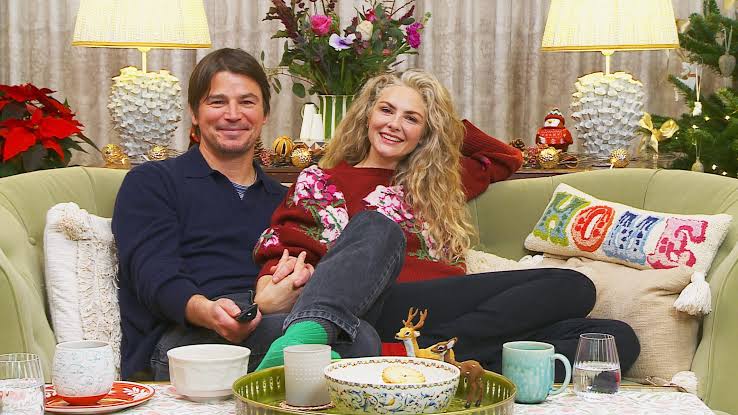
Josh Hartnett was recently interviewed by Vanity Fair to promote his work in Verity, the latest Colleen Hoover adaptation that managed to earn more than four times what Tom Cruise’s Digger did in the same weekend. Now aged 48 and a father of four with wife Tamsin Egerton, Hartnett is happily in his middle-aged character actor years. You may have recently seen him in M. Night Shyamalan's Trap or as one of the dozens of white dudes in Oppenheimer. Next, he has a horror series, Below, on Netflix.
Vanity Fair chose this time to ask him about their last encounter, when Hartnett was the magazine's 2001 cover star. He's been candid in recent years about how he felt that story set him up to fail in the eyes of the industry. Said Hartnett, "I was at a point in my life where I was feeling more easily defined by the press coverage that was swirling around me because I was young. And when you’re in your early 20s or late teens at a major moment in your life, and a major publication sort of takes a shot at you in a way, it’s scary. You’re like, Oh my God, this is not what I thought of myself, and I don’t want people to see me this way."
He's got some perspective on the topic, noting that he's now less impacted by other people's perceptions of his life and career. But it did make me interested in diving into the offending interview. Was it really so bad?
Vanity Fair. "The Making of Josh Hartnett." July 2001. Bruce Handy.
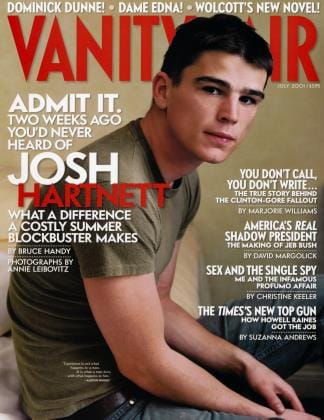
“Admit it. Two weeks ago, you’d never heard of Josh Hartnett.”
That’s the cover line to this issue, accompanied by a shot of short-haired Hartnett looking stony-faced in the way that is demanded of serious actors. “What a difference a costly summer blockbuster makes.” Said blockbuster was Pearl Harbor, Michael Bay’s attempt to reverse engineer the mega-success of Titanic and make a prestige historical drama out of one of the deadliest attacks on American soil. The film was intended to be a very big deal: it had a $135 million budget, which made it the highest budgeted-for budget in movie history, and was set for a Memorial Day weekend opening of May 25th. The cast included Ben Affleck, a legit leading man, alongside relative newcomer Kate Beckinsale, and a slew of big-deal actors in minor roles: Cuba Gooding Jr., Mako, Alec Baldwin, Jon Voight, Dan Aykroyd, and too many other familiar faces to count.
And there was Josh Hartnett, a 22-year-old who was best known for The Faculty and Halloween H20. He was a kid from Minnesota who was being moulded into a teen heartthrob. This was the era of Freddie Prinze Jr., Leo at his prettiest, and the boy band battles of Backstreet Boys and N*Sync. Hartnett had the goods, with his baby-faced handsomeness and non-threatening aura. He was chosen as one of Teen People's "21 Hottest Stars Under 21" in 1999. He was so cute that even having the world’s worst haircut didn’t deter his fans. And, as Vanity Fair declared, his superstardom was inevitable, especially once Pearl Harbor premiered.
"It will change your life," is the quote from producer Jerry Bruckheimer that opens the piece. Everyone told him that, including Bay and Affleck. Pearl Harbor was going to be "a worldwide blockbuster, a movie that will not only mint money but also latch onto the global consciousness with a death grip, dictating the dreams of ticket-buying mobs from Kansas City to Seoul to Caracas (though perhaps not Tokyo)." It's not merely that this film is going to redefine Hollywood; it's going to birth a megastar on par with Tom Cruise, the kind of "A Star is Born" movie that introduces to the world their new favourite person.
At the time of his casting, Hartnett had made seven films, only four of which had been released. His most acclaimed role was in The Virgin Suicides, as the hottest boy in high school who enters the scene in aviator sunglasses as Heart's "Magic Man" plays. It was the perfect use of his baby-faced charm, but now, he was being talked up for his "dark good looks" which were described as being "of the type usually referred to as brooding, and whose eyes, though squinty, can read on film as having profoundly soulful depths." Backhanded compliment, much?
Ben Affleck, who has always been a very good interviewee on topics of the industry, offers the best summary of what could happen to Hartnett. “I remember what the tidal wave of publicity that accompanied Good Will Hunting did to my life,” he wrote in an e-mail. “Simply put, Josh will get very famous very quickly and runs the very real risk of becoming a sort of one-man embodiment of the Backstreet Boys to hormone-crazed 15-year-old girls from Minnetonka to Tarzana. He is particularly at risk for this as he is so very PRETTY. I suspect he’ll find the prospect of this (as well as that of becoming a pinup in prison cells everywhere—which is, I’d say, the ‘downside’) somewhat overwhelming. It’s great and heady, but a little weird to say the least.”
Befitting a cover story, Hartnett is touted to the nines by colleagues as the star of tomorrow, with Bruckheimer comparing him to Montgomery Clift and Gary Cooper. Surprisingly, the Vanity Fair writer is trying to temper expectations, saying that Bruckheimer's comparison "doesn't do Hartnett any favors." I don’t think this was meant as a dig at Hartnett’s skills so much as the writer pulling back on the impossible burden of hype. I was reminded quite a bit of the infamous Gretchen Mol profile the magazine did a couple of years before, one that became synonymous with Harvey Weinstein trying to make fetch happen.
Hartnett is not egotistical about his future. In the quotes given, he seems perfectly pleasant, maybe even a little cautious about saying the right thing. A wise move, of course. This was still a time when Vanity Fair could get away with being snarky as all hell about its subjects if they wanted to. But Hartnett isn’t giving snark-worthy material to him. Aside from his beanie hat, which is called "his main actorly affectation."
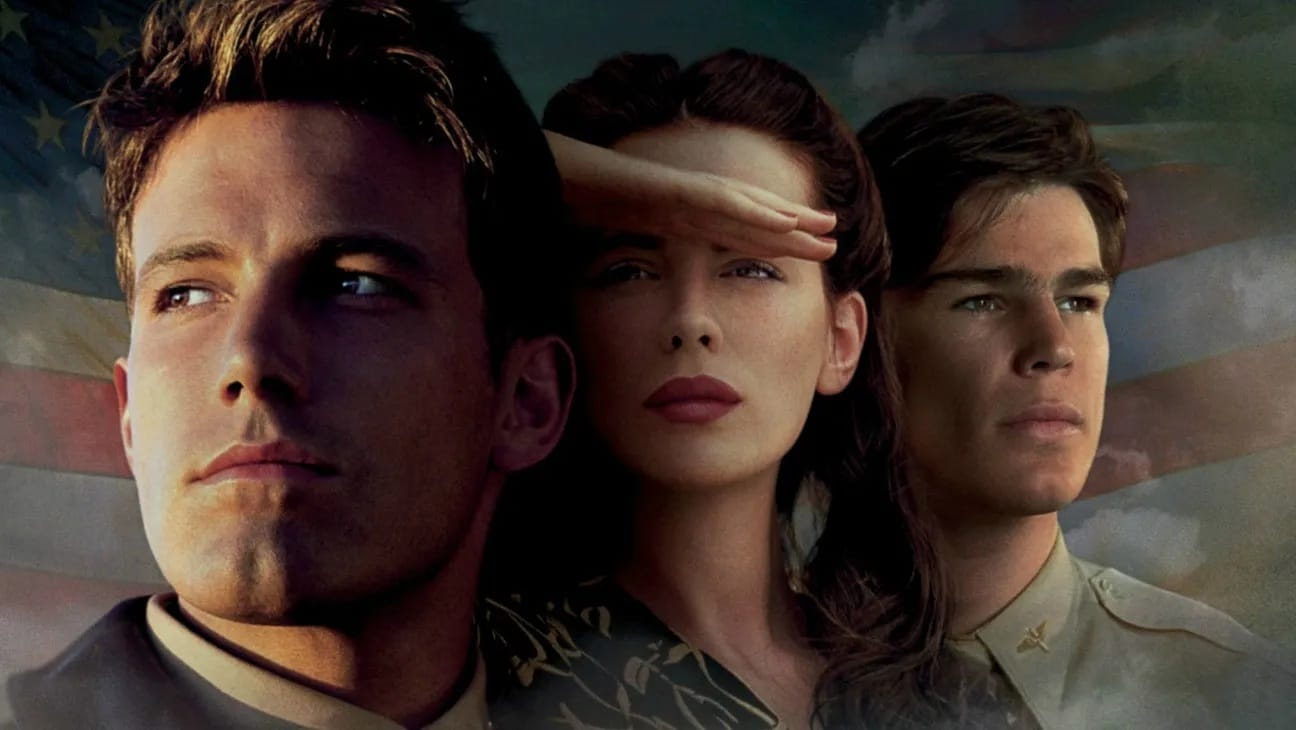
People like Hartnett. He's easy to work with, committed to his job—for The Virgin Suicides, he sought out the book's author, Jeffrey Eugenides, to ensure he did things properly—and eager to please. He likes beat poetry, worries he swears too much, and his biggest movie-star splurge was being an Audi A4, which he hopes to upgrade to a Toyota Land Cruiser. He loves movies and the process. I was reminded once more of Affleck, who is so damn good at discussing the industry and its hows and whys. Hartnett’s asking to be taken seriously without turning it into an ego trip. He just wants to be good at his job.
So, it must have been weird for him to read this piece and see how often it talks about him being the hottest man alive. Affleck called him “so very pretty.” Kate Beckinsale said he was "earth-shatteringly handsome in a slightly surprised way—he can’t quite believe when everyone is falling over him and teasing him about being so good-looking." The writer calls him "gorgeous" but with "a slightly simian set to his face and a winning gap between his front teeth," which he says makes him more interesting. Remember the good old days when you could compare a guy to a monkey but in a nice way? These profiles, man…
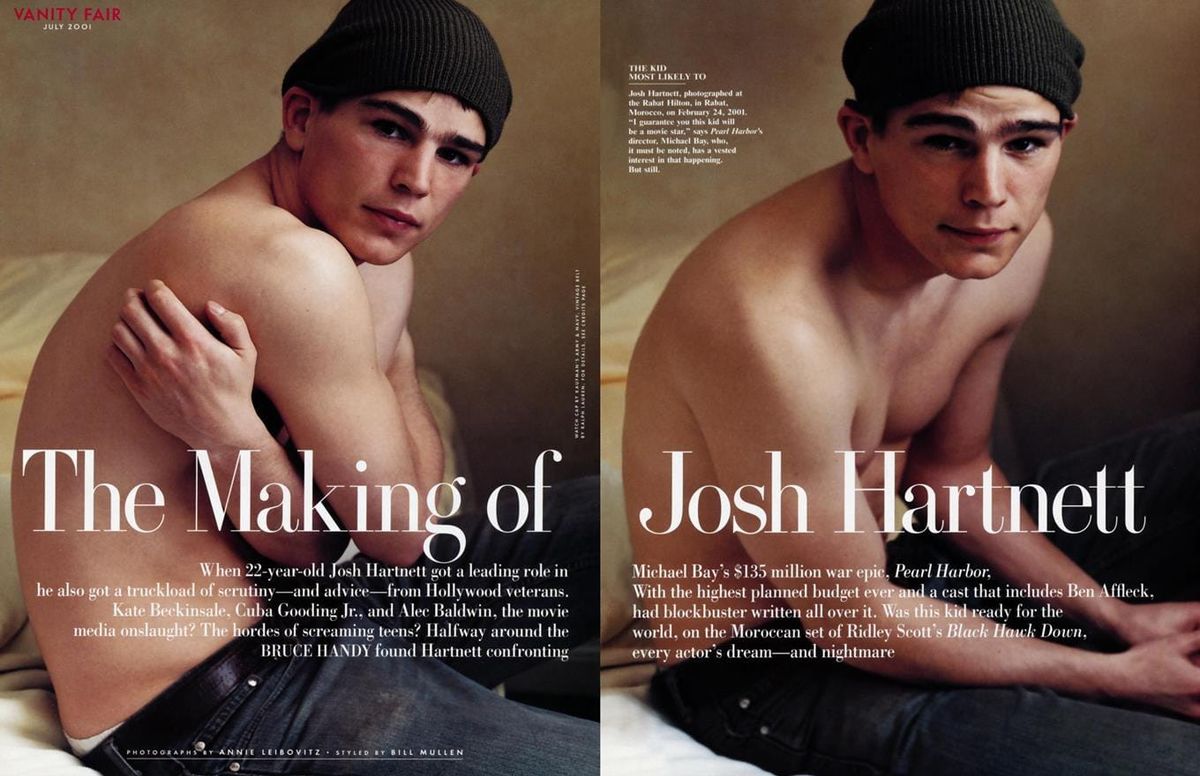
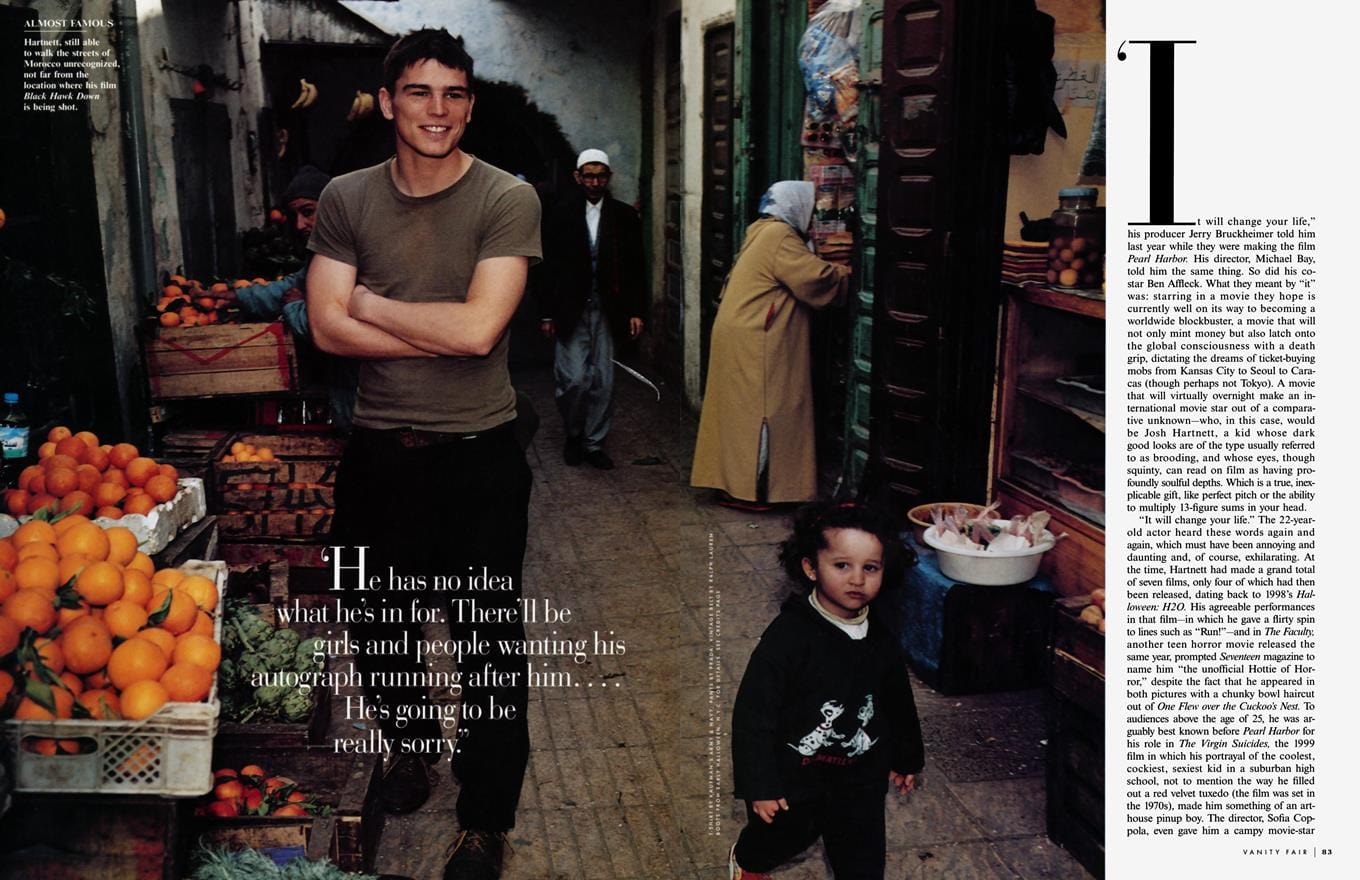
The accompanying photographs by, who else, Annie Leibovitz are pretty bad. Poor Josh, shirtless but with a beanie hat, looks like a lost puppy. He doesn't convey stoicism or raw sexual energy, but the timidity of a kid who doesn't know he's being made fun of. I don't think Leibowitz was taking the piss out of Hartnett. This photoshoot probably would have worked great with someone like Leo, Affleck or Matt Damon. I do think the intention was to make him seem like a fish out of water. Other photos include him in a Moroccan market, where he radiates "lost American tourist" energy, and another of him on a bed with his shirt off. Were the Leibowitz photographs meant to temper his handsomeness or poke fun at the teen heartthrob image? There’s a guilelessness to these photos, an innocence of a kid who has no idea what’s going to happen next. That’s the real theme of the piece: is this guy, barely out of his teens, prepared to be famous?
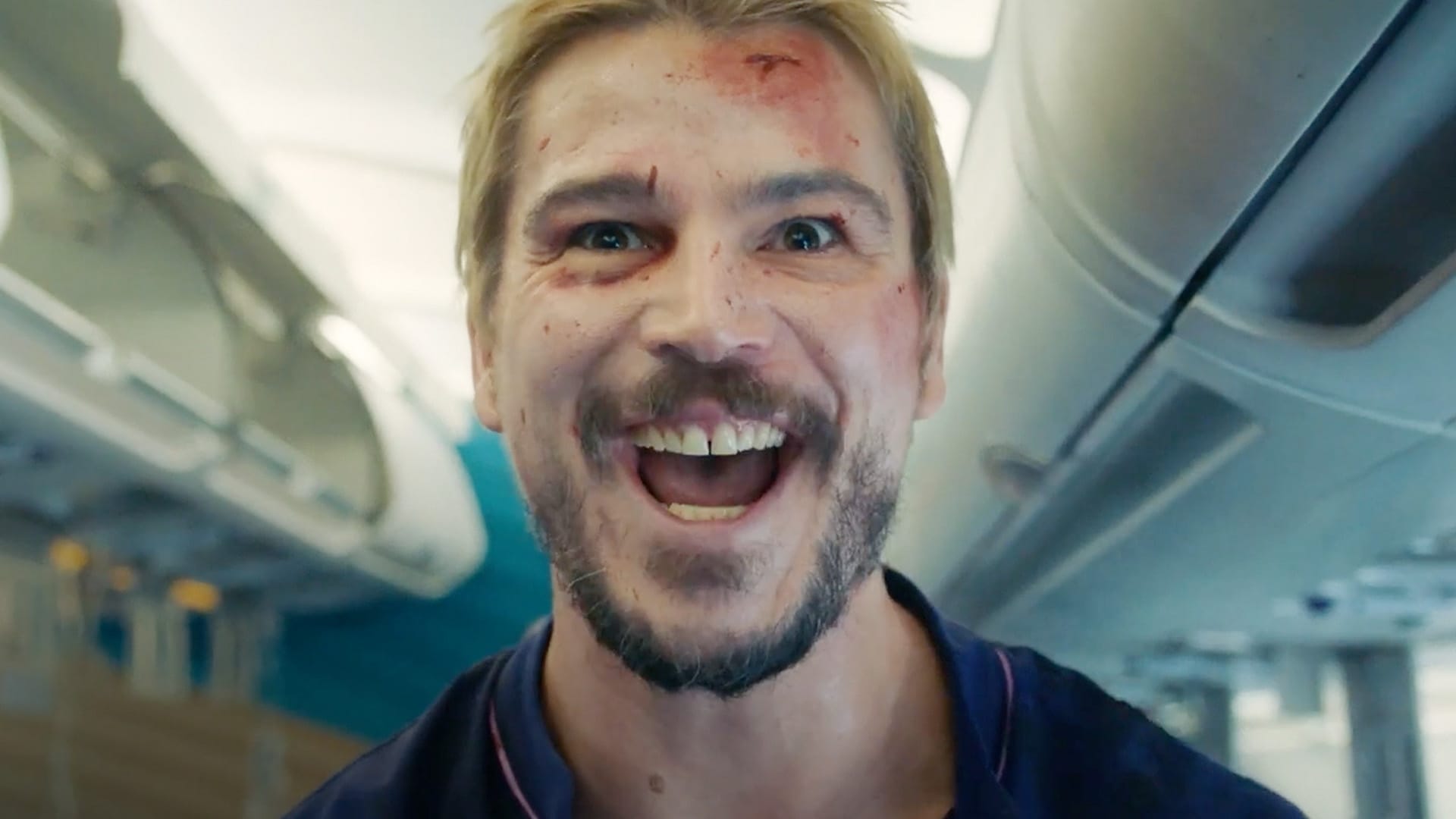
For the record, young Hartnett was never my type, in part because every movie I saw him in cursed him with the worst haircut possible, but current Hartnett is very handsome. There’s an action movie called Fight or Flight where he has bleach blonde hair and that 100% did it for me.
The pre-release expectations on Hartnett's shoulders are evident in the piece. The writer goes to talk to him while he's in Morocco, working on Ridley Scott's war drama Black Hawk Down. It's a big ensemble drama, but it's Hartnett who will end up solo on the poster. He was "rumored to be getting $2 million for the role" and has been given his own driver back to his hotel while "almost everyone else is ferried to and fro in vans." One producer compares it to when he worked on Sleeping With the Enemy with Julia Roberts:
“When we started, she was just an actor that we cast. They probably paid her $500,000. And when Sleeping with the Enemy finished, she was on the cover of People magazine and Rolling Stone and everything. It was like watching stardom happen in slow motion. And the same thing we could feel happening with Josh, even though Josh, in the outside world, isn’t Julia Roberts or Tom Cruise yet. But because of Pearl Harbor and because of the buzz, you could feel the sands shifting and this enormous kind of personality being born. It’s a weird thing to watch, you know. It’s both really kind of wonderful and also sort of frightening, because you can see the person wondering where they end and the stardom begins.”
Is Hartnett ready for it? One friend says he wants a bigger career but is ambivalent about fame. Hartnett himself says he almost didn’t audition for Pearl Harbor because he knew it would bring a harsher spotlight onto his life. The piece closes with him in a bar in Morocco trying to avoid attention. "When real movie stars walk into a room, it’s all about them. They know it and everybody else knows it. I like to fly under the radar. I try, anyway.” The piece thinks that any chance of remaining under the radar is utterly impossible, and so does everyone else in his orbit.
What fascinated me about the profile was how it all but said Pearl Harbor was a mess, and how it hindered the cover star they're promoting. The writer says, "neither he nor the rest of the cast have much in the way of characters to play: more telegraphed than written, the romantic story line lacks even the pulpy energy that made Titanic work." But he does credit Hartnett with finding "what humanity he can playing the part Ronald Reagan would have once played. He doesn’t grab the audience so much as draw it in, a welcome pool of stillness amid the expert whizzing and smashing and flying apart."
Even Hartnett is aware that his job as the human in an explosion fest is a tough one. As he diplomatically puts it, “A movie like Pearl Harbor, they want it simple in a lot of ways. The plot can be a little more complex if you know the characters right off the bat. My job was to make the character as complex as possible within that simplicity.” That’s his nice way of saying, “Okay, the script is crap and Bay isn’t directing me well, so let me do the heavy lifting.” There’s a reason so many of his movies are populated with amazing character actors who don’t need his instruction. When you’ve got Buscemi or Turturro, you don’t need to worry.
Pearl Harbor, of course, was not the record-breaking mega-hit it was intended to be. It grossed around $449 million, so it probably didn't make back its overall budget, although it was the sixth highest-grossing film of 2001 (number one was the first Harry Potter movie.) Critics thought it was laughable, especially the acting of the three leads, and it received six Razzie nominations, but it was the year of Freddie Got Fingered and Glitter, so it went home empty handed. At least it won an Oscar for its sound editing. Bless Hartnett because he isn’t good in the film but he’s also saddled with a nothing part and has no chemistry with either Affleck or Beckinsale. Michael Bay is not known for being a hands-on director with his actors, and you can tell in Pearl Harbor. The three leads simply do not feel appropriately cast. There’s no heft to Affleck at his brattiest or Beckinsale’s paper-thin character, and poor Hartnett seems terrified of the camera. The romance plot only exists here because of Titanic, and whatever you think of the appropriateness of using real-life tragedies as a backdrop for a fictional love story, at least the central pair in Titanic had chemistry and motivation.
In 2020, Hartnett was interviewed by The Guardian, and he talked about the profile. “Oh, that was an awful piece,” he shudders. “Was there even a quote from me in it, or was it just everyone talking about how hot I was? People got a chip on their shoulder about me after that. They genuinely thought I’d been thrust on them. It was a very weird time.” After Pearl Harbor flopped and he aged out of teen rom-com roles, he wanted to reshape his image into something less malleable for studio executives. "I tried to find smaller films I could be part of and, in the process, I burned my bridges at the studios because I wasn’t participating. Our goals weren’t the same.” It felt like he went from hot to not so quickly when Pearl Harbor didn't change the world. As early as 2006, GQ was talking about him making a comeback with The Black Dahlia (terrible film, read the book instead.)
Hartnett never became the A-Lister of the moment, but his career has been solidly respectable, and he’s never been out of work for long. Nowadays, Hartnett lives in England with his family and seems very content with his choices. Frankly, I think it’s far preferable to be in his position than Affleck’s. Ben may get bigger films made, but who would want to deal with all the extra baggage that comes with that? Personally, I think it’s good that I have no idea what Hartnett’s kids are named or what they look like. That wouldn’t have been guaranteed had Pearl Harbor made him an icon.
In that Guardian interview, he admits he went back and re-read the Vanity Fair profile for the first time since it was published, and he realised it wasn't as excruciating as he'd remembered. And his response is as self-aware and professional as his comments in the piece itself. "It’s just that it happened at a time when I wasn’t that famous, and it seemed to already be asking whether I should be or not. I felt like: ‘Oh my God! I’m not the tallest poppy yet – don’t cut me down!’ I was being compared to Tom Cruise and Julia Roberts and that’s insane. It was a set-up-to-fail moment.” He gives a sigh. “It was actually an interesting look at the nature of fame. If only it wasn’t about me.”