Review: With The Social Reckoning, Aaron Sorkin Just Can’t Help Himself
Aaron Sorkin takes on Mark Zuckerberg once more, but the results are inert.
The evils of Facebook are so monstrous that I’m not sure a single piece of art can fully convey them. We live in a world so thoroughly poisoned by the cancer now known as Meta that it can be tough to remember what life was like before Mark Zuckerberg ruined everything. The spread of misinformation, the lack of fact-checking, the algorithmic demand for more and more radicalized content… It’s an all-consuming force of unfettered cruelty in the name of “number go up” tech bro profit. You don’t need me to tell you this. The chances are you’ve been on Facebook or Instagram or Threads today and seen at least one truly objectionable thing. How we got to this place is known, thanks to excellent journalism, but can we really know it if Aaron Sorkin hasn’t wagged his finger in our faces about it?
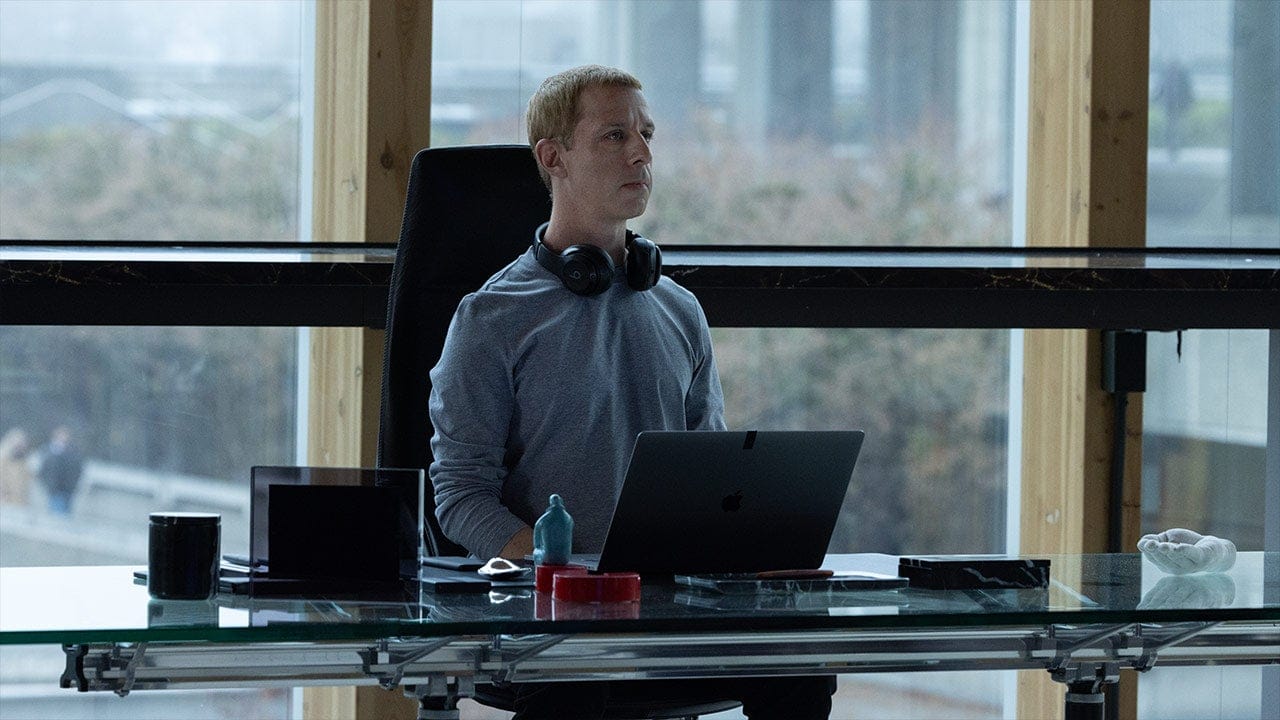
The Social Reckoning is the sequel to The Social Network, released 16 years ago to mighty acclaim and a few Oscar wins. David Fincher and Sorkin used the founding of Facebook as a backdrop to explore an age-old tale of friendship and treachery. It’s a story of youthful petulance, elevated to sign-of-the-times lore by Fincher’s achingly precise direction and Sorkin’s signature rat-a-tat-tat dialogue. But the Facebook of now is not the one of the previous decade. That Zuckerberg seemed almost quaint in his gormlessness. The one who now complains about the masculinity crisis to Joe Rogan and hobnobs with Donald Trump is a nastier creature, so much so that Jesse Eisenberg declined to reprise his role for this follow-up. Jeremy Strong, fresh from playing slimeballs Kendall Roy and Roy Cohn, stepped into his ill-fitting suits. Sorkin has taken over directorial duties. He’s in total control, and boy, does it show.
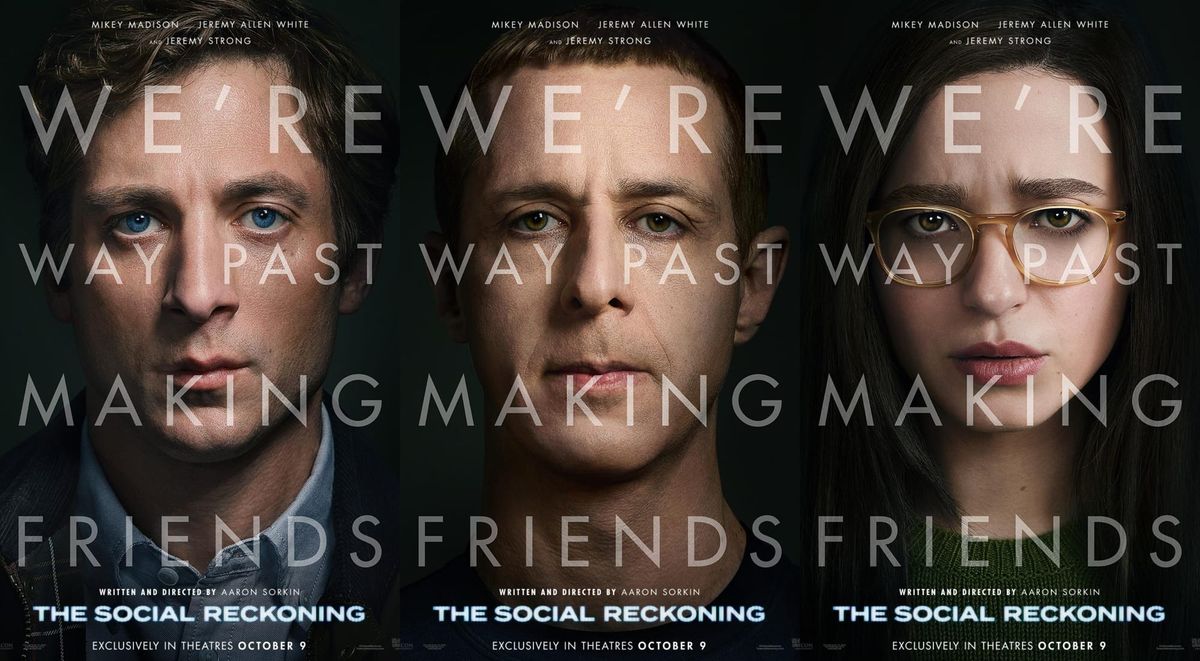
It’s 2020. Frances Haugen (Mikey Madison) is a data engineer at Facebook, working in the civil integrity unit of the company. She's started to notice some uncomfortable details about the mighty algorithm. Radicalized and misleading content is being pushed to the forefront of people's feeds. The negative impact of Facebook and Instagram use on teenagers is growing. Propaganda is spreading further and quicker than ever. Frances wants the company to do something about it, but nobody will listen. Enter Jeff Horwitz (Jeremy Allen White), a journalist for the Wall Street Journal. She just wants to pass on one little detail, but soon, she must contend with becoming the face of the movement against Facebook.

This is largely a story about journalism in its twilight years and the necessity of whistleblowing, but Sorkin cannot help but want to reduce everything to a cycle of quippy dialogues that undermine these very real characters. Frances Haugen is portrayed as a twitchy, childlike woman who wouldn’t look out of place as the Rachel Leigh Cook character in She’s All That. While she frequently chastises Horwitz for his lack of tech knowledge, she’s mostly subjected to a ton of condescending mansplaining. Seemingly eager to get ahead of the “Aaron Sorkin can’t write women” discourse, he has Horwitz clap back at Frances, calling him a mansplainer by saying women only use that term when they’ve lost the argument. I am not kidding. I wonder how Horwitz feels about being portrayed as a casual sexist, the kind who calls his female intern “the female intern”. Maybe the Sorkinese could have been charming in a less self-important film, or with two actors equipped to do this kind of screwball point-making. Mostly, it just makes both Frances and Jeff seem dumb and mean.
You get the sense that Sorkin had to go back to his old bag of tricks because he realized there wasn’t much of a story here. Haugen is undoubtedly very brave, and Horwitz did great work bringing this story to the forefront, but we don’t get any real insight into the process. It’s mostly scenes of them arguing while Frances takes photos of online documents from a flip phone, all of which is presented to us in the most perfunctory style and framing. Fincher could make people in rooms doing not much interesting because he knows how to elicit intimacy and tension from such scenes. Sorkin feels like he’s never learned how to direct beyond one set or space, like a play. The cinematography is muddy and Alexandre Desplat’s derivative “prestige movie” score will have you crying out for the return of Trent Reznor.
I get why Sorkin wanted to make this film. He seems troubled by the legacy of The Social Network and having made Zuckerberg seem kind of badass in his nerdy ruthlessness. The sequel’s depiction of him certainly feels like course correction in an often entertaining manner, but it’s also inert. I kind of wish the movie had been like All the President’s Men (which it takes serious inspiration from) and never depicted him, much like Alan J. Pakula’s masterpiece, which only shows news footage of Richard Nixon. Jeremy Strong does nail the voice and cadence of Zuckerberg. He is mostly kept to one room, where he rehearses for his upcoming Senate hearings, stiff-necked and refusing to listen to his advisors (Wunmi Mosaku—wasted—and Bill Burr—a fun ranter, if nothing else.) If Eisenberg’s young Zuckerberg was full of spiteful energy, Strong’s older version is constipated with ego, but still a sulky child at heart.

The Social Network isn’t really about Facebook. It’s not a film that has much of an interest in how the site operated in those early years because there wasn’t much today. It seemed so innocent, right? Hey, let’s reconnect with old friends and share photos of my cats. But it worked in the film’s favour because the real action was human. With The Social Reckoning, Sorkin has to tackle a more existential crisis related to the site. The prologue features a woman named Kayleigh (thanks, Aaron) filming herself as she goes on a drunken racist rant against a pair of cops. Kayleigh, it turns out, was a friend of Frances’s, and she realizes that this woman who was once progressive has been radicalised by Facebook.
Wherever Frances goes, she hears people didactically talking about the site and the wrong things on it: science misinformation, COVID lies, teen bullies. And then January 6th happens. I won’t spoil the ending—in as much as the history of five years ago can be spoiled—but the final ten minutes of this thing felt like an episode of The Newsroom, with self-important music and men in rooms talking about how to respond to an insurrection goaded on by a sitting President. One vaguely regretful-looking rioter is shown mid-attack, a moment that felt so smarmy on the writer-director’s part, a desperate act of wish-fulfilment regarding those largely unrepentant losers. Sorkin seemed more eager to play Captain Hindsight than really delve into the maze he made for himself. For some reason, he is curiously vague about the political specificities of the moment. Trump is never named, for one.
We’re in the middle of a weird boom in films and TV about the tech bros who have destroyed society. After this, we’re getting Artificial, about Sam Altman, the four-hour documentary on Elon Musk, and Netflix’s miniseries The Altruists, on Sam Bankman-Fried. One cannot help but wonder who these are for, who the target audience of such “entertainment” is. We know who the villains are because they’re all still wreaking havoc on the world (except for Bankman-Fried, who is in jail and desperately hoping Trump will pardon him.) Detailing their cruelties is worthwhile, and I’m all in favour of things that piss them off, but how do you even begin to confront this hell? Sorkin is quickly overwhelmed by it and falls back on his shtick, which is an ill fit for subject and actors alike. He wants to take on a giant, but his attempt to conclude the story with a note of triumph feels cheap.
What is the social reckoning here? The Facebook leaks did jack shit to hinder Meta’s monstrous growth. Zuckerberg’s only grown more evil. Pervert glasses are now a thing. Sorkin seems aware of the incongruity in play, the friction between his ideals and style and the reality of this situation. Friction’s actually a big theme of the film. Facebook’s engineers are told to rid the system of it, to make the user experience so lubricated that they don’t even notice how many hours they’ve spent falling into the rabbit hole. Sorkin, by contrast, hits a dead end. He knows he can’t monologue this story to a happy ending. If only…
The Social Reckoning is in cinemas now.