Hollywood & Crime: Wallace Reid’s Addiction and His Widow’s Fight for Awareness
The action man of 1910s cinema was forced onto morphine after years of injuries. His widow made a film about it.
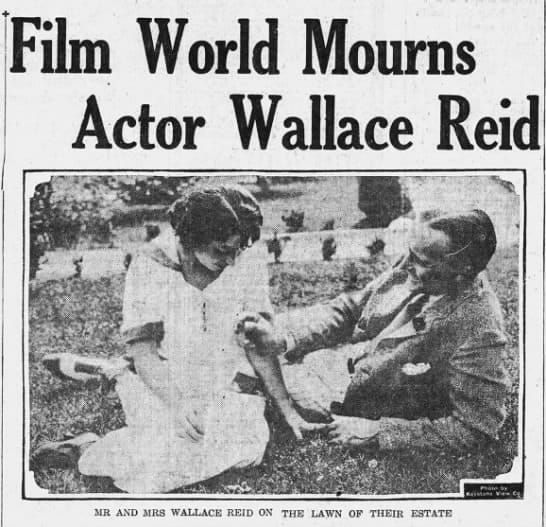
The entertainment industry seems to treat drug-related deaths as a weary inevitability. A business dependent on exploitation and parasocial stressors is positioned as a breeding ground for unhealthy coping mechanisms, and the possibilities of changing that are dismissed as impossible. Sure, we’ll talk about “awareness,” but the major factors that lead to the problem are never tackled. Society is not kind to addicts of any kind, but particularly those on drugs (prescription or otherwise.) Kindness is only offered when they’ve passed away, and even then it’s with a hefty dose of judgment: From Judy Garland to Marilyn Monroe, Chris Farley to River Phoenix, Amy Winehouse to Hayden Panettiere. The first major drug-related death in Hollywood inspired a slew of headlines about the burgeoning industry's moral degradation, and it inspired the late performer's widow to reshape the story into one of empathy for addicts.
William Wallace Halleck Reid, better known as Wallace Reid, was once known as "the screen's most perfect lover." Born into an acting family, he got his start on the theatrical circuit, touring the country and working as a performer and stagehand. His father, Hal Reid, was a playwright and actor who got into the film business early, making his first short in 1910. Wally's mother, also an actress, had hoped her son would choose a more sensible career over one on the stage or screen. For a while, it seemed that Wallace would. He was a good student, a gifted athlete, and loved to play various musical instruments. But he caught the acting bug and chose to leave school, where he'd been studying medicine, in favour of showbiz.
As a teenager, he spent time in Wyoming, where he learned to be an outdoorsman and spent some time on a pick-and-shovel line building a dam. Much to his parents’ dismay, he was as thrilled by a life of horses and guns as he was by performance. But, to appease them, he took work as a writer for newspapers and magazines, until his dad came calling in need of a last-minute replacement for the lead of his latest play. Father and son ended up working together in moving pictures, where Wallace quickly became a favourite as a beefcake leading man. He was very hot and looked good naked, and boy did directors take advantage of that. Eventually, Wally headed West, where Los Angeles was becoming the epicentre of the entire industry (thanks, Thomas Edison.) It didn’t take him long to get work. Lots of work.
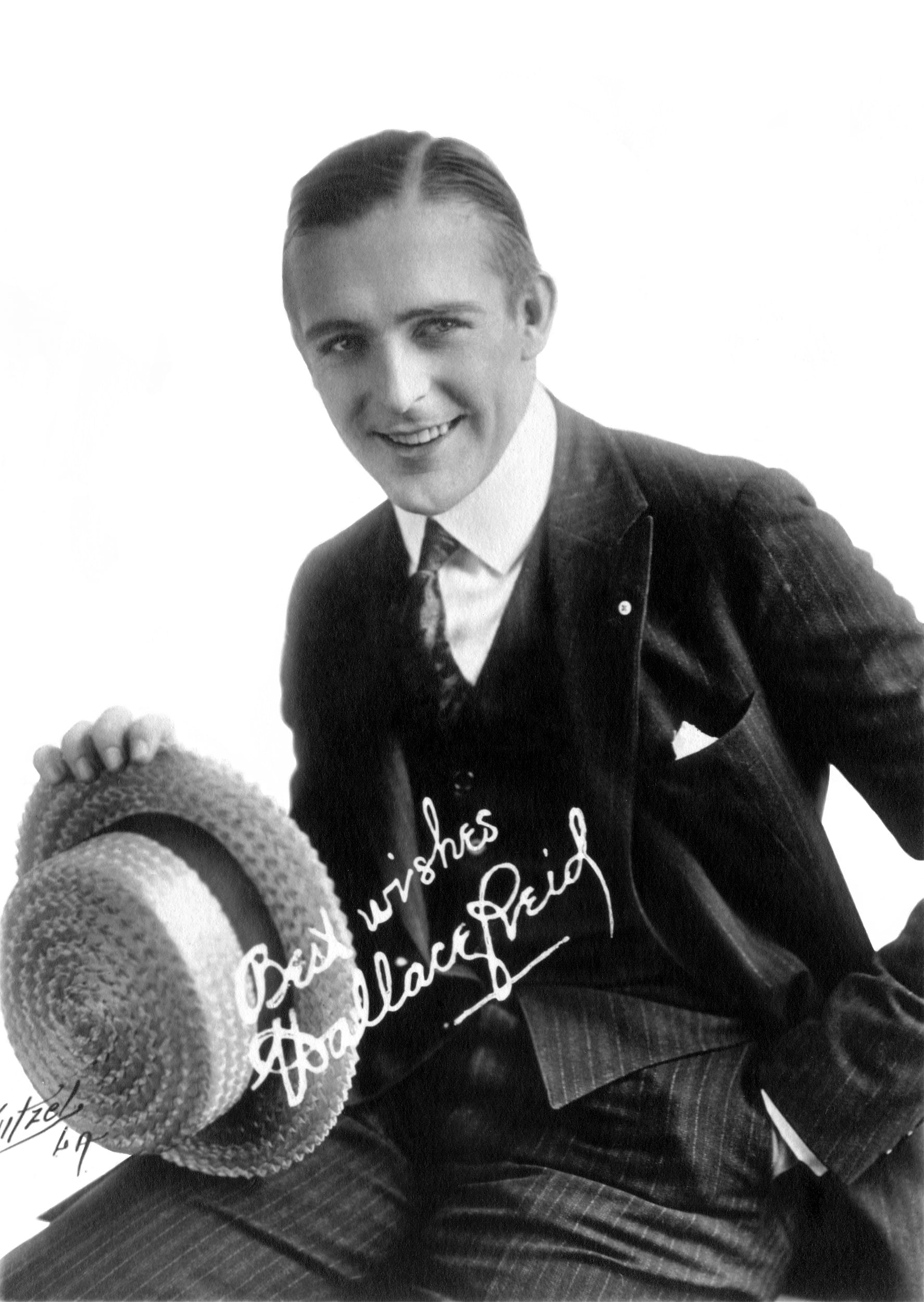
In 1912, while making the short Western His Only Son, he met Dorothy Davenport, another rising star from an acting family. At first, Dorothy thought Wally was immature and inexperienced, but they soon began dating and married the following year. As the 1910s rolled on, Reid became an evermore prominent leading man, and eventually one of the decade’s defining stars.
Reid was a supporting player in the racist monstrosity that is The Birth of a Nation (mercifully, he wasn't in blackface), but by that point in time, he had already starred in dozens of shorts. Most of these are now lost to time, as with the vast majority of silent cinema, but archival material shows just how big a deal he was in the 1910s. Reid worked with all the major actors of the time, like Lillian Gish, Gloria Swanson, and Mary Pickford, and accrued many director credits too.
The early days of the film world were a dizzying rush of speediness, quantity over quality. It wasn't uncommon for silent performers to make dozens of shorts every year, most of which would play for a couple of days in cinemas and not much more. In 1910 alone, Mary Pickford made 34 shorts for her studio, Biograph. So, Wallace making 36 shorts in 1912 or 53 (!?) in 1914 was pretty much par for the course. Still, it was an intense workload, especially for an actor who was largely known for Westerns and action shorts. He was celebrated as the paragon of on-screen masculinity. The men wanted to be him, and the women wanted him to wear skimpy clothes and save the fair maiden. Where Rudolph Valentino was sold as the "exotic" lothario with a feminine edge, Reid was all-American, clean-cut, and invincible. But he was also cool with being a co-lead or even second fiddle to a female colleague. He was a “man’s man” without all the cock-strutting tedium, although in real life, he was pretty insecure about being a guy who played pretend while his contemporaries went to fight in the First World War.
One way he was an appealing action man was through his willingness to do his own stunts. This wasn’t uncommon at the time, when the idea of stunt doubles was a relatively new concept. Because these shorts were made fast and cheap, nobody wanted to pay extra for a trained professional, even if they were available. If you needed a cowboy, you either got a real one to do the shot or you just found a handsome enough fellow who could ride a horse and wanted the exposure. Even the headliners would do their own stunts, and the things they were called upon to do were, to use the professional term, fucking insane.
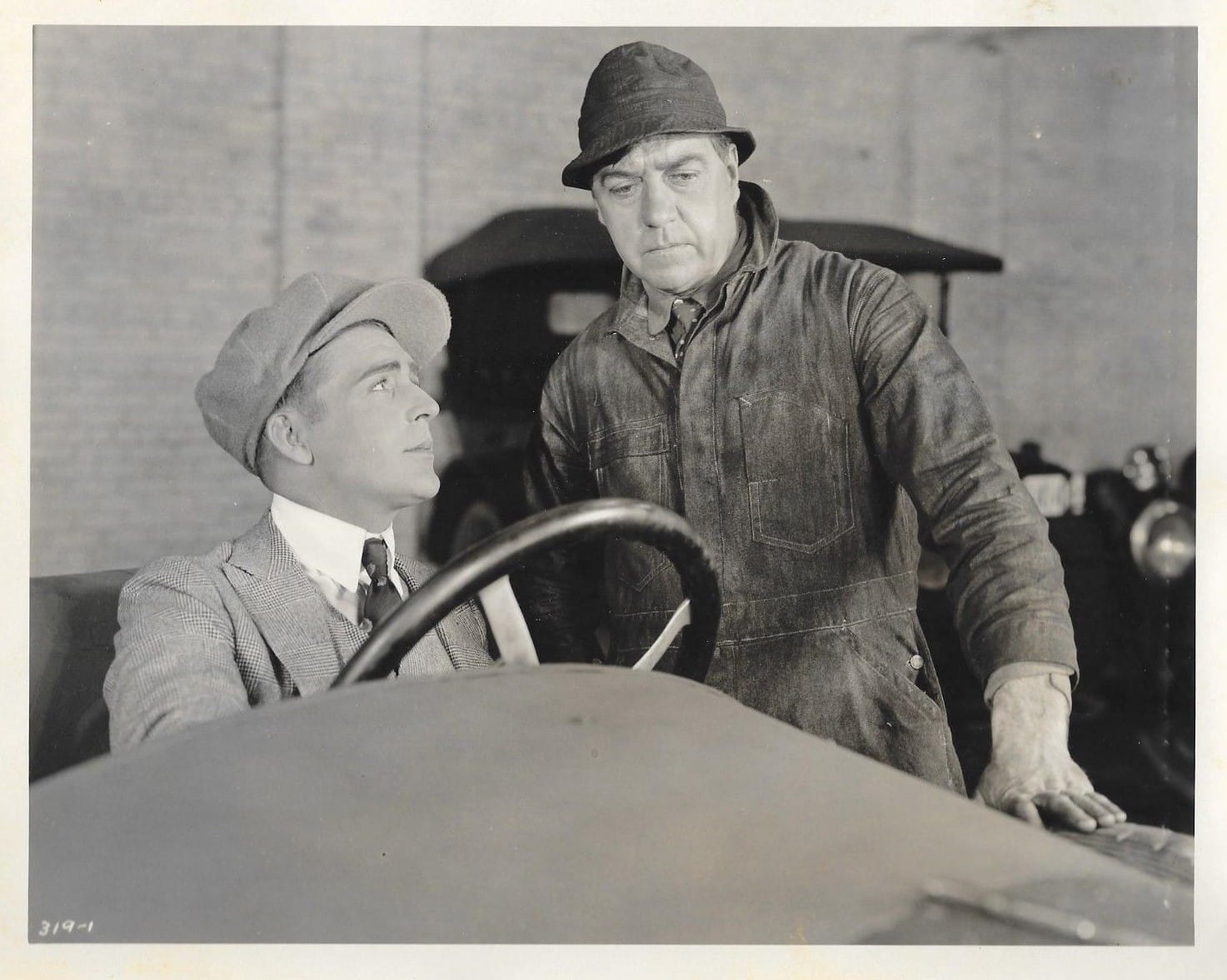
He was the headliner for a series of car films that involved risky racing scenes. One time, he fell off his horse and the animal then fell on top of him. For a while, Wally was okay with it all. He was young, had a high pain threshold, and wanted to work. Dorothy had given birth to their son and stepped away from acting, and he was also helping to fund his parents' lifestyles. He couldn't afford to stop.
In 1919, Reid was accompanying the cast and crew of his next project, Valley of the Giants, to their shooting location in Northern California. The train carriage they were riding in broke loose, spinning off the tracks and crashing. Practically everyone on board was injured. At first, Reid thought he was one of the lucky ones, and he spent hours trying to help his friends and colleagues before help arrived. But his injuries were severe. He required stitches on a three-inch gash on his scalp, and a shard of glass remained stuck in his head. He also injured the sciatic nerve in his back and had a wounded arm. Mere days after the accident, Reid was put back to work by the studio. The director had to carefully angle Reid so that his bandages wouldn’t show up on camera. Suffering from the after-effects of a traumatic crash, and dealing with stabbing migraines that left him near-infirm, he was given morphine by a studio-hired doctor.