Do You Remember: Fiona Apple, the MTV Awards Speech, and a Rallying Gen X Cry
The singular musician refused to let the world tell her what to do. Of course the world got mad.
Recently, Fiona Apple, the singer-songwriter who remains an icon to legions of Gen-X women, made a video that was shared on her roommate’s Instagram account. Apple is famously private and has no social media, so on the rare occasions when she wants to speak out on an issue, she will use the page of her friend Zelda Hallman. In the statement, she talked about wanting to find a way to talk about what’s going on in the world right now and decried her own inability to write about “this f*cking endless barrage of horrors.” She talked about not wanting to let anyone down or make her fans feel that she was purposefully being silent on salient topics they cared about. “I’m going to keep trying,” she said.
It was a very Fiona Apple moment: Candid, a bit messy, clearly very thoughtful and full of intention, and from a vulnerable place. Apple doesn’t do this very often, but when she does, we listen. It’s been six years since she released her fifth album, Fetch the Bolt Cutters, one of the rare recipients of the perfect 10 rating from Pitchfork and a bona fide masterpiece of self-realization that felt like the culmination of an era of flux. Since then, her fans wait for Zelda to offer updates or more videos from Fiona, which are sporadic but typically focused on pertinent political topics she cares about. At a time when a lot of bigger and more powerful musicians are deliberately keeping their mouths shut lest they hurt their bottom line, Apple has gotten louder, more specific, and put her money on the line (and into the pockets of those who need it.) It’s no surprise that she’s ended up like this. Actually, that’s not the right term. She was always like this, even when she’d be mocked for saying so.
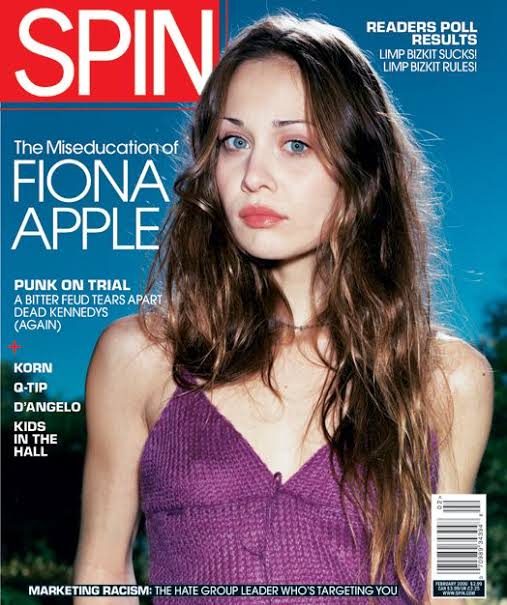
Fiona Apple McAfee-Maggart was 19 years old when her debut album, Tidal, debuted. She was immediately heralded as the next Tori Amos or Alanis Morissette, a raw and flinty singer-songwriter who penned achingly personal numbers and was reshaping what a chart-topping songstress could look like. She could sound sultry, fragile, and sinister in the same song. Tidal felt like an album from an artist twice or three times Apple's age. She would later admit that the album was her trying to prove herself as more than a potential novelty for her record label. But it’s true that critics and the press did seem fascinated by this prodigious talent who seemed to embody both her era’s no-f*cks-given aura and the lyrical dexterity of musicians gone by.
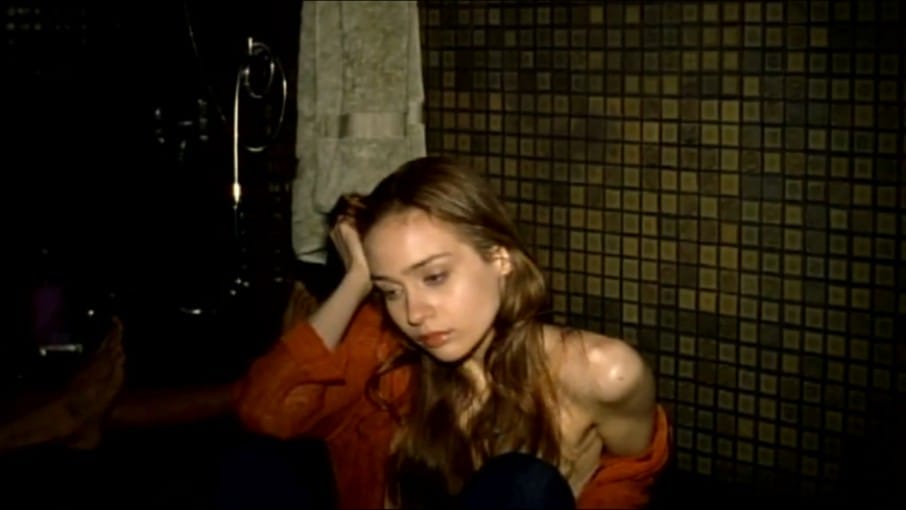
It was the third song on the album that made her a star. "Criminal" remains Apple's most recognisable song, a seductive lament about breaking a man's heart just because she could. For the music video, director Mark Romanek, one of the defining voices of the medium at the time (he did "Bedtime Stories" for Madonna and "Closer" for Nine Inch Nails), put Fiona in the midst of what looked like the aftermath of an orgy. There are bodies lain across the floor. She sings in a bath, her head between a man’s legs. She writhes around inn the backseat of a car, sans trousers. The lighting is blown out, like a bad porno or crime scene photos. You don’t see anyone else’s face. It’s a pretty damn good encapsulation of the song, and it was almost immediately controversial.
The voyeuristic lens capturing the tail end of a very fun party was deliberately provocative and inarguably uncomfortable given the fact that Apple wasn’t even old enough to drink. Apple was accused of sexualising herself and of making herself look younger than she already was. The press also couldn’t stop talking about her body, because it was the ‘90s and this just happened every damn time. Apple was derided as “an underfed Calvin Klein model” and mocked and scolded for being too skinny in equal measure.
The Calvin Klein brand had faced a lot of controversy throughout the decade for thin models and a particularly notorious 1995 campaign where young models did audition-style videos that people accused of being an example of child sexual abuse. It even led to an investigation by the Department of Justice. Apple was seen as the latest example of a weird dichotomy that seemed to define the decade: a hyper-panic over the sexualisation of children by a culture that giddily profited from it. Consider Britney in her school uniform or Alicia Silverstone in the Aerosmith videos. Society loved telling us they were protecting the kids as they gawked at teenage girls and stirred up a moral panic to go after queer people.
And, of course, the young women and girls were blamed for it all. Apple would speak candidly about her experiences of sexual assault as a teen, and the press often seemed both disgusted with her for talking about it and desperate to know the gory details. Alas, not much has changed.
Tidal gave Apple this odd reputation: the voice of a generation who was also self-serious and kind of a drag; a precocious starlet who was letting young girls down by showing off her midriff; a relatable poet who was pretentious as hell. Her fans loved her eloquence and rejection of the demands of the era. She seemed genuinely alternative and not just someone using the label at a time when it was cool to do so.
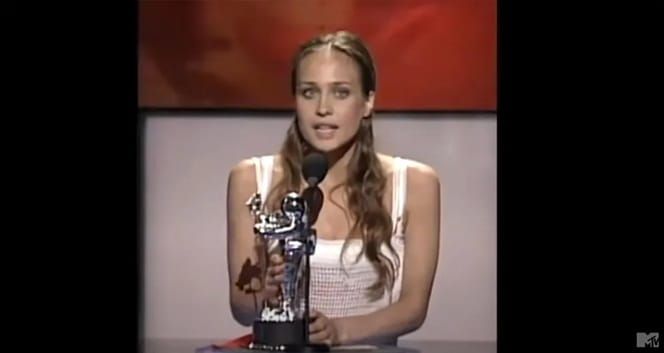
On September 4, 1997, the MTV Video Music Awards took place in New York City. Chris Rock hosted. Puff Daddy opened the show with a tribute to The Notorious B.I.G. featuring Sting on backing vocals for "I'll Be Missing You." Jamiroquai performed "Virtual Insanity" and offered a mini recreation of its already-iconic video via treadmill dancing. That song won Video of the Year, but Beck took home more awards for "The New Pollution." Mark Romanek received the Video Vanguard Award, but "Criminal" wasn't nominated. "Sleep to Dream" was, with that video directed by Stéphane Sednaoui. He was no slouch in the music video world, having shot "Big Time Sensuality" with Björk and “Ironic” for Alanis Morissette. Fiona won Best New Artist in a Video, beating Meredith Brooks and Hanson. And then came her speech.
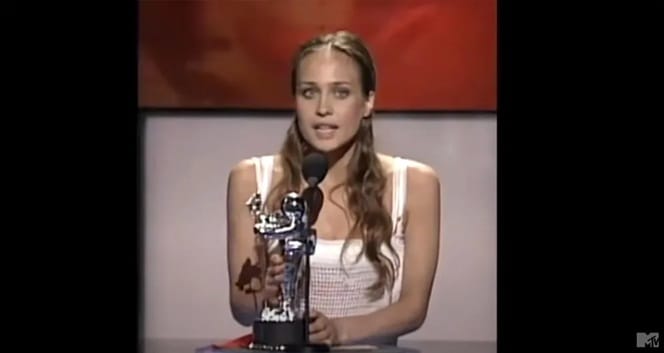
"I didn't prepare a speech and I'm sorry. But I'm glad that I didn't, because I'm not going to do this like everybody else does it. 'Cause everybody that I should be thanking, I'm really sorry, but I have to use this time. See Maya Angelou said that we, we as human beings, at our best can only create opportunities, and I'm going to use this opportunity the way I want to use it. So what I want to say is everybody out there that's watching, everybody that's watching this world. This world is bullshit! And you shouldn't model your life—wait a second—you shouldn't model your life about what you think that we think is cool, and what we're wearing and what we're saying and everything. Go with yourself. Go with yourself."
She ended the speech by thanking her mother, her sister Maude, and the song's producer, Andrew Slater. Then she told the audience. "It's just stupid that I'm in this world. But you're all very cool to me. So thank you very much." As she left the stage, Chris Rock quipped, "Let's hear it for Fiona X!"
In the room, the audience loved it. The press responses, though, were far meaner. Oh no, it’s super-serious little girl Fiona Apple trying to pretend she’s above it all again. She’s soooo ungrateful. NYRock declared it to be “one of the most ridiculous soliloquies ever to be witnessed at an MTV Awards event (which is pretty amazing in light of the competition she has).” Yahoo! would call it one of the “wackiest moments” in the awards show’s history.
Perhaps most harshly, the speech was parodied by Janeane Garofalo for a Denis O’Leary comedy album, who declared Apple to be a hypocrite for her speech. “You shouldn’t model your life about what you think that we think is cool . . . Even though I have an eating disorder and I have somehow sold out to the patriarchy in this culture that says that lean is better. Even though I have done that, and have done a video wherein I wear underwear so that you young girls out there can covet, and feel bad about what you have and how thin you’re not.”
I… think that’s supposed to be satire? It just feels like hating a barely adult woman for being honest. But it's also indicative of how the backlash to Apple was rooted in infantilising her as someone who stepped out of line and needed to be put back in her place. Rolling Stone later asked Apple about the speech, which she refused to apologise for, and rightly so. The interviewer then played her the tape of Garafalo's parody. She wasn't a fan. After crying for a bit, she said, “Of course I have an eating disorder. Every girl in fucking America has an eating disorder. Janeane Garofalo has an eating disorder, and that’s why she’s upset. Every girl has an eating disorder because of videos like that. Exactly. Yes. But that’s exactly what the video is about.”
After Tidal, Apple consciously moved away from making commercial music. Her work became more layered and less radio-friendly. Her follow-up album’s full title is 90 words long. The music became more difficult, both stylistically and in subject matter. It also was never as sexually aggressive as anything she did in "Criminal." That became the song (and the video) she tried to avoid recreating for the rest of her career. And since then, Apple's fanbase has remained devoted, waiting patiently for every new song or message.
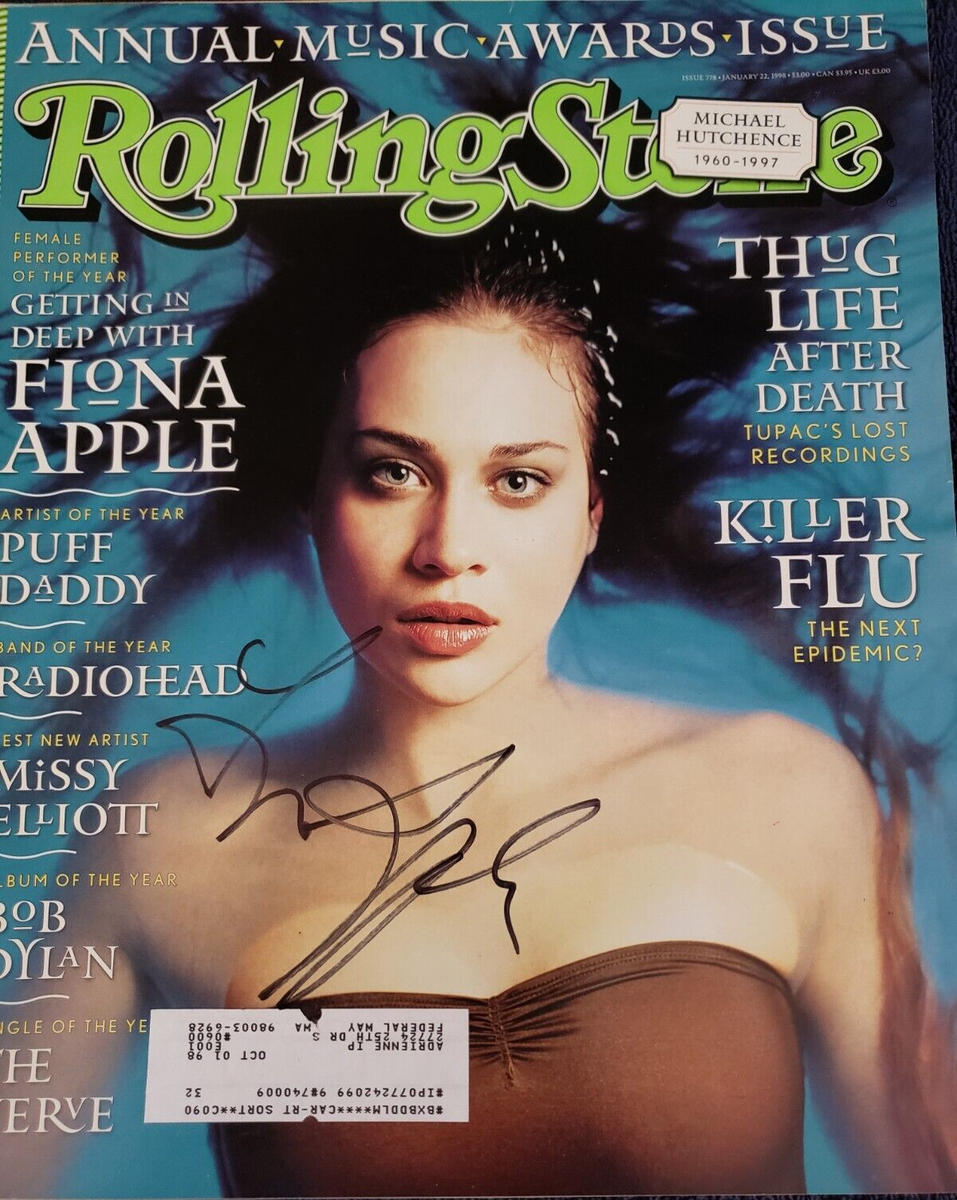
Apple's fans love her in part because of her honesty but also her consistency. "When I have something to say, I'll say it," she told Rolling Stone. And that's exactly what she does. She volunteers as a court watcher, helping to bring accountability to the justice system. In August 2020, Apple narrated a video produced by Brooklyn Defender Services, We Have Rights, and WITNESS about how to document raids and arrests by ICE. She frequently donates years' of royalties from her biggest songs to causes like refugee rights and at-risk kids. Last year, she wrote a song, "Pretrail (Let Her Go Home)" about the impact of the cash bail system on working-class women. When Apple said that this world is bullshit, she wasn’t wrong, and she’s spent decades doing the work to make it less so. What more could one ask for from anyone, much less a celebrity? She's always led the way.