ZoeBot: The Rachel Zoe Years and the Size Zero Takeover
The rise of boho chic, the Zoe Bots, and hyper-skinny panic.
CONTENT WARNING: This piece discusses eating disorders.
When I was a teenager, I wanted to dress like Sienna Miller. I had the boho skirts and crocheted tops from New Look, and coveted a floppy wide-brimmed hat so that I could live my best “screw you, Jude Law” adolescent fantasy. I didn’t look as desired, of course, because normal people never live up to the ads. But it was looking at this style of fashion in local shops during this period that I first saw a size zero dress. It seemed unfathomably small to me, a slip of a thing that wouldn’t have looked out of place in the kids’ section. Suddenly, it felt like size zero was everywhere, and everyone was talking about it. If this panic had a face, it was the stylist who became inextricably connected with the hyper-thinness of the mid-2000s.
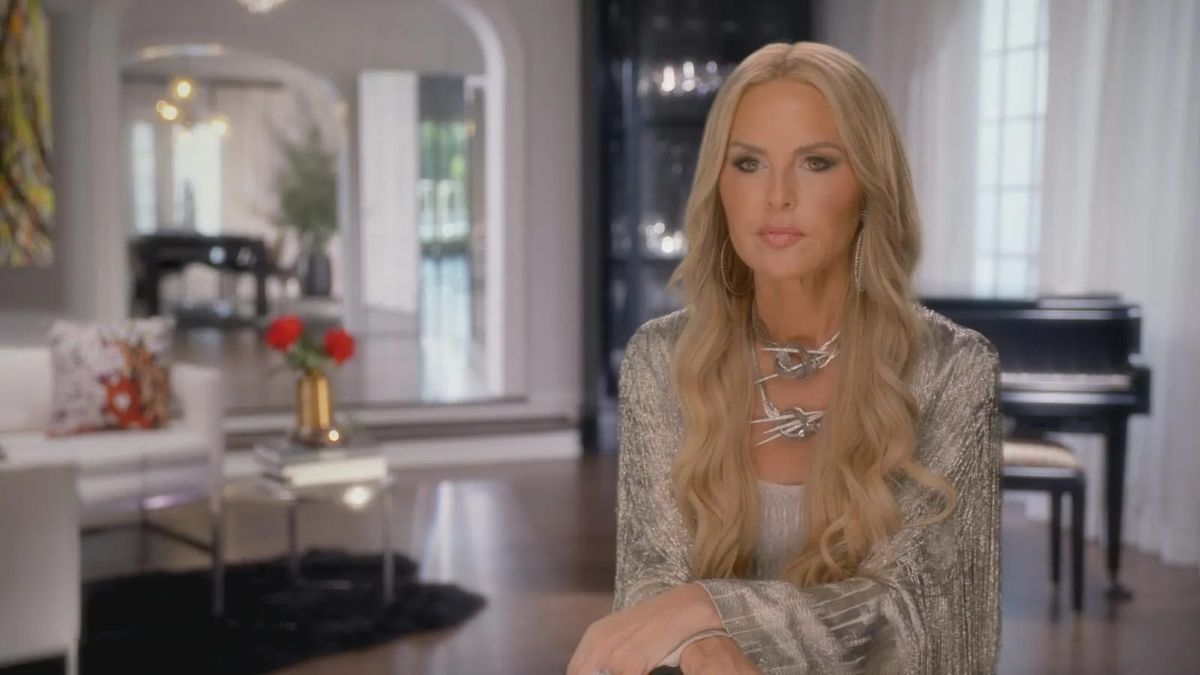
If you read any celebrity reporting from 2004 to 2007, the chances are high you encountered Rachel Zoe. In a short period of time, she became the most famous stylist on the planet, dressing A-Listers and reality TV stars alike. For a while, it seemed that every woman in Hollywood was wearing long headscarves and peasant dresses, thanks to her influence. Her boho-chic rich girl couture, vintage-inspired but oh-so-expensive, was everywhere, worn by some of the most photographed women of the time. And as those women’s bodies became more and more scrutinised, the press put the blame at the feet of the stylist.
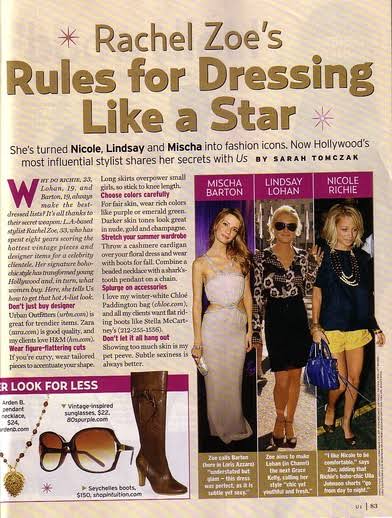
Born Rachel Zoe Rosenzweig, she got her start in fashion working for the now-defunct teen magazine YM before making the leap to freelance publicity. Soon, she moved into styling, and landed her first big client, Jennifer Garner. "My mission, when I moved here [to Los Angeles], was to try, somehow, to merge the worlds of fashion and celebrity," she told Vogue. In the years that followed, she did red carpet dressing for the likes of Keira Knightley, Anne Hathaway, and Cameron Diaz. Her A-List premiere styles were pretty traditional for the space, but also frequently gorgeous. This seafoam green number on Hathaway is stunning. But this wasn’t what made her famous. When you think of Rachel Zoe, what first comes to mind is street style and Nicole Richie.
After her breakout moment following the unexpected success of The Simple Life, Nicole Richie went from an unknown nepo baby to a star in her own right, albeit a frequently mocked one. Nicole was the “chubby” BFF of Paris Hilton, who was derided as the embodiment of the “stupid girls” era that Pink wrote that dumb song about. The press obsessed over Paris, Nicole, Lindsay Lohan, and their coterie of hot young starlets, all while scolding them as the embodiment of civilisation’s failures. In the pre-Twitter era when tabloids still ruled the roost, but Perez Hilton was emerging as the snarker-in-chief, these women were easy targets. For Richie, who didn’t really do much beyond reality TV and who needed an identity outside of Hilton, fashion was a way to reshape her celebrity.
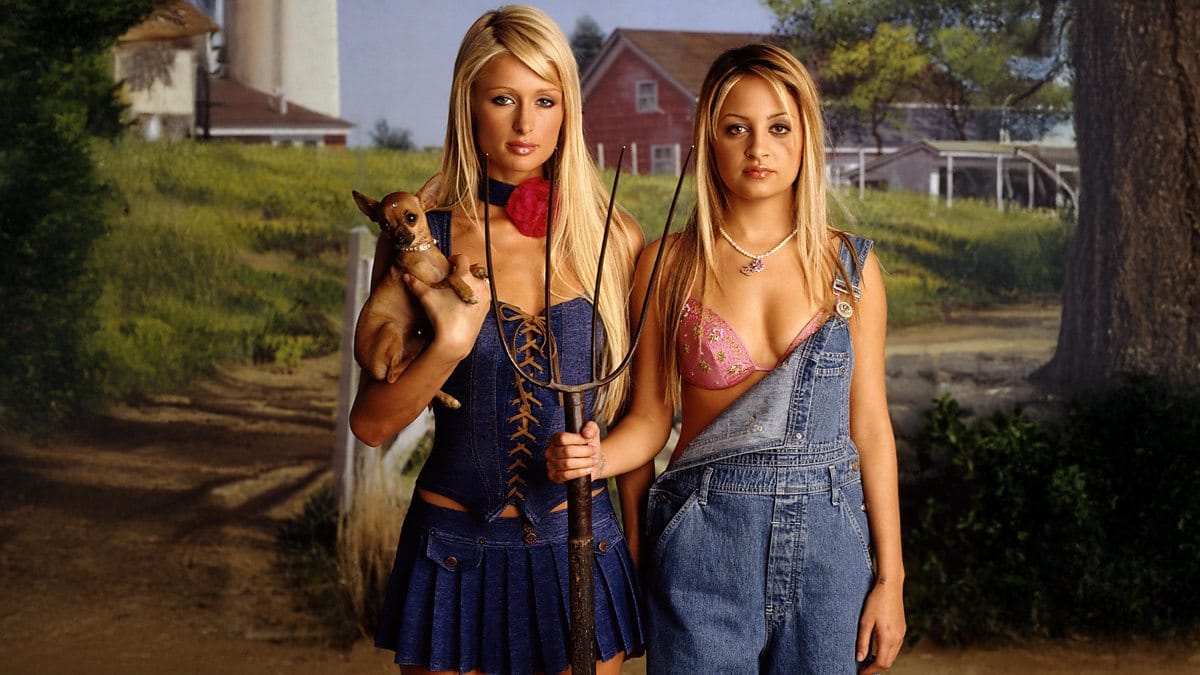
She hired Zoe and suddenly became a style favourite. Nicole’s kaftans and sandals were the polar opposite to Paris’s hot pink party girl look. If the goal was to make her seem like the cooler of the two, at a time when they had a much-discussed falling out, it worked. It also made her seem, if not more relatable to her audience, then at least more easily aspired to than Hilton’s adornment of jewels and Juicy Couture. The Nicole look seemed way more attainable than the Paris one, and that mattered because Richie’s core fanbase was teenage girls. It seemed retro but fresh, flowy and comfortable but still sexy. There was nothing minimalist about this look.
Lindsay Lohan, who was making the transition to adult roles, started using Zoe’s services, as did Mischa Barton, who was a breakout star on The O.C. They, along with Richie, were photographed everywhere they went, and where they went was a ton of nightclubs. The press’s agenda with these young women and that whole era of paparazzi chases, DUIs and feuds probably deserves its own post. With the Zoe look, even when these women were being derided for their “bad behaviour”, what they wore was obsessed over.
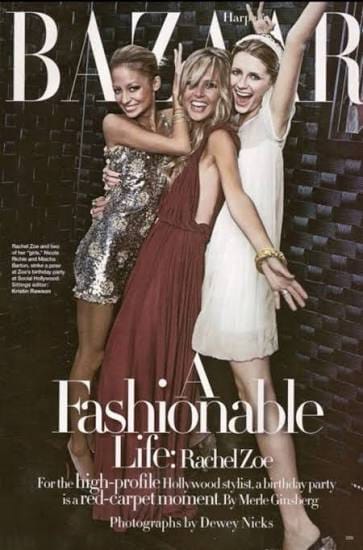
The Rachel Zoe look was instantly recognisable during this period: oversized sunglasses, big jewellery, loose-fitting shirts and long flowy skirts. And, of course, thinness. It was casual but monied, a Grecian goddess crossed with a Palm Beach socialite. The expense of it was evident, at least on these women. Compare them to the other face of so-called boho chic at this time, Sienna Miller, who always seemed more spontaneous and lived-in with her looks. Where Miller's look felt natural, Zoe's clients seemed like a project, and it was one where everyone started to look the same. Nicole, Lindsay, Mischa… it was like a uniform. And the skinnier they all got, the more the Zoe look began to feel like something bigger than a mere fashion trend.
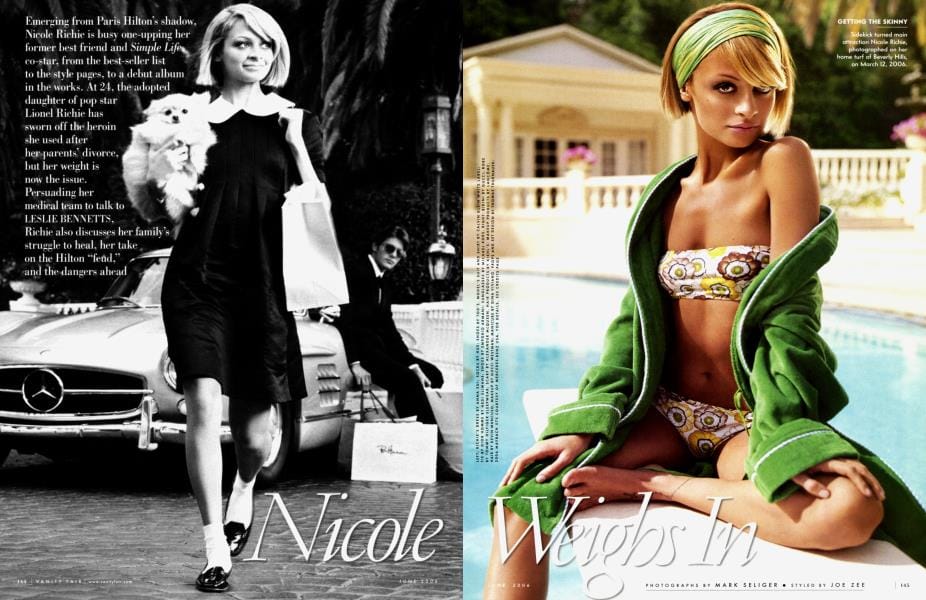
The Zoe look, with clunky bracelets and chic kaftans, made these women look even smaller than they already were, swamping them in fabrics and metals that dwarfed every part of their bodies. When you saw Nicole Richie carrying an oversized bag, with half her face concealed by bug-like sunglasses, she seemed frail. Her Zoe era coincided with a period of drastic weight loss. Photographs of Richie on the beach in a bikini were gawked at with leering concern. Lohan also grew noticeably thinner. I remember very cruel “eat a sandwich” jokes being made about the pair on TV, and someone selling t-shirts with their images that said “Starve Wars.”
Eating disorders can be competitive for sufferers, but the seeming desire to be skinny was treated by the media as another sign that those damn women were stupid and setting a poor example for the children. Anorexia and bulimia are frequently derided as selfish by those looking for an easy target, and therefore acceptable to mock. Remember that “Stupid Girls” song and Pink mocking women with bulimia? Wow, she really did always suck, didn’t she?
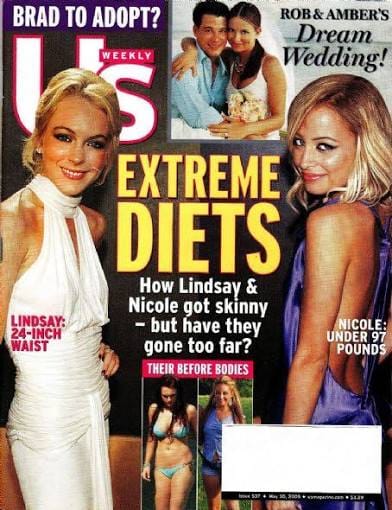
The size zero (UK size four) fury was the inevitable endgame of the era’s intense body shaming. As we’ve discussed before in this newsletter, it didn’t take much for a woman to be derided as too fat to be seen in public by the media. Consider Britney Spears, Brittany Murphy, Kate Winslet, Jessica Simpson, Hilary Duff, and basically any woman who had hips. The same magazines screaming about Lohan and Richie getting too skinny were circling other women’s bodies and laughing at their “muffin tops” and “bingo wings.” While the goalposts of beauty standards are forever moving and there’s always been a kind of faux-concern over thinness, being skinny has always been seen as more desirable than being “fat”, however that is defined.
Rachel Zoe was fingered as the source of the problem. As Richie and Lohan got thinner, they started to look more like Zoe herself, who is very slender. The press nicknamed them the ZoeBots. Rumours swirled that she was pressuring her clients to lose weight so that they’d look better in her chosen outfits, and that she never provided anything in a size larger than zero. I remember hearing stories on OhNoTheyDidnt about Zoe allegedly providing diet pills for her clients, whom she called her "girls." The L.A. Times claimed that, "Fashion insiders have whispered privately that Zoe is single-handedly bringing back anorexia."
Richie took to her Myspace page (ah, remember those days?) to share some coded feelings on an unnamed person who everyone assumed was Zoe. "What 35-year-old raisin-face whispers her order of three pieces of asparagus for dinner at Chateau every night, and hides her deathly disorder by pointing the finger at me, and used her last paycheck I wrote her to pay for a publicist instead of a nutritionist? HINT: Her nickname is Lettucecup." Lohan then posted a smiley face and added, "Hmmmm ... no comment."
To save face, Zoe released her own statement to TMZ: "After trying to be a good friend to Nicole, we made a mutual decision to sever our working relationship. Changes are inevitable in any business relationship. I am very fortunate to have such a wonderful life; I have been married for 10 years and have been a stylist for more than 15 years. And I am lucky to work with such a diverse group of women, of all shapes and sizes, that inspire me every day. I have nothing but love for Nicole and wish her only health and happiness."
Nobody really believed Zoe. Her claims of having clients of all shapes and sizes was clearly nonsense, and she had become synonymous with this small group of women whom she dressed to look like an extension of herself. It didn’t help that she was also frequently on the same red carpets as her clients, arm in arm and in similar outfits. Stylists weren’t typically this public, and they certainly didn’t try to turn themselves into the celebrity. Nor did they dress their clients as an extension of their own style.
Zoe had to respond to all of these claims. Of the diet pill rumours, she said, "Anyone who knows me, they laugh. I’m so drug clueless. If I can get through a glass and a half of wine in a night, that’s a momentous occasion." In a 2008 interview with Harper's Bazaar, she said, "Truthfully, I've never seen myself as being too thin. Sometimes I'll look at photos and be like, 'Oh, that's not a good look.' But generally speaking, I'm not too thin." Clients Cameron Diaz and Eva Mendes also refuted claims that she made them lose weight.
When asked if Richie was maybe on the thin side by The Guardian, Zoe replied, "Nicole does NOT have a problem. She's the smallest-boned person I know." Richie later admitted to Vanity Fair that she was “too thin right now" and that she'd started "seeing a nutritionist and a doctor. I was scared that it could be something more serious." The magazine still had her pose in a bikini, of course. That same year, Lohan admitted to struggles with bulimia, which she then claimed was a misquote, but still acknowledged that she had gone through a period of dangerous weight loss.
Rachel Zoe obviously did not invent thinness in the fashion industry. From Twiggy to heroin chic to the current age of GLP-1 fetishisation, there has never been a time in the business where being as thin as possible hasn’t been considered the desired status quo for designers. I think the ZoeBot era became notorious because it drove home how homogeneous this kind of body fascism is. Corporatised beauty standards do not make room for difference or diversity, and here we had a stylist who seemed to be shaping all of these very different women into the same person. It’s always been easier to scapegoat one individual than force a reckoning on a systemic problem. Becoming the face of a cultural sickness that demands women become smaller and more compliant for patriarchal and capitalistic control is a thankless position, and an unfair one. At the very least, though, Zoe had an unhealthy dynamic with Richie that may have exacerbated her problems. The pair have since made up.
Zoe has returned to the spotlight as a new cast member on The Real Housewives of Beverly Hills. Her style is still very boho, albeit with leather suits thrown in now and then. And skinniness? Well, we know how that’s going these days.
Personally, I’m of the opinion that if your fashion only looks good on one hyper-specific kind of body, then it’s probably not a great piece of clothing. Brands have fled from body diversity in the past couple of years, a move that feels not coincidental given the ubiquity of Ozempic in everyday life. There are still some great stylists out there doing amazing work with larger bodies, such as Kelly Augustine, who has been dressing Gabourey Sidibe this year, but they are the exception. There is no one nefarious force dictating the body trends of the moment, and it’s always more cathartic to lay the blame at the feet of one notable person. We just went through this with Ariana Grande. There’s never been a time when thin wasn’t in, and the industries of fashion, entertainment, and social rules will always prefer it.