Why We Can (Not) Talk About Ariana Grande
Okay, let's talk about it. Or not.
CONTENT WARNING: This piece discusses disordered eating, body-shaming, and the issues surrounding them both. Approach with caution.
I keep getting asked to talk about this. It is my job to discuss celebrity culture and to find ways to reconcile the various intersections of fame, gender, society, money, health, etc. I’ve been writing a lot of pieces lately on weird Hollywood fad diets and how insidious the body-shaming of the 2000s and 2010s was for people like me who grew up amid it. Really, that’s been my roundabout way of getting at the elephant in the room without directly confronting it. But then we all saw the latest music video by Ariana Grande, and the thing people had been tiptoeing around for months became impossible to ignore.
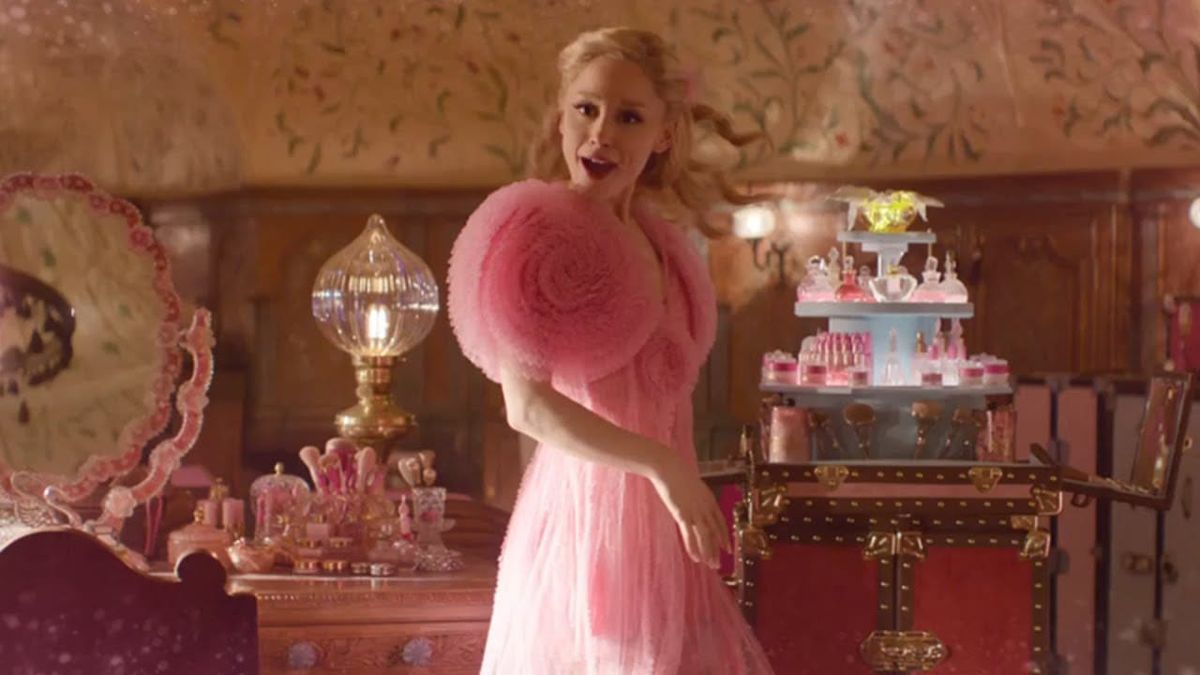
“Ariana’s gotten very thin” was a sentence I heard a lot during the press tour for Wicked: For Good. She and her co-stars did seem to be noticeably skinnier than they had been in recent years. Indeed, we were growing used to seeing women on the red carpet getting smaller and smaller. With Grande, who has always been petite and has been through some traumatizing things over the years, it felt different. It was tough to ignore how prominent her ribs and collarbones suddenly were, or how sluggish she seemed in videos of her current tour. I couldn’t finish watching her newest music video because I was truly upset by how frail she looked. I obviously wasn’t alone on that front, even as the Arianators cried body shaming and said it was cruel and antifeminist to talk about it. The headlines were full of shock and scorn. The discourse has been noisy and circular. We’ve spent years telling one another, “don’t talk about people’s bodies.” So, how do we confront, you know, all of this?
It’s not that her fans are necessarily wrong, even if their rhetoric veers between smug and ignorant in the name of support of their idol (doesn’t standom do that all the time anyway?) We’ve got decades of evidence of how celebrities, particularly female ones, become objects of derision and gawking mockery at the hands of the press when their bodies demonstrate any sign of change. The tabloids spent years declaring anyone over a size eight to be dangerously overweight and worthy of shame, but those who bowed to the pressure or dealt with disordered eating behind the scenes were soon the subject of headlines about how they’d “gone too far.” I remember the ways that Nicole Ritchie and Lindsay Lohan were made fun of for being very thin, and how any consideration of their health was framed as a ghoulish dissection of their “skeleton” bodies and how they were “letting down their young, impressionable fans.” It’s never the wider culture’s fault, just the single individuals who feel the most unbearable pressure to conform.
Does anyone feel the benefit of clickbait videos or headlines gasping about Grande’s bones or comparisons to cancer patients? I cannot imagine a single person reading such press and thinking, “Well, that’s made me feel like I’ve helped, and all of my own insecurities have vanished!” The messaging isn’t exactly consistent, anyway. How do you quantify this kind of concern, real or otherwise, with the fact that every second ad online is for a GLP-1 or new pseudo-starvation diet plan?
The societal rhetoric may now claim that some people (read: women) are getting too skinny, but it’s not as though they’ve done anything but ceaselessly lavish praise upon the notion of thinness. It’s still the desired norm, and any display of curve or muscle is met with a chorus of people saying you need to lose weight and oh wow, don’t you care about your health? Fat people are still hated with a ferocity that is overwhelming, and the rules are different for how their wellbeing is discussed. I understand Grande’s fans’ concern for her mental health amid such rhetoric, but it’s not a privilege afforded to anyone above a size 18.
As Roxane Gay noted on her Threads account, “People comment on fat people’s bodies constantly. They often cite that they are merely concerned about fat people’s health. So much concern for our health. But when you comment on someone who is dangerously thin all of a sudden, there is a rigid morality around not discussing people’s bodies even when they look very unwell. The hypocrisy is grating.” And she’s right. In the grand scheme of things, society would far rather you be underweight than overweight, even though the health concerns of the former are major and often underdiscussed. If you went “too far” in weight loss, you’re still not allowed to gain too many pounds lest the cycle begin again.
The gaslighting has been insane. It didn’t start with Ariana, obviously. It was every celebrity whose face stopped moving even as they insisted it was all just good genes and hydration and hey, have you tried my new skincare line? It’s Oprah spending decades shilling quacks and fad diets, making millions from Weight Watchers, then doing a TV special on the GLP-1s she took so she can partly claim credit for “breaking the stigma.” It’s influencer fitness trainers with obvious BBLs claiming their workout routine will get you the same body if you’re disciplined enough. The Kardashians got rid of their BBLs and size zero is back. The already incremental progress the diluted media-friendly version of body positivity got us has been rolled back with ruthless efficiency. The culture demands that fat people suffer to get thin. They sell you GLP-1s then tell you that you’re taking the easy way out. Loser incel bros on social media clip videos of perfectly average women at the gym then berate them for not eating 900 calories a day and doing six hours of cardio.
The cycle of body fascism remains a profitable one, and we’re forever being sold new and shiny ways to hate ourselves, with a quick-fix option for the right price. Why wouldn’t you feel dizzy and aggravated trying to navigate this?
Eating disorders are a tricky force. They’re a psychological landmine that constantly deceives you and moves the goalposts with rapid frequency. Many recovering patients of anorexia and bulimia talk about how loved ones’ fears over their thinness felt like validation. Every shocked reaction or gasp was a sign that they were on the right track. You feel encouraged to accentuate your losses, through revealing clothing or body checks on social media (or music videos where you’re styled by Law Roach.) Bad attention is good attention. But ultimately, it can all feel incredibly corrosive to the patient. Even if the illness makes you crave those cruel comments as a bastardized form of proof, there’s only so many times you can be hectored before you feel that rot set into your brain.
A ton of people on Grande’s team had to approve her new video, had to sign off on outfits that accentuated her frailness and sold it as the glamorous new era of Ariana. Given how loud the conversations have been around Grande over the past few years, they knew the responses it would elicit. Given how major a star she is, I can’t imagine her record label or inner circle being unaware of how her image is used, especially now that pro-ana sites and social media accounts are celebrating this video. Wilful ignorance can only get you so far.
Jameela Jamil, who has been in recovery from anorexia for several years now, noted the “trolley problem” of the “shrinking pop star situation.” Either you comment on it, kindly or otherwise, and risk impacting the person’s physical and mental health, or you ignore the issue and watch as hyper-thinness and malnutrition becomes the new norm. Hell, we’ve been there for a while already. Low-rise jeans made a comeback. Even amid all of this concern for Grande, and I do think most of it on the ground level is earnest, we’re being told every single day that we could always be thinner. For women, from a young age, it’s an expectation, a signifier of our moral and cultural worth. Watching famous figures like Karen Carpenter struggle with eating disorders didn’t make the culture more empathetic. It just gave them more fodder to hate women with.
Whatever Ariana Grande is going through – and none of us really know for sure – one can only hope that she finds good people to surround herself with, because I don’t think her current team meets that standard. It’s also worth noting that, if she is going through another kind of serious illness, then she shouldn’t be on tour. It’s also a poor defence from the comments because “she’s clearly happy and healthy” and “what if she’s got a disease” are mutually exclusive stances, Arianators.
While I was writing this piece, Grande’s team released a statement saying that she plans to take time off after her tour, meaning she will no longer be making her West End debut in Sunday in the Park with George. The statement kept repeating the word “healthily” and was, it must be said, a pretty passive-aggressive read. While I doubt anyone expected Grande’s team to make any announcements regarding her health, it felt pretty icky to me that they kept insisting the real problem was the scrutiny surrounding her. How dare you care, even as we demand that you snap your fingers in joy at her latest music video. They still want you to put money down to watch her sing live. Dance monkey dance, right?
I feel like we all have so much more to say, but we’re terrified of exacerbating an already precarious situation and further turning it into a sideshow where the stakes get higher and the headlines sleazier. True concern and a desire for change have become poisoned by the dual forces of corporatisation and control. Every moment of a person’s suffering is an opportunity for someone to make money and reinforce a rotten status quo.
And that’s why we can talk about it, and why we can’t. It’s an unwinnable system made toxic to the core by generations of the world defining the ideal woman’s body as that of a child, of hating fatness so much that self-harm is preferable to largeness, and of turning it all into a for-profit spectacle. But talk about it we must, right? The conversation still matters, if only so we can have at least one voice amid the noise that knows none of this is normal. I wish I had the solution, or at least a salve to the pain that so many people are going through right now. For now, we’re all hyper aware that there’s really nothing we can do.