Single Female Lawyer: Ally McBeal, Body Wars, and the Death of Feminism
It was one of the most talked-about shows of the late '90s. Did it set women back an era? No, but wow, the discourse was a lot.
Content note: This piece discusses issues of disordered eating.
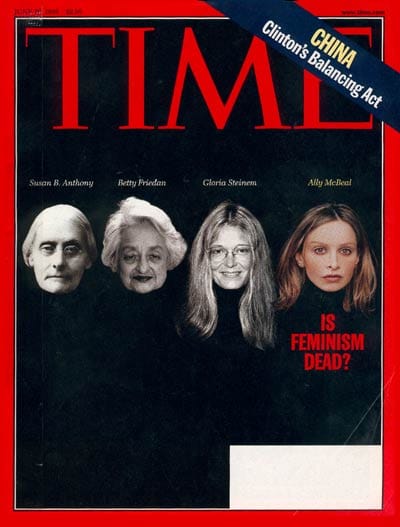
Susan B. Anthony. Betty Friedan. Gloria Steinem. Ally McBeal. Is Feminism Dead?
That’s the headline that dominated the cover of the June 29, 1998, edition of Time Magazine. Accompanying that rather incendiary headline was an article by Ginia Bellafante that argued "today's chic young feminist thinkers" were more concerned about themselves than the wider fight for equality, and Ally, a fictional character on a network TV show, was emblematic of the problem. We used to have Madeleine Albright and protests, and now we have Spice Girls and fad diets.
It was, of course, a bananas cover, and the overall story, while full of salient points, is full of holes that put too much blame on individuals and a younger generation that, provably, did a lot of boots-on-the-ground work for the cause. But, of course, what people remember from that story is Ally McBeal and the image of Calista Flockhart juxtaposed against iconic feminist leaders, as though she’d grabbed women’s rights by the scruff and dragged it into the gutter. What can I say? It made sense at the time.
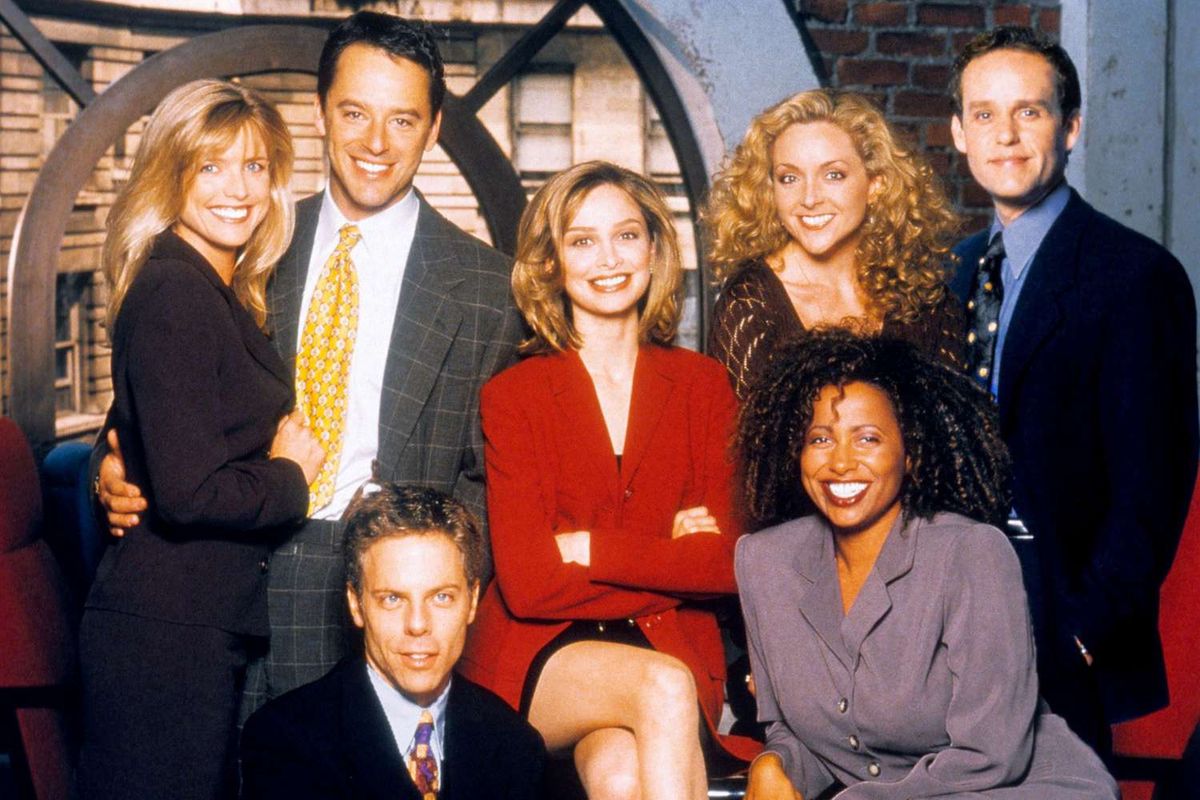
In 1997, Ally McBeal premiered on Fox. Created and largely written by David E. Kelley, showrunner on The Practice and later Boston Legal, the show was a kooky comedy crossed with a legal drama that featured surreal asides, piano bar solos, and a level of horniness rivalled only by adolescent boys and romantasy novels. Ally was a hard-working and ambitious lawyer who loses her job due to sexual harassment and ends up working at the firm Cage & Fish, where her ex-boyfriend and his wife now work. It was a massive hit, running for five seasons, winning a ton of Emmys, and making stars of its cast. It was also an endless hotbed of discourse. Ally was viewed as either a sparky screwball heroine or a massive failure to women everywhere. She and her colleagues, stuck in their unisex bathroom, were dissected endlessly as though the future of gender relations rested on their lithe shoulders.
You know how some pop culture feels so indelibly of its time that it quickly becomes a relic? Like how Hamilton, which is brilliant, cannot help but feel like the most Obama-era show possible? Ally McBeal is the most late-Clinton-era thing I’ve ever seen. It’s a fizzy slice of sex, careerism, and Gen-X wackiness that could only have been made in 1997. Times were good, money was everywhere, Clinton hadn’t been impeached yet, and hot white cosmopolitans dominated television. It occupied a world like ours but two steps into the uncanny, with dance numbers, CGI babies, and that famous bathroom.
And Ally, played by Flockhart, was a woman on her world and in her own one: hopelessly romantic, career-driven, easily distracted, forever worried about her biological clock and the passage of time, and clumsy. She imagined her colleagues, clients, and passers-by as animals, and often seemed surprised by her own mind’s conjuring. The character was an updated version of a screwball heroine, the kind you could imagine being played by Miriam Hopkins in the 1930s, but her status as a “thoroughly modern woman” who was also constantly thinking about boys made her an unexpected adversary to many in the pop culture sphere. Like Time Magazine, which said of her (and fellow romantic singleton Bridget Jones), "The problem with Bridget and Ally is that they are presented as archetypes of single womanhood even though they are little more than composites of frivolous neuroses."
Time wasn’t the only publication to take swings at Ally and company. She wore very short skirts, pined after a married man, and was prone to big emotional outbursts. In her piece "Cautionary Tales of Liberation and Female Professionalism: The Case Against Ally McBeal", Michelle L. Hammers said, "McBeal operates as a cautionary tale about the dangers presented by the co-optation of postfeminist and third-wave feminist discourses as they relate to current professional discourses surrounding the female body." The F Word wrote in 2001 that the show was "knowingly and deliberately sexist." Kelley probably didn't help his case by saying stuff like, "She's not a hard, strident feminist out of the '60s and '70s. She's all for women's rights, but she doesn't want to lead the charge at her own emotional expense."
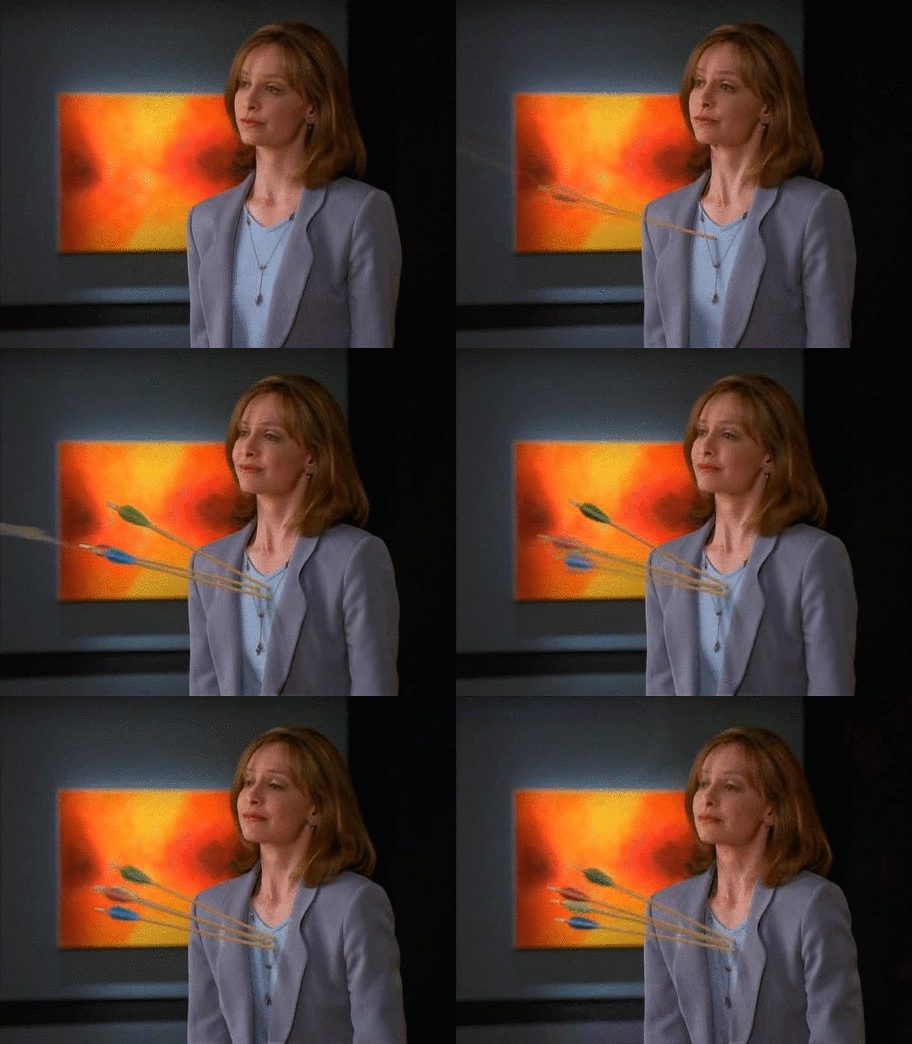
I think many of the criticisms are fair. You watch some episodes of Ally McBeal, and you just want to drag her into a corner and tell her to get it together. I had forgotten just how aggressively horny the show was, but wow, all they ever talk about is sex, and sometimes in ways that are kind of gross. It’s a proudly immature show at times, sticking its tongue out and wagging it at the audience, often literally. But it’s also a show clearly not set in the real world. Ally’s a kook, but so is everyone, including the men (shout out to our comedic king, Peter MacNicol.) If all the surreal asides weren’t enough to prove that, the dialogue, which is rat-a-tat-tat speedy and mannered, will do the job.
Look, I get why people hated this show. It’s deliberately a lot, and it’s aggressively of its time in terms of jokes about women, fat people, queer people, and anyone who seemed like an easy target. With the distance of time, it’s easier to watch it and not think about whether or not Ally is aiding the cause. We probably expected too much from one TV show, and one written by a man at that. But I couldn’t help but want to dive in further on why this show, of all the massive network hits of the 1990s, became so obsessed over.
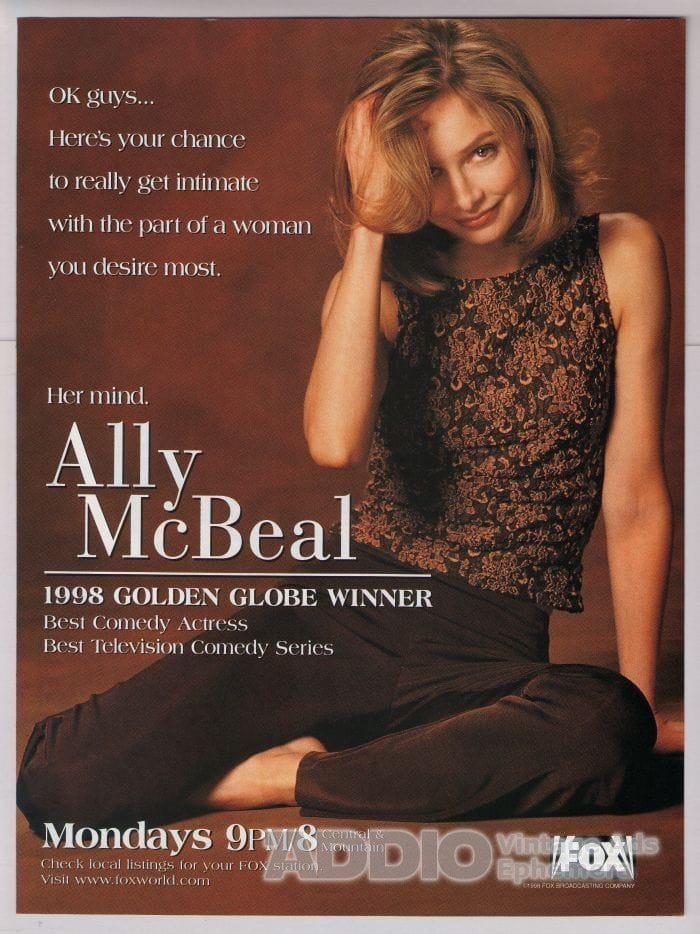
It wasn’t just feminism scares that smothered Ally McBeal. It was body fascism. I was a kid when the show first aired so I didn’t watch it (my parents never did either), but even then, I was keenly aware of the wall-to-wall coverage on both sides of the Atlantic over the thinness of the female cast.
Calista Flockhart is a very small woman. She's slim and always has been. The show often made jokes about it (as well as plenty of fat jokes about other characters, which every damn show of this era did.) As the show went on and became more popular, she seemed to get skinnier. People were not kind about it. The Guardian sniped that her body "looks to be constructed out of flesh-covered pipe-cleaners." One radio station suggested a "Meals for McBeal" drive and threatened to send truckloads of Twinkies and Ring-Dings to her trailer. Mad TV did parodies of the show, including where Flockhart collapsed from anorexia, and another featuring a Happy Meal parody of her diet, including laxatives and a fake finger to induce vomiting.
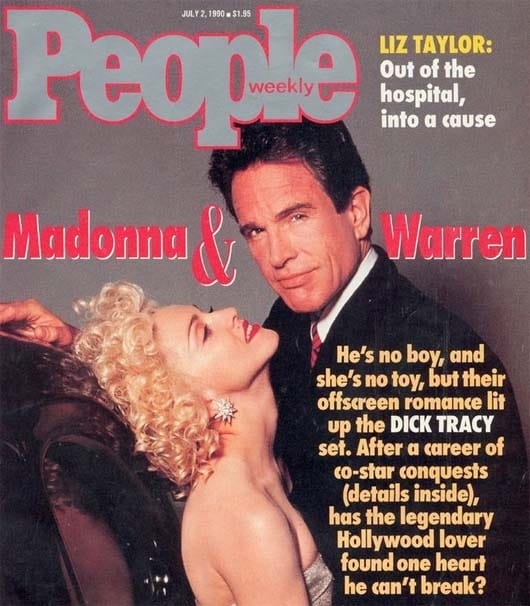
At one point, a CBS affiliate in New York reported that production on Ally McBeal had been halted "indefinitely" because Flockhart was undergoing treatment for anorexia. Her team quickly shut that story down. This came after her appearance at the 1998 Emmys, where she wore a white backless gown that had people freaking out over her visible bones. Eventually, she had to do the pre-requisite sit-down with Barbara Walters and answer questions about whether or not she ate. A cover story for People had the title "Am I Anorexic? ... No." Once again asked about her body, Flockhart said, "I guess I don't know the exact definition of anorexia. But I eat. I eat normally. I eat whatever I want, whenever I want. I don't have a messed-up relationship with food...Am I anorexic? I guess my answer would have to be no."
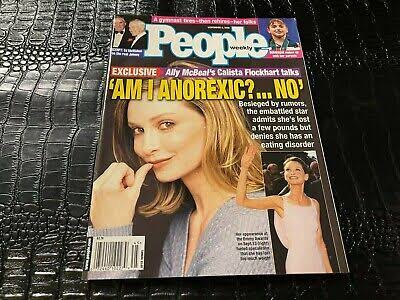
The pressure must have been tough for Flockhart. Imagine being blamed not only for the death of feminism but for a generation of hyper-skinniness. Heroin chic was only a few years prior, so it's not as though she was heralding a new age of bodies for women. And skinniness, especially ultra-thinness, never really goes out of style. The endless coverage of her body was a real trap. A few years after the show ended, she admitted that the stress of 15-hour workdays and anxiety over the series’ concluding led her to over-exercising and omitting meals from her schedule.
The press may have condemned her thinness but they also called anyone larger than Flockhart fat. It made an impact on a lot of women, including Flockhart’s colleagues at Ally McBeal.
Courtney Thorne-Smith, who played Georgia, Ally's romantic antagonist, admitted in 2000 that she had been struggling with an eating disorder. ""I started undereating, overexercising, pushing myself too hard and brutalizing my immune system," she told Us Weekly. The pressure to stay thin caused her to step away from the show. "To be totally honest, if I could be thinner without it causing a lot of pain and anxiety in my life, I would be," she admitted.
Portia de Rossi has written candidly about her struggles with anorexia and bulimia. In her memoir, Unbearable Lightness, she discusses how her time on the show exacerbated many of her problems with her weight. While she says there wasn't any active pressure to be thin from her cast and crew, being on TV and having to do striptease scenes made her spiral. "The only thing I really had control over was how I looked and what I weighed," she told Oprah. She fell into a cycle of endlessly exercising on-set and consuming only 300 calories a day.
The rumours began to swirl that there was a competition on set: Who could be the skinniest star of Ally McBeal? The thin wars were on, and the women of the show were the competitors. But it wasn’t just this show. The women of Friends faced similar accusations around this time. Joan Rivers, never one to let an easy fat joke go by, said of Helen Hunt during a red carpet appearance, "[She] doesn’t weigh as much as Kate Winslet’s arm." One newspaper derided Lara Flynn Boyle (who had auditioned to play Ally) for being "blade-thin, so extraordinarily skinny and brittle that she looks as if she could shatter into a million pieces."
The self-righteous berating of these very thin women as being a bad example to young girls was hard to swallow given that anyone larger than underweight was slammed as hideously large and ugly. Consider the way Kate Winslet was talked about when she became a big star thanks to Titanic. Body fascism prizes thinness, even as it shames those who “go too far.” Flockhart and company may have been thrown under the bus for being “anorexic”, but it’s not as though the industry stopped prioritising that level of skinniness in the casting process. We didn’t see an influx of plus size women on TV post-Ally. We’re not seeing them now either.
Re-reading and watching all things Ally made me think a lot about our current times. We really do go through the same cycle of bullshit over and over, don’t we? It’s been hard to watch women in the public eye get thinner and thinner, and for the responses to veer between abject denial and furious scorn. How do you lecture all of these women for getting so small when you spent all those years telling us that nothing about our bodies was acceptable? When your moral, romantic, financial, and cultural worth is measured on a scale, it’s no wonder crash dieting and GLP-1 abuse has soared.
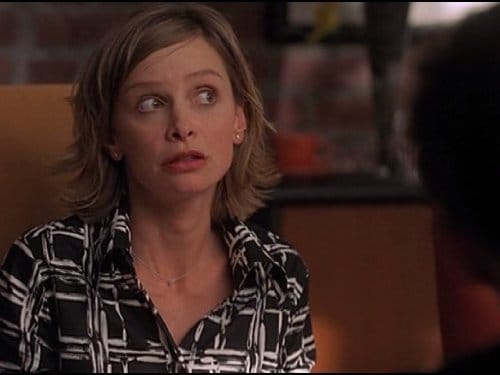
The press singling out Calista Flockhart as a disappointment for a character she played didn’t make things any better for anyone. Interrogating her over her diet, whether you believed her claims of being healthy or not, certainly never led to body inclusivity in the media. There’s a bleak history of the celebrity media demanding that women answer for the crimes of body politics, and pushing that spotlight into a handful of people seldom ends well. You can only act so concerned about it before it veers into outright sneering. Karen Carpenter was hectored over her illness in interviews and, as so often happens with people dealing with disordered eating, it just made her more defensive and exacerbated her pain. You can roll your eyes at these people saying they’re “healthier than ever” but what do you expect them to say? That yeah, they’re suffering and in pain and it’s hard to deal with because everyone thinks they’re vain little girls trying to ruin impressionable kids’ lives?
I wonder if we’d ever get another show on network TV that caused such controversy in 2026. The monoculture means such things are probably over, but I also don’t know if you’d get a series like Ally McBeal on the air again. Not just because it’s so of its time but because it’s a proudly bad taste wonderland outside of our own planet’s rules. We’re certainly not over the kinds of discourse it inspired, although I’d argue that you’re more likely to see it on reality TV than anything scripted. All of this drama may also be why the show hasn’t had a nostalgic revival, although Flockhart and several of her co-stars did reunite to dance and hand out an award at the Emmys. It’s no Moonlighting, but it has its charms. Perhaps it’s best we don’t rehash this in 2026. We’ve got our own bullshit to deal with first.