The Platforming and Ironic Stanning of Club Chalamet is Gross and Potentially Dangerous
Thanks, I hate it.

The Wall Street Journal published a bizarre profile of Simone Cromer, a woman better known to the internet as Club Chalamet. Cromer went viral several times over the past couple of years, usually for her unhinged rants about the actor Timothee Chalamet, to whom she’s become enamoured. When his romance with Kylie Jenner went public, she did an hour-long audio rant about insisting that the romance was fake because he’s never taken her to Olive Garden and that she 100% knew that the lovers were not engaging in intercourse. These ramblings have made Cromer an oddly beloved figure on certain irony-poisoned corners of the internet. Now, she’s gotten a profile of her life and, uh, work that is largely bizarre to read but also disheartening as all hell to this professional pop culture hot takes merchant.
I kind of knew Cromer before she latched onto Timmy. Once upon a time, she was obsessed in a similarly unsettling way to the actor Michael Fassbender, and she used to frequent a forum I was on. She posted a lot of weird Fassy-related fawning but also occasional bouts of misogyny. She gave up on Fassbender and flamed out on him, not when he was accused of domestic violence, but when he married Alicia Vikander. It was the woman who ruined it for Simone.
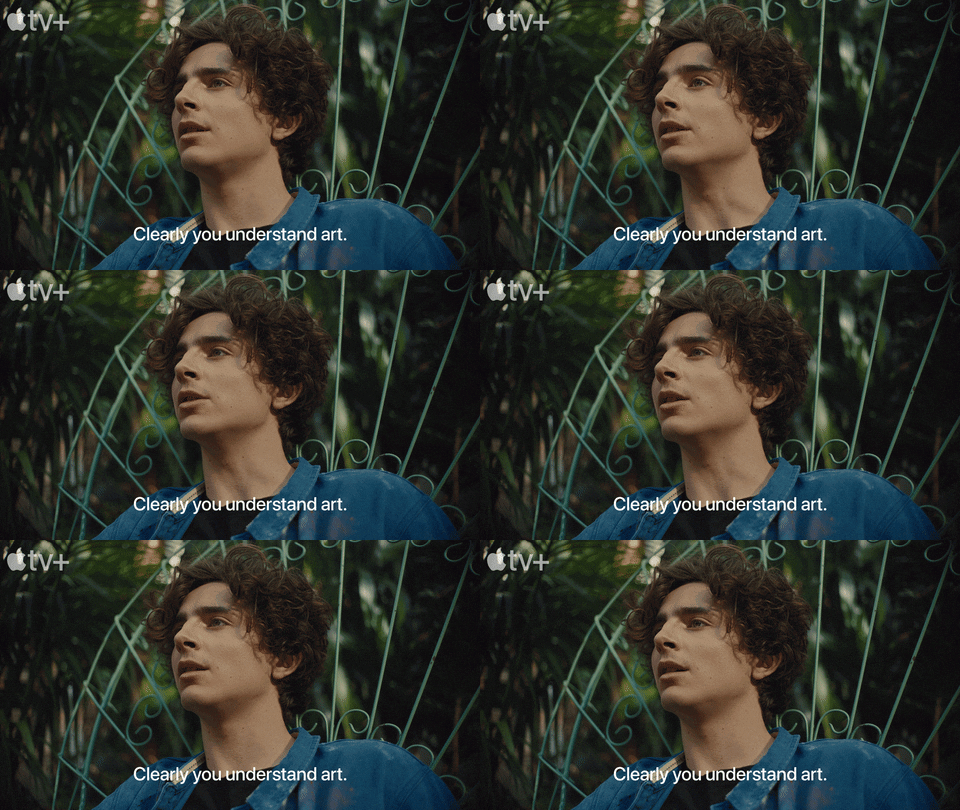
Cromer insists that she is not sexually consumed with Chalamet but views him like a supportive aunt (she’s about 30 years his senior.) She also claims not to be a stalker or to be dangerously obsessed with him, although she has gone to several events to be near him and even his sister Pauline. A lot of people view her as harmless, largely because they’re not aware of things like her sharing TERF tweets, passionately supporting Zionism, or mocking Guy Pearce for coming forward about the harassment he experienced from Kevin Spacey (Simone is a Kevin fan too.) But they are aware of her misogyny, and they think it’s funny. Because she’s being cruel and dismissive towards Kylie Jenner, a reality TV star from a corrosive family whose cultural impact has been a net negative for humanity, they endorse it, implicitly or otherwise. Misogyny’s bad, unless you think the target is too shallow for intellectual marvel Timmy Chalamet.
It’s not unusual or unheard of for so-called Big Name Fans to be covered in the mainstream press, or to expand beyond the confines of their own fandoms. I remember the halcyon days of Harry Potter fandom when people like Melissa Anelli got covered like she was a star in the franchise. It’s easier for outsiders, especially those trying to write about the topic at hand, to focus on one figurehead and have them act as the vessel for the wider discourse. That can be messy for the fandoms, as you can imagine, to have a diverse crowd of people and opinions reduced to one person. Who died and made them Pope of Tumblr?
Fandom discourse is also often an excuse to laugh at women, from the original Trekkies to Twi-moms to SuperWhoLock. All the serious conversations we want to have about parasocial dynamics, fan entitlement, and the intersections between fan and creator get overwhelmed by the same “lol dumb horny ladies” rhetoric we’ve heard for decades. A lot of Club Chalamet chat is focused on her being older than what we expect fans to be like. This overlooks how a lot of the most harmful fandom behaviour often comes from older women and not teenage girls. It wasn’t adolescents engaging in QAnon-esque conspiracies about Benedict Cumberbatch’s marriage. Teenage girls weren’t the ones trying to track down Caitriona Balfe’s wedding certificate. Overall, the clout of this demographic for cultural and political power is underrated, and it’s been to our peril. The problem with Cromer isn’t that she’s a Timmy stan in her 50s: it’s that she’s a creep whose nastiness has been elevated and legitimised by people who think it’s funny she’s a Timmy stan in her 50s.
I recently wrote about the murder of Rebecca Schaeffer, an actress who was killed on her doorstep by a stalker who managed to locate her home address via a private investigator. Her death, along with the stabbing of Theresa Saldana by her own stalker, ushered in the first era of anti-stalking legislation in the state of California. It also brought to the forefront how easy it was for regular people to access the kind of information we previously thought secret. It took little effort for Schaeffer’s killer to get his hands on her address. While laws have gotten stricter on issues of stalking and harassment, the problem has gotten notably worse in various ways, most blatantly in the online world. Non-celebrity victims have talked repeatedly about how hard it is to get the authorities to take action on things like social media abuse because jurisdiction is tough to define. We also have a new era of bullies and show-boaters eagerly embracing their online infamy through harassment, such as the loser who tried to grab Ariana Grande at a recent red carpet event. He was proud of what he did. He’ll probably try to do it again.
Maybe Cromer isn’t going to turn up on Chalamet’s doorstep and demand satisfaction, but why should we normalize her creepy behaviour anyway? Why should it become her brand to be the misogynistic numbskull who mocks victims of sexual harassment and brags about how she definitely knows that Chalamet isn’t having sex with his girlfriend? Turning this obvious display of idiocy and parasocial entitlement into a pseudo-ironic diva-off is pathetic. Who else do we decide gets to act like this? Who’s the next Zionist TERF with an unnerving fixation on a celebrity who we can give a glossy newspaper profile to?
It feels indicative of the wider issue of the internet: the perennial push to commodify everything. It’s not enough to be a fan: you have to turn your love into fanfiction that you can profit from, then make a viral social media account you can monetise, then get invited to official events where the subject of your adoration has to pretend not to be weirded out by your presence. Most fans are harmless enough and possess a sense of proportion, but what happens when the wrong one gets through the vetting process?
I understand that I sound like an insufferable scold here. Every time I see a contemporary in my field treat this woman like she’s a fun sideshow or someone to encourage, I feel like I’m on the street corner yelling like tinhat preacher about the end times. Am I the one who’s out of touch here? Should I just get with the times and embrace this current age of celebrity culture, where Big Name Fans are not only back in fashion but elevated to influencer status, complete with red carpet access and a free pass to be as sexist as they want (as long as it’s towards a societally accepted target)?
F*ck no. I’m not doing that. I think shame is an underrated virtue, and we should bring it back. I’m sick of the parasocial rot becoming the pop culture status quo, at a time when we’re already besieged by hard-right cultural hijacking, AI slop, and the “never stop hustling” ethos. I don’t think we should cheer on the amplification of a creepy stalker fan to the status of celebrity and model for a new era of fandom just because some people find the idea of a woman pushing 60 being into hot young Willy Wonka as funny as a pie to the face. You just know that some publicist has considered organising a sit-down between her and Chalamet. Do they want her to ask him if her “sources” are correct about him not having sex with Kylie? Would he be expected to laugh along as she ranted about how his relationship is clearly fake and listen to the nasty nicknames she has for the woman he’s dated for at least two years? Is this what he has to hold space for?
I miss the days when the lines between fandom and subject were more starkly drawn. You didn’t publish your fanfiction for profit, you didn’t ask leering questions at Q&As, and you didn’t get treated like a star because your lack of social boundaries was suddenly funny. Okay, this time never fully existed in fandom, but maybe it’s something to aim towards. At the very least, maybe we should exert more caution about who we ironically stan.