Stars, Drama, and Maple Syrup: Dispatches From TIFF 50
The 2025 Toronto International Film Festival was full of celebrities, scandals, and awards season speculation.
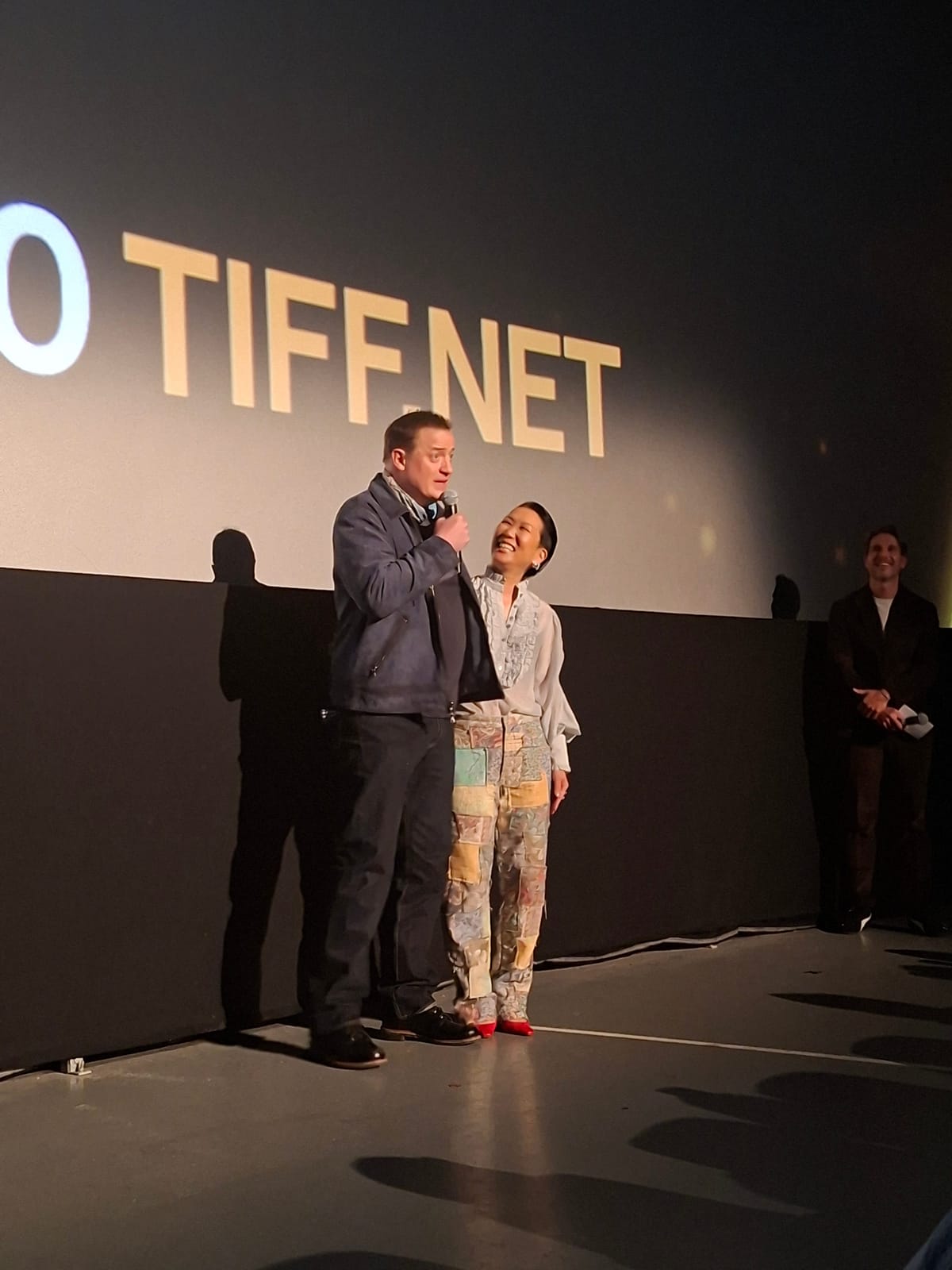
Happy TIFFTY! Everyone was saying it, so declared the pre-screening ads. Nobody was saying it. But it was the 50th edition of the Toronto International Film Festival and one of the jewels in the fall festival season crown wanted it to be a big one.
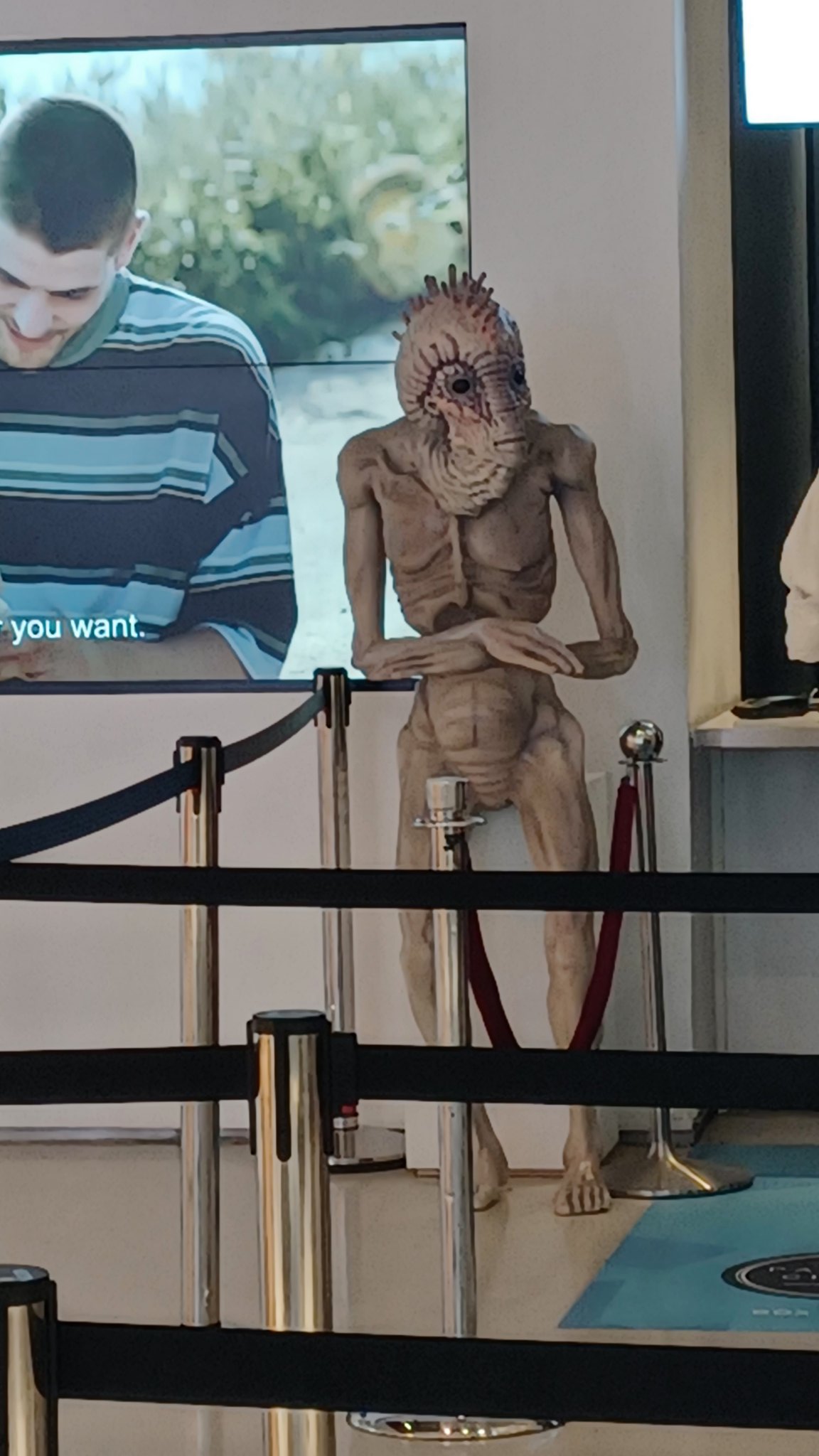
(The Mugwump from Naked Lunch that used to be next to the Lightbox box office. Alas, he’s no longer there.)
This was my sixth in-person appearance at TIFF, a minor miracle for a lowly freelancer from Scotland in a crumbling industry. But I save up all year for it and wouldn’t miss it for the world. There aren’t a ton of benefits to my chosen line of work in the current climate, but getting to go to Toronto for a week to see movies, hang out with friends and colleagues, and eat the best food on the planet is one of them. I’m now home and jetlagged to the absolute tits, so I’m finishing up my reviews before I totally crash out.
Let’s start with some highlights. TIFF had a few big world premieres that they were very proud of. Every Autumn, it’s a fight for supremacy between Toronto, Telluride, Venice, New York, and to a lesser extent London, for those premieres. Venice tends to come out on top most of the time these days because it’s a historic and glamorous event. It’s also a festival that’s become evermore defined by awards season and its status as the launching pad for a slew of For Your Consideration titles. This year was obviously no exception, but TIFF is also very entwined in Oscar conversations and pushed that hard with its WPs.
We had Wake Up Dead Man, the third entry in the Knives Out series. Rian Johnson’s whodunnit saga starring Daniel Craig as Benoit Blanc. I saw this one at its world premiere, having somehow snagged a ticket, and the atmosphere was rapturous. You try not to let that impact your review of the movie, but it does act as a solid indicator of future success. Sure, audiences are going to hoot and holler for celebrities at any moment, especially if they’ve paid for the privilege. And we got the entire cast, including Craig, Andrew Scott, Glenn Close, and Kerry Washington, so the crowd was intense. Still, it’s also worth noting that this was just a damn good movie, and an excellent vehicle for Josh O’Connor. As I mentioned in my review, it’s really his film and not Craig’s, and Johnson delves into darker territory with this Poe-inspired locked room mystery that has a lot of thorny things to say about the institutions of faith. If it isn’t in the top three of the TIFF Audience Award picks, I’ll be stunned.
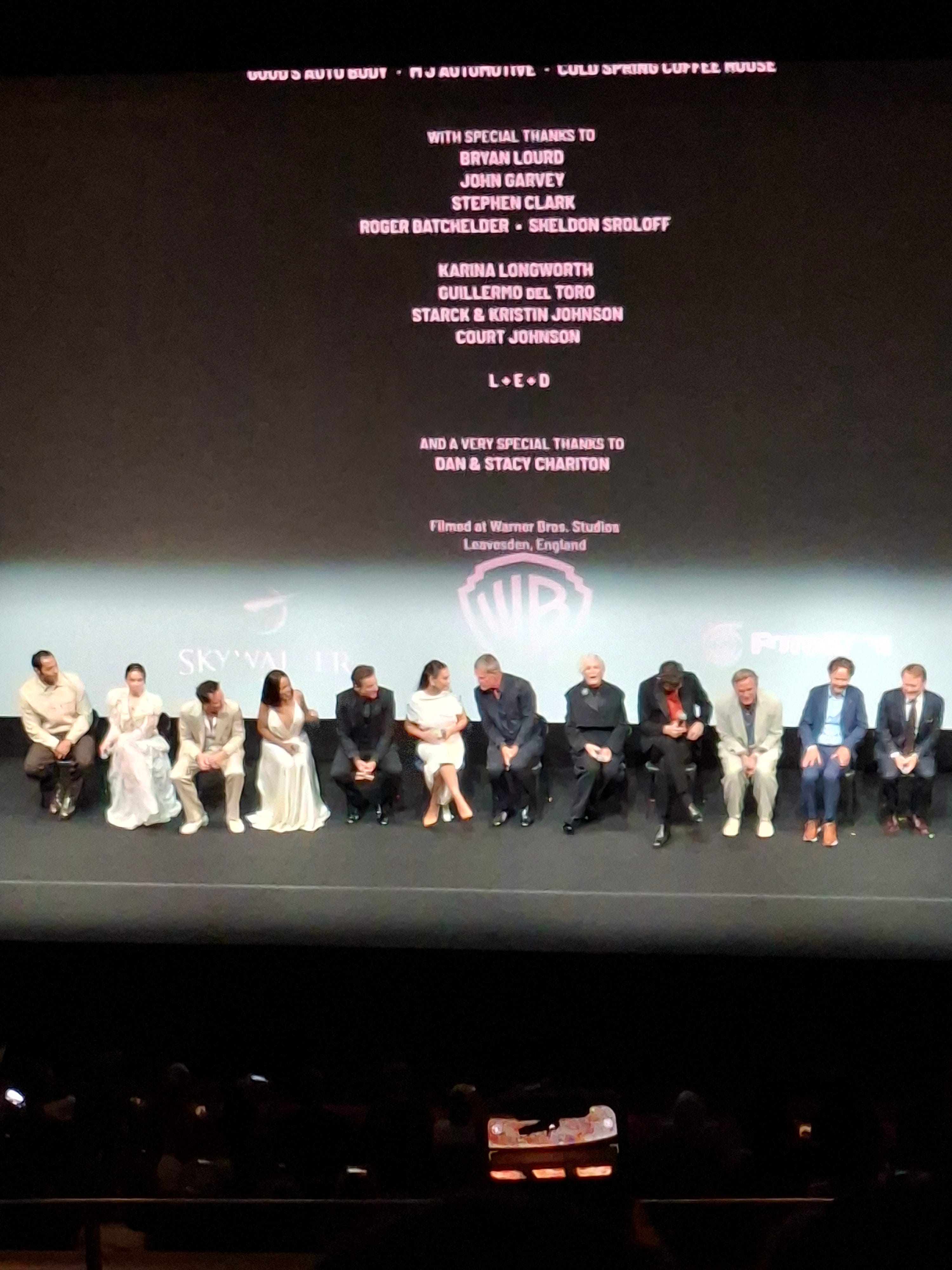
(Wake Up Dead Man cast and director.)
Speaking of the Audience Award, this is the big one for TIFF. The festival now has a glitzy awards show where it hands out hilariously made-up awards for its attendees that make me think of that one joke on The Simpsons where Homer wins “Outstanding Achievement in the Field of Excellence.” But it’s the Audience Award that carries clout. It’s an honour that tends to be one of the most reliable predictors of Oscar success in the season. The vast majority of its winners and shortlisted titles either win or are nominated for Best Picture. Last year was a notable exception. TIFF pushed The Life of Chuck, Mike Flanagan’s adaptation of a Stephen King short story, hard and it paid off with the win. But Neon sat on it for months then dumped it in theatres this Summer with no fanfare. Did they just stop caring about it once they picked up about 84 titles from Cannes? Probably. Frankly, that movie never made sense to me as an Audience Award winner. I feel like it got pushed harder because it was a world premiere.
Speaking of world premieres, we also had Rental Family, starring Brendan Fraser as an underemployed American actor working in Tokyo who goes to work for a rental family company as a friend/partner/parent/rando for hire. Fraser’s a local boy and this is his first film after his Oscar win for The Whale. As I mentioned in my review, it’s another example of an actor winning the Oscar then giving a superior performance almost immediately afterward. The Brenaissance reigns supreme, though, and he really is great in this role that feels tailor-made for him in his current era. It’s also a classic weepie that made me cry. Perhaps it’s not as ambitious as it could have been and I know some people found it too sappy but that was the point. It’s a story about emotional manipulation. I think it could do very well with Audience Award voters. Also, Fraser was at my screening and I was very excited, as a The Mummy bisexual.
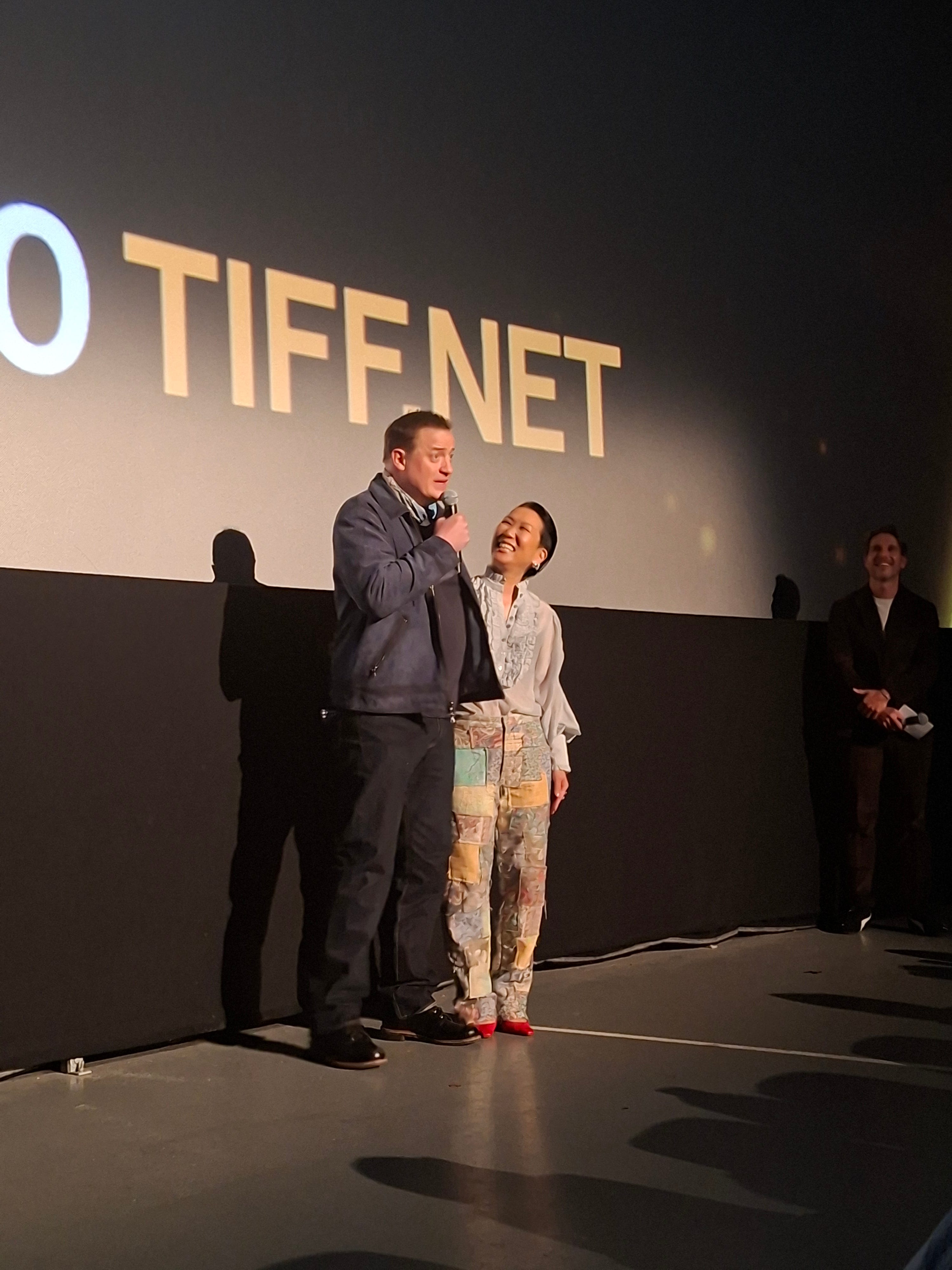
(Front row, baby! Brendan Fraser and director Hikari.)
Hedda had its world premiere. Nia DaCosta and Tessa Thompson reunited to tackle a highly ambitious project: a queer reimagining of Hedda Gabler. It works better thematically than it does stylistically. Thompson is great as a knowingly performative woman who chooses bitterness and manipulation over boredom, and both Nina Hoss and Imogen Poots are scene-stealers. I was less impressed by some of the visual choices. It’s a weirdly murky movie in terms of its cinematography, to the point where things like Hedda’s dress look like they’re totally different colours from what they really are. It was received warmly but there is enthusiasm for Thompson to make a Best Actress push if Amazon get behind her.
I didn’t see Christy. My colleague Lindsay took that bullet for Pajiba. But hoo boy it was impossible to avoid the Sydney Sweeney of it all. Leading up to TIFF, sites like TMZ and Deadline were working overtime to push Sweeney as the Best Actress winner in waiting. Apparently, Christy, a biopic of pioneering boxer Christy Martin, was undeniable. It was magnificent. Audiences were going to lose their minds for this artistic achievement. Lindsay said it was okay, but that Sweeney is acted off the screen by Katy O’Brien. TIFF has added more public screenings so there must be a touch of demand for it. I’m not ready to predict Sweeney for the Best Actress ballot quiet yet though. It’s a busy year, way busier than the men’s side of the equation. A good performance in an okay movie from a rising ingenue with vaulting ambition is possible. The narrative is there. But in terms of the work, look elsewhere.
Like Hamnet. Having premiered at Telluride, the buzz was intense. Chloe Zhao’s adaptation of Maggie O’Farrell’s novel felt like ideal material for the Oscar-winning director. It’s the story of Agnes Hathaway and her marriage to William Shakespeare, particularly the death of their son Hamnet, whose name became Hamlet for one of his father’s most iconic plays. The press screening for this one was brutal to get into. With the press and industry screenings, if you have a pass then you just queue and it’s a first-come-first-served situation (as opposed to public screenings where your seat is allotted.) So, you just had to get in queue mega-early for some things. I waited an hour for No Other Choice, the newest Park Chan-wook film, and didn’t get in.
It can be a good indicator of buzz, and with Hamnet, it certainly paid off. Talk about a tear-jerker. The final five minutes had most of us sniffing and rustling for handkerchiefs. The film is Jessie Buckley’s through and through (although Paul Mescal is also great.) What she does with that climactic scene, all through reaction, is stunning. I think it’s an Audience Award contender, and Buckley is my current Best Actress choice.
Guillermo del Toro has a big attachment to Toronto since he films there regularly and has great respect for the Canadian entertainment industry. Frankenstein was supposed to have its North American premiere at TIFF, following its world premiere at Venice, but Telluride snatched it up last minute. It was a big shock, and perhaps another sign of TIFF’s struggle to cling to power in a crowded season, but more on that. I’m a del Toro stan and I did like Frankenstein but it didn’t entirely enthral me. Yes, Mary Shelley’s novel was perfect source material for the king monster lover but maybe it was too perfect? I needed more from it beyond stunning visuals. Perhaps del Toro works best when he allows himself to be more acidic alongside his fairy-tale phantasmagoria. But the film did allow me to come to an important cultural conclusion: Jacob Elordi isn’t just tall, he can also act.
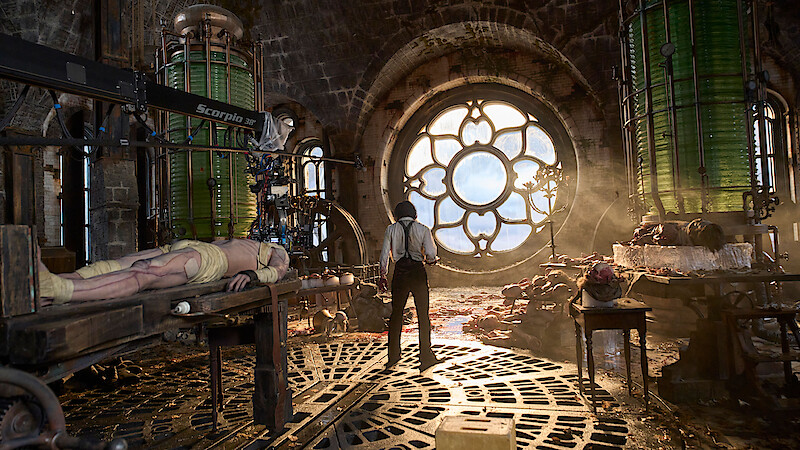
(Image via TIFF // Netflix.)
A lot of my favourite films from the fest had premiered at Cannes. The Secret Agent is an excellent Brazilian drama about life under a dictatorship and the necessity of identity in such circumstances. Wagner Moura should get a big Best Actor push if Neon are smart. The Japanese animation Scarlet was a gorgeously rendered re-imagining of Hamlet that made me bawl. The Mysterious Gaze of the Flamingo was a remarkably assured directorial debut about a group of trans sex workers and found family during the AIDS epidemic. Fresh from Venice was Nuesta Tierra, the documentary debut of Lucrecia Martel, one of my all-time favourite filmmakers. Not content with being one of the greatest directors of her generation, Martel turned her camera towards the story of Javier Chocobar, an indigenous activist who was murdered and whose death led to something of a reckoning in Argentina over its colonialist past. The blend of static courtroom drama, archival images, and drone footage allowed Martel to paint a fierce and ferocious portrait of a nation in denial.
I didn’t see any real turkeys, mercifully. Sometimes, you hear about the ones to avoid or the ones that are so bad you kind of want to see it first-hand to confirm. The Wizard of the Kremlin felt like a missed opportunity to delve into the rise and creation of Vladmir Putin but the decision to focus on a fictional character as the imagined spin doctor of the regime was misguided. Ballad of a Small Player, Edward Berger’s follow-up to Conclave, was similarly meh, despite Colin Farrell’s best efforts. It was one of many Netflix films here and one got the feeling it would quickly become less of a priority for the service once the reviews proved tepid.
Politics was hard to avoid this TIFF. A number of Palestinian films screened, including The Voice of Hind Rajab, which one a major prize at Cannes and received the longest standing ovation in the festival’s history. Alas, they all received a sliver of the attention that The Road Between Us did. A blatant piece of pro-Israel propaganda, the movie was added to the festival’s line-up last minute after some drummed-up non-controversy that tried to position it as a victim of censorship. Never mind that it was the work of a mediocre director whose work never does well at TIFF. He gets in a lot because he used to be on the festival’s board. The film screened in the Roy Thompson Hall, a big venue, and from what I was told, a moderator was brought in from outside of the festival to run it. Policemen on horses were on patrol around the venue, which had seen anti-genocide protestors earlier in the week. I walked past a woman yelling at a man and calling him an antisemite for not wanting one of her yellow ribbons. The film’s presence at TIFF was an obvious embarrassment, one made all the worse by the stench of favouritism surrounding the addition of a former board member. It did Cameron Bailey, the festival’s chief, no favours.
Bailey has faced heavy criticism for the past couple of years over his running of TIFF. A recent piece by Canadian publication The Walrus called out what they saw as his most egregious chances, including the endless parade of actors’ vanity projects, prizing star power over quality. Wavelengths, the fest's section dedicated to experimental and avant-garde movies, was reduced in size this year. It had fewer titles under its banner than the TV section. Bailey was actually called out by name at one screening. He could get away with more when the films weren’t fleeing to Venice or Telluride. But between this and the propaganda shilling, one wonders if the fest needs a managerial shake-up.
The corporatization of film festivals feels sadly inevitable in a time when funding for the arts is so dire. Still, seeing how much of TIFF is just Listerine pop-ups and L’Oreal freebies does suck. This is not a cheap city nor is it a cheap fest for the public. Tickets can be three-figures for a movie! The grand promise that you might get a glimpse of Lily James or Keanu Reeves from the back of the balcony at the Princess of Wales Theatre if you pay all that money is increasingly unviable for fans. It wasn’t much easier for those of us trying to work there. The endless hunt for Wi-Fi in the Entertainment District is real, kids!
But I’d be lying if I didn’t admit to loving the TIFF experience. As someone whose job largely relies on sitting on her couch in her pyjamas and writing hot takes, it’s a thrill to be so immersed in film and criticism for this space, and in a city I love. I love getting to hang out with friends and colleagues who all flock to the area. I went to dinner with Lainey Lui and Sarah Marrs and we had our now-annual gab about the business and what to expect from awards season (we also saw Jacob Anderson there and I apparently lost my chill seeing Louis.) I got to eat lots of amazing food, I visited the Hockey Hall of Fame and paid too much money for a Maple Leafs jersey, and I bought lots of maple syrup at the airport duty-free!
I’m now stuck on a jetlag time schedule and trying to finish up all of my work before I go back to normal life (do not ask me what time I woke up today. It’s embarrassing.) As someone in a disintegrating industry where I am constantly worried about losing work, TIFF is a little respite where I get to critic more than ever before. It’s dizzying, aggravating, tiring, funny, and stressful, and I adore it. Sadly, I forgot to eat poutine. But I did buy two Leafs jerseys and more books than I could fit into my suitcase, so it balanced out.