Review: “Wuthering Heights” is Oh So Very Dumb
I think I’m gonna die in this film…
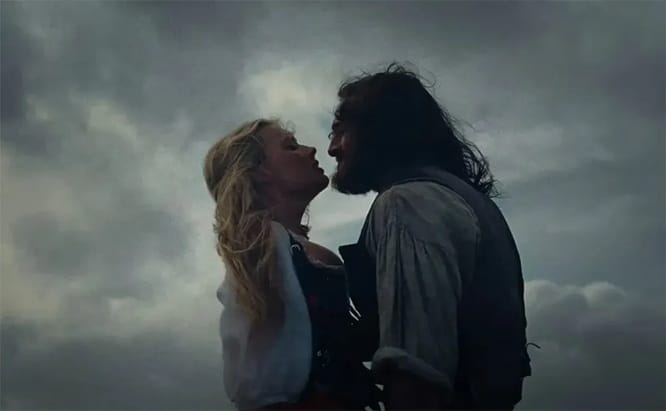
I wasn’t a Wuthering Heights girl. As a teenager, my great problematic gothic romances were Dracula and The Phantom of the Opera, and in the race of the Brontes, I always preferred Charlotte’s Jane Eyre to Emily’s frantic tale of revenge and class (still never read Anne, sorry.) Still, I get why this book endures, and why it inspires such strong feelings in generations of readers. It’s a novel engineered to the nth degree to be as passionate as possible, so steeped in rage and lust that it threatens to engulf the reader. It’s also a deceptively dense text, which explains why so few of the dozens of adaptations we’ve gotten over the decades have dared to tackle the entire thing. Emerald Fennell was never going to be that kind of director. She made that clear when she declared that her take, “Wuthering Heights” (note the quotation marks), would serve to elicit a very specific emotion in her viewers: the all-consuming fever felt by a teenage girl reading the book for the first time. She wants vibes, not themes. In that sense, she has succeeded. The problem is that the movie, as a result, is so very dumb.
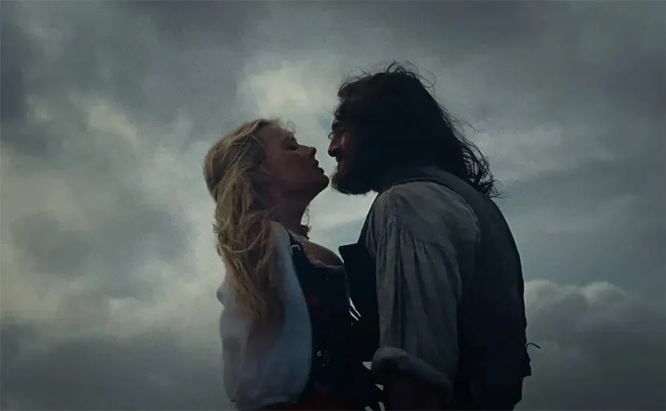
I needn’t recount the plot for most of you, I presume. This is still the tale of torrid forbidden lovers on the Yorkshire moors: Cathy Earnshaw (Margot Robbie) and Heathcliff (Jacob Elordi), brought together in childhood and torn apart by class. Well, okay, no, it isn’t. For one thing, Fennell has entirely eliminated Cathy’s brother from the story and condensed his plotline into that of her father (played by British national treasure Martin Clunes.) It makes no sense. And Heathcliff being white, but Nelly, Cathy’s companion, being Asian (Hong Chau, we love you and you deserve better), also makes the dynamics muddled. This is a race-blind adaptation, except for Heathcliff, who is not white in the books but played by the tallest man in Australia because he looked like the cover model of the book Fennell read in her adolescence. Heathcliff, in this version, is not driven by vengeance rooted in his othering by a racist and classist society. He’s just a horny boy, and Cathy’s rejection of him on the aforementioned grounds feels flimsy.
I was actually a tad stunned by how disinterested in the book’s loftier themes Fennell seemed to be. There is nothing going on here beyond carnality, and it’s not even that sexy. Robbie and Elordi do not have the necessary heat to pull off this romance, and the decision to make the hate-love dynamic one of full-on S&M is lazy in its interpretation (and, again, largely unsexy – except for one bit, which I’ll give her credit for.) The book’s power lies in the way it blends that unbearable longing with the stifling weight of the real world’s unfair expectations. Without the latter, you just wonder what the true stakes are. Although I must note: the first time Heathcliff put Cathy’s fingers in his mouth, someone behind me at the cinema applauded. There’s a lid for every pot, kids.
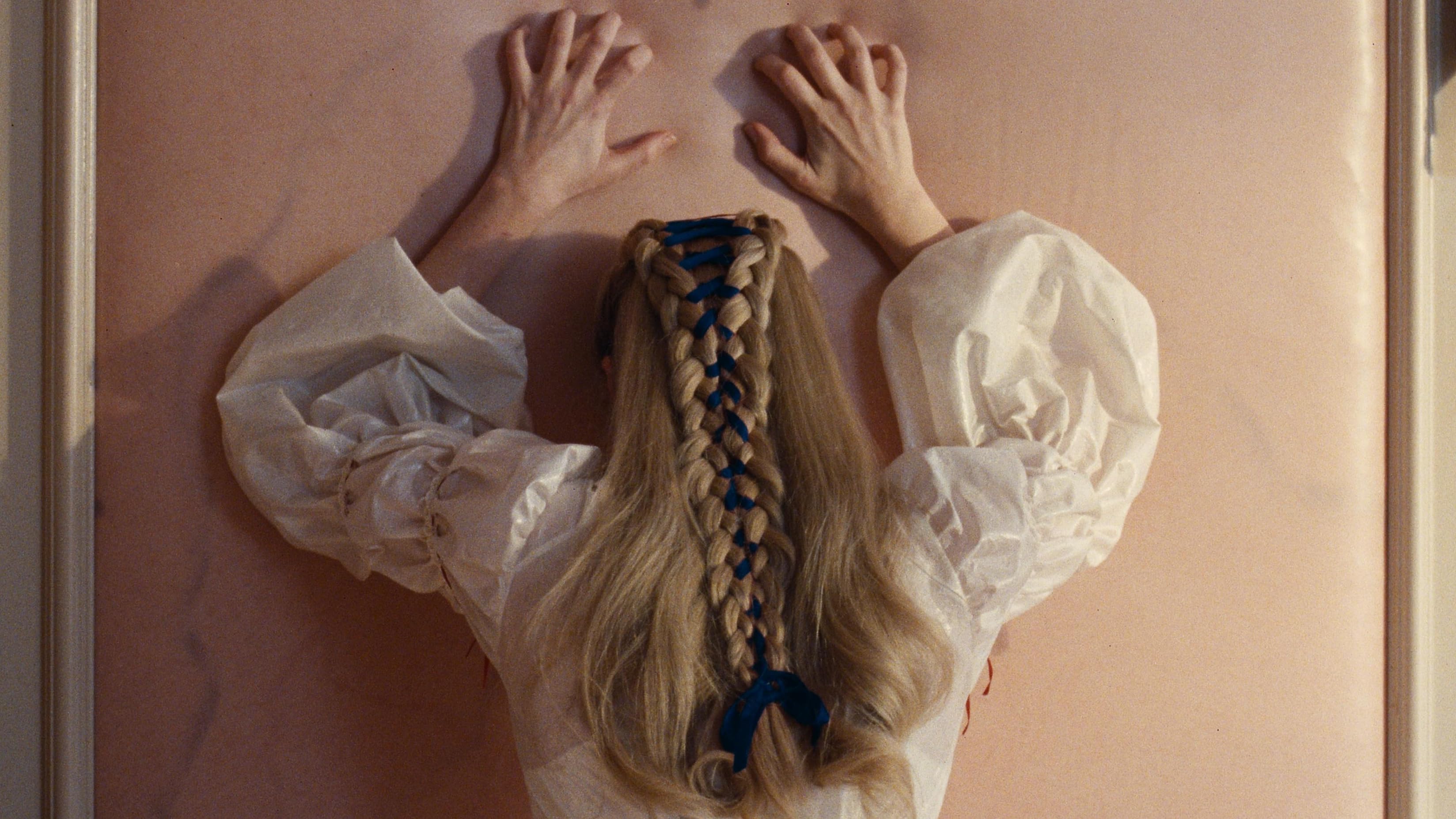
(Image via YouTube.)
Some of the adaptation choices border on malpractice. The issue of removing Cathy’s brother is especially glaring, but so are the changes made to Isabella. Alison Oliver is at least game for this interpretation, but the decision to make her a horny little church mouse who is turned on by Heathcliff’s abuses defangs his truly monstrous nature. She becomes his little doggy girl and seems excited by his vengeance, and as a result, Heathcliff is just a bodice-ripping hero. How dull, but also how insulting. Elordi seemed up for the challenge. Fennell wasn’t.
Really, this was the issue I had with Saltburn. There was a movie that kept telling me how naughty and deviant it was, all while offering me Jilly Cooper’s reheated nachos. That film’s “posh people deserve rights too” social commentary would have been somewhat easier to swallow had we been dealing with a truly outrageous portrayal of decadence, but it was timid. So is “Wuthering Heights.” Fingering aspic is not shocking. Maybe I’m too jaded and perverse as someone who has read de Sade and whose favourite film is Quills, and I know we’re a society with increasingly puritanical views of cinematic sex. Still, I don’t think it’s too much to ask that your one-track-mind version of this story be as titillating as you claim it to be.
Fennell flinches, and in the end, all we have is window dressing. Some of it is admittedly pretty. I don’t even mind the anachronisms of it all. Fennell’s “spaghetti at the wall” approach to aesthetics is one of her strongest suits. Charli XCX’s score is a particular highlight. But there’s no thematic foundation for much of it. Why do Cathy’s poverty-era dresses still look as lovely as her rich married lady era ones?
Here’s the perfect representation of Fennell’s problem. Much has been made about the one room with wallpaper fashioned after Margot Robbie’s skin: freckles, veins, and all. It’s a cool touch on paper, a way to add a psychosexual layer to this text. But Fennell doesn’t trust the audience to notice it on their own, so she has a character directly point it out and linger on the fact. There’s not much else going on in this movie, we were definitely going to notice the wallpaper!
I was saddened by the hollowness of “Wuthering Heights.” I’m all in favour of creators taking public domain texts and running wild with them. I own far too many terrible odd-the-wall takes of Phantom of the Opera to be judgmental of that. But if you are so eager to forego all of the source material’s weight and pathos in favour of pure vibes, then your vibes better be bloody impeccable. As it is, I get the feeling Fennell lost her calling as a fanfiction writer.
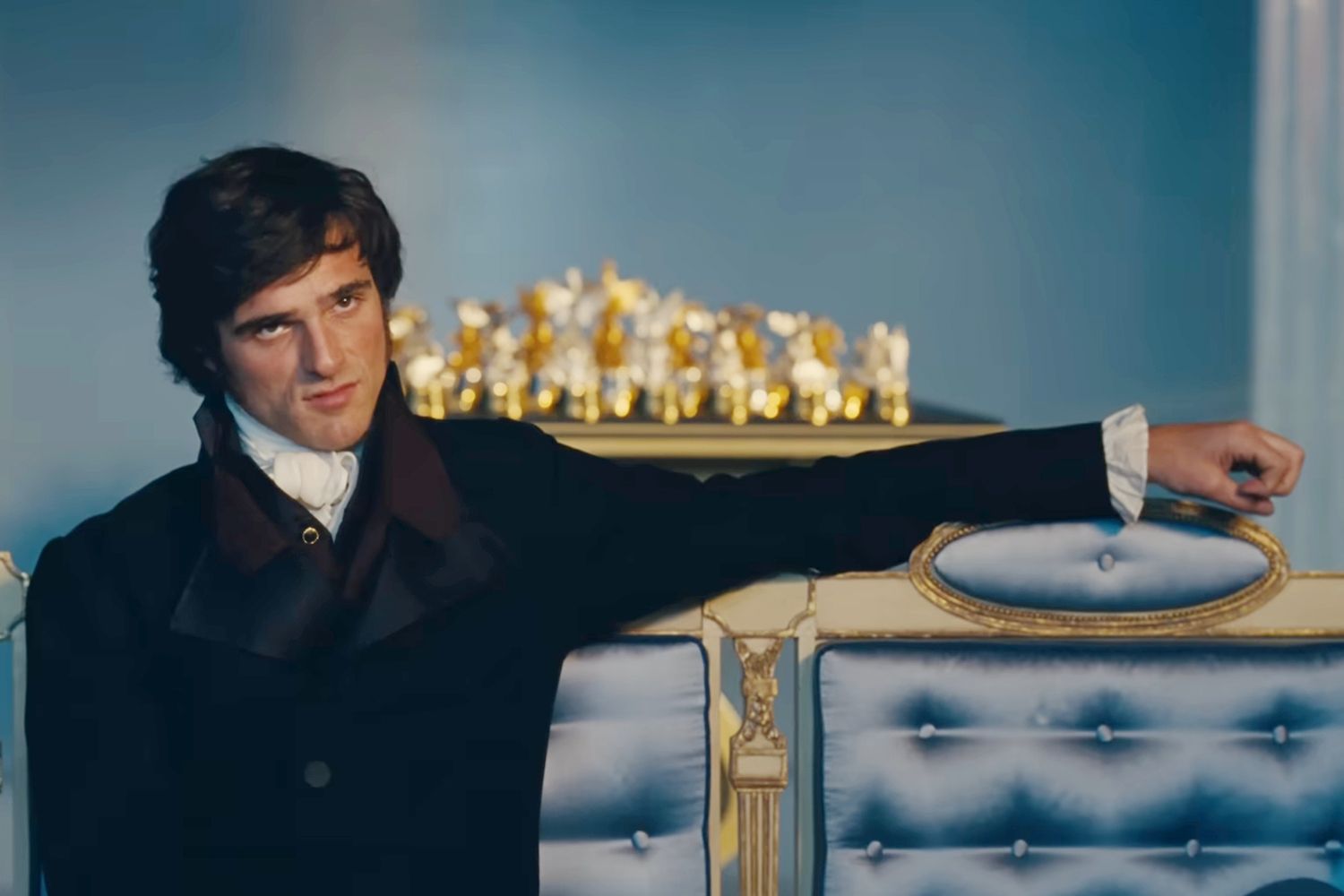
(Me reading Emerald’s AO3 account.)
“Wuthering Heights” is in theatres now.