Review: The Mastermind is an Anti-Heist Film About a Very Entitled Man
Josh O’Connor teams up with Kelly Reichardt for an art heist drama that’s the anti-Ocean’s 11.
When you think of art heists, your mind probably goes to images of glamorous hold-ups and intricate planning, to picturesque backdrops. Maybe you, like me, are fascinated by the still-unsolved Isabella Stewart Gardner Museum break-in or the recent jewel robbery at the Louvre. This is a crime that makes us imagine high-class circumstances and debonair criminals you can’t help but root for. Really, art theft is largely committed by cartels and crime rings for reasons of collateral. The chances are that all of those legendary artworks stolen from the Gardner Museum were left to rot in a basement or destroyed to cover up the trail.
But our fascination remains. It’s one that we share with Kelly Reichardt, the beloved indie director and queen of modern slow cinema. With The Mastermind, she takes inspiration from the Gardner Museum heist and the 1972 robbery of the Worcester Art Museum. But don’t expect a flash-bang approach or suave anti-hero, not from the woman who gave us Meek’s Cutoff and First Cow.
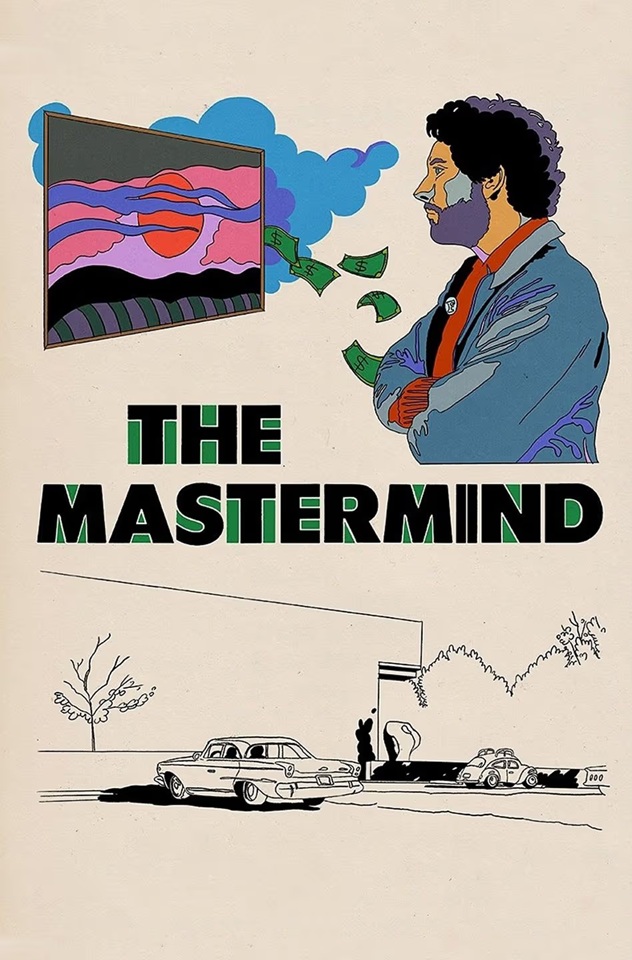
It’s 1970 in Framingham, Massachusetts. J.B. Mooney (Josh O’Connor) is an unemployed carpenter and art school dropout with a wife (Alana Haim), two songs, and a pair of disappointed parents. He’s decided to commit grand theft from his local art museum. With the help of a couple of small-time crooks, he plans the heist of four paintings by Arthur Dove. It doesn’t go well.
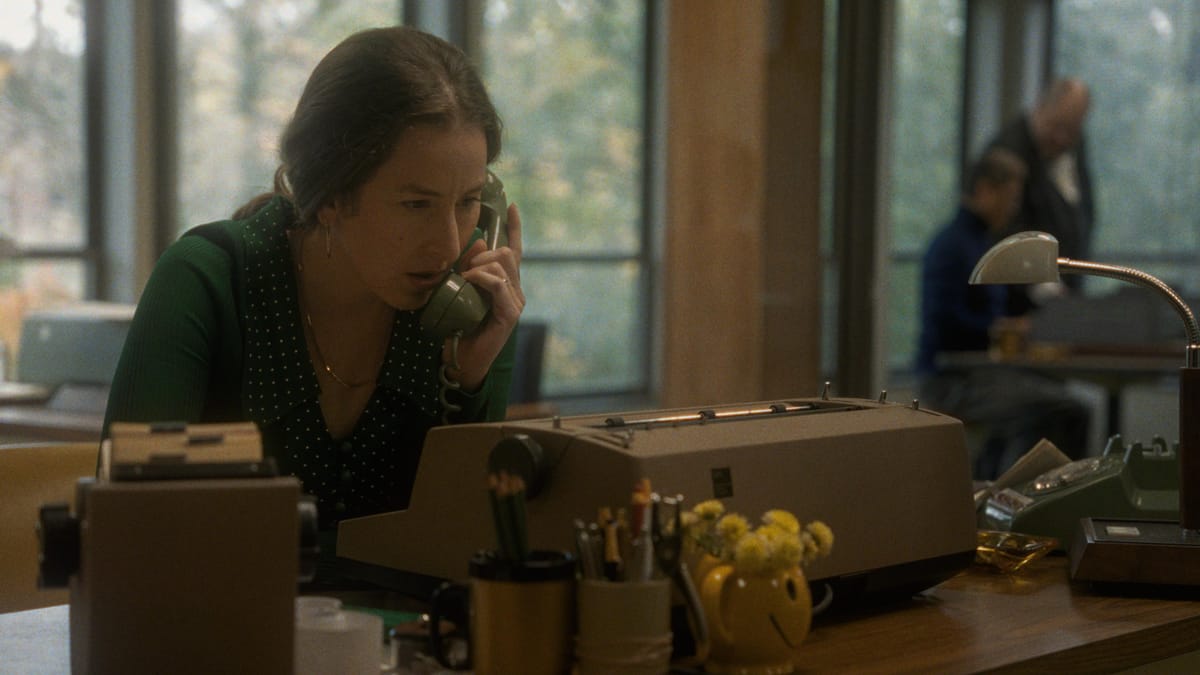
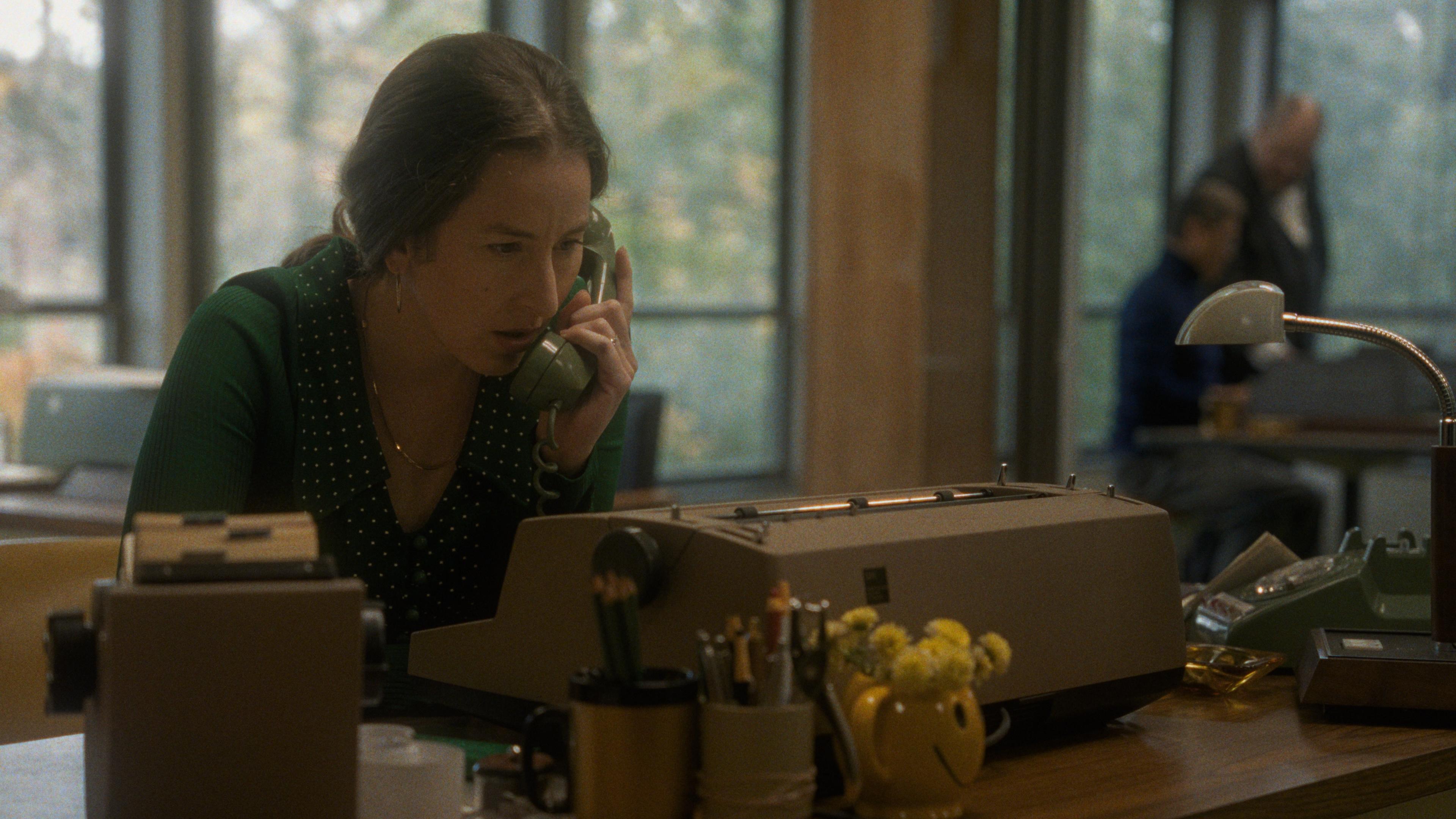
The Mastermind might be the coziest heist film ever made. Lived-in and homey, this is a gentle take on suspense in a place as far away as one could get from the glamour of the genre. Expect lots of polyester suits, slightly shaggy haircuts, and dry humour among the mundanities of suburbia. Reichardt’s love of long static shots is sharply employed here, showing the tedium of even the simplest crime. How do you steal the right car? Where do you hide the loot? There’s no rush here, even as J.B. puts a timer on the heist. It’s meant to be a speedy eight minutes, in and out, but it’s still an oddly lackadaisical effort. A jazzy score by Jeff Grace feels like it came from a more conventional heist tale, but it is still right at home among the quiet shuffling and bored Girl Scouts of the museum.
J.B. is the opposite of Thomas Crowne. He’s hapless, kind of bratty, and not very good at anything he sets his mind to. Josh O’Connor channels some of that Prince Charles entitlement with this sly performance, offering us a protagonist whose endless failures are hilarious but painful to watch (J.B. is, perhaps, the Wario to O’Connor’s character in La Chimera.) You almost want him to succeed, not because he deserves it or his plan is good, but because it’d give us respite from his flop-sweaty ineptitude! But his privilege soon becomes aggravating. He has no qualms about lying to his own mother to get money out of her. His wife’s anguish over the situation he’s put their family in elicits no real sympathy from him. In one cringe-inducing moment, he tries to offer an apology but cannot help but use the opportunity to beg for more money. A potential lifeline in the form of an escape to a commune in Canada is rejected because J.B. insists it’s “not my scene.” He’s a crook, but he’s not a hippie, okay?
(Image via IMDb.)
The backdrop to this high-low stakes crime is the ongoing war in Vietnam. It’s a matter to which J.B. seems utterly unconcerned. The country is in a state of flux as the dreams of the flower power era die out, but J.B. is a middle-class white boy with no risk of being drafted, so it doesn’t concern him. He’s rebelling, yes, but against his dad’s desire for him to get a real job and support his kids. Reichardt has long been fascinated by themes of the individual versus the community, and one’s responsibilities in each zone. In First Cow, my favourite of her works, the cow of the title is owned by the wealthiest man in the outpost, and the only way for everyone else to enjoy her milk is through theft. Night Moves follows a group of radical environmentalists who plan to blow up a dam but become torn between moral and ethical duty. The Mastermind is like Reichardt’s Shampoo, but instead of our lead partying while Nixon rises to power, J.B. just slouches through life while the world changes.
Reichardt skeptics often view her as laborious or slow for its own sake, but I’ve always been drawn to her methodical dissection of cinematic tropes and the realist-driven spin she puts on those familiar beats. This is still a gripping heist movie, one stripped of the dazzle we usually love from this subgenre, but its real intrigue comes from her portrait of an America split into two: one of apathy and another of action. The title is a joke, but also not really. J.B. thinks he’s better than his normie life or those of the people he barely pays attention to. Everything fails, every step goes wrong exactly as you expect it to, and still J.B. feels as though he’s one step away from absolute victory. The ending is a moment of delicious irony, and might be the best of Reichardt’s career. The real heroes have something to fight for. J.B. is too detached to even skate through life.
The Mastermind is now showing in cinemas. It will be released on Mubi sometime later this year.