Reading Hollywood: Happy 60th Birthday to Hollywood Babylon, The Defining Document of Golden Age Gossip
Kenneth Anger's lurid mixture of myth, nonsense, and deviance helped to shape celebrity history.
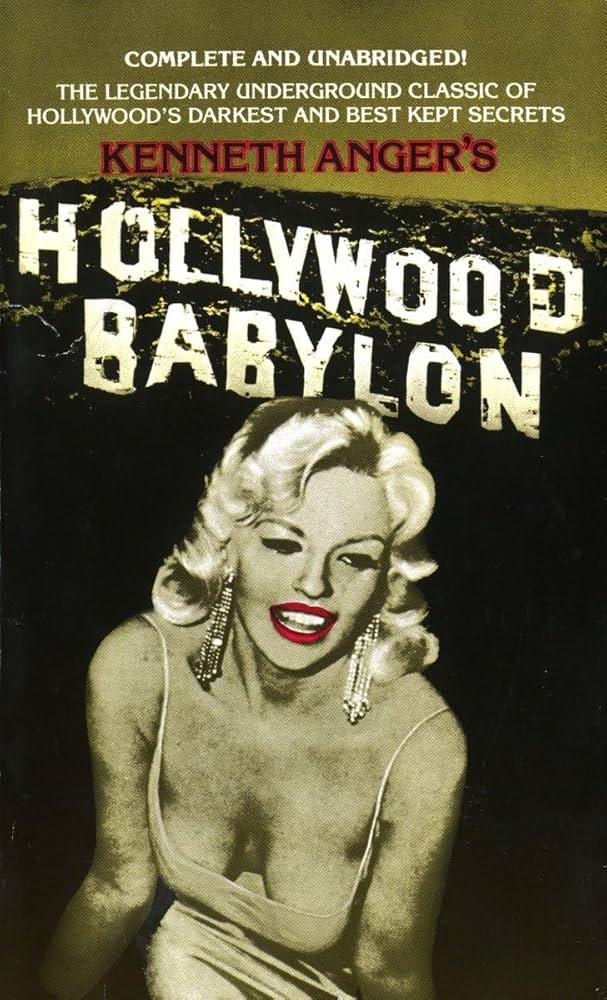
What do you think is the biggest piece of celebrity gossip ever written? Is it Marlyn and JFK? The Brangelina saga? Liz Taylor’s eight marriages? Adrian Brody’s castle (well, I care about that one very deeply.) When I was growing up, there were stories that just made their way into my brain through cultural osmosis, and I didn’t question them for years, like Richard Gere and the gerbil. As I got older and more interested in classic Hollywood and gossip, I found myself collecting certain tales like a pack rat. It wasn’t until I read a certain book that I realised how many of these lurid tales came from the same source: the one and only Hollywood Babylon by Kenneth Anger.
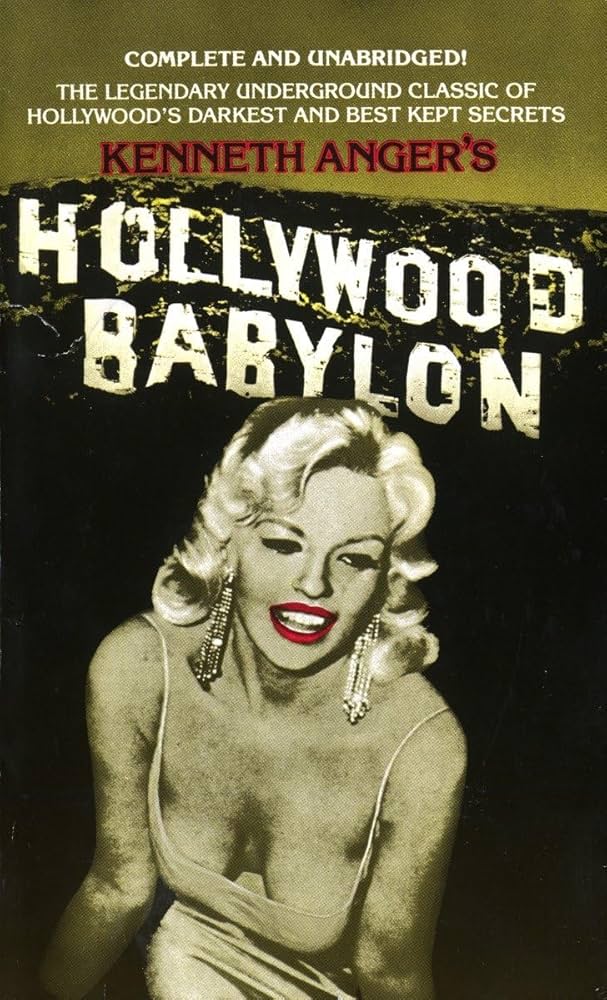
(This is the censored cover, mercifully. Image via Amazon.)
Kenneth Anger never really broke into the mainstream, but as an underground star, he was one of its true icons. Born in 1927 in Santa Monica, California, he grew up in a comfortably middle-class family and was spoiled rotten by his grandmother Bertha. She was the one who introduced him to cinema and encouraged his artistic pursuits. He claimed to have appeared in the Warner Bros. adaptation of A Midsummer Night’s Dream when he was only a child, but he’s not credited in the movie, although one of his biographers insists that he really was cast. It didn’t take long, however, for Anger to become more intrigued by working behind the camera, crafting home movies that revealed his already sharp artistic voice.
Thanks for reading Gossip Reading Club! This post is public so feel free to share it.
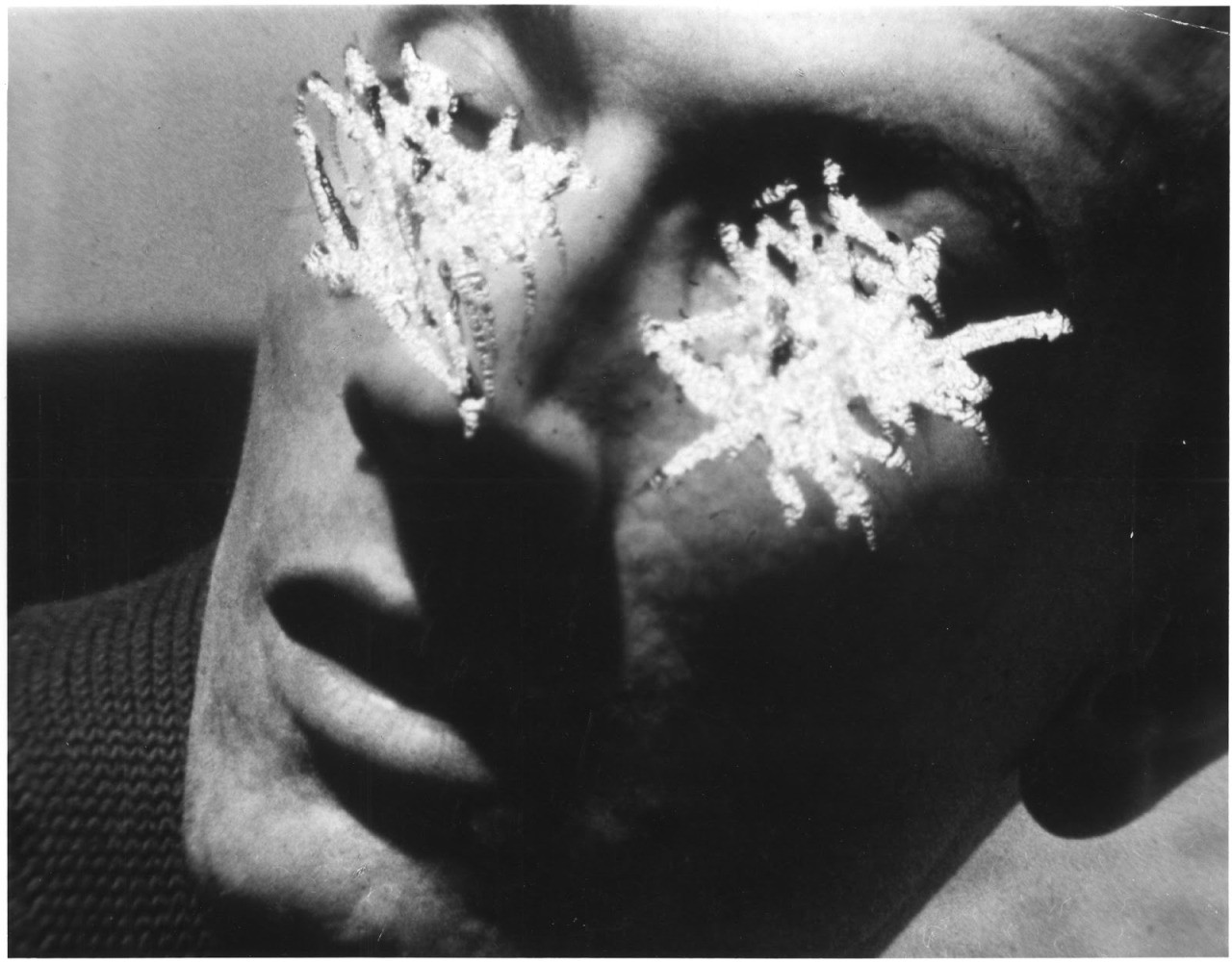
As an adult, Kenneth became intrigued by Hollywood, the occult, and queerness. He read the works of Aleister Crowley and began exploring his own sexuality, which led to him being arrested by police in a “homosexual entrapment.” After attending USC to learn more about filmmaking, he directed Fireworks, an avant-garde short that was brazenly gay and erotic in the midst of the Hays Code. Fireworks led to Anger being arrested on obscenity charges, but he was acquitted after the case went to the Supreme Court of California, which deemed the film art, not pornography (why not both, babes?)
Fireworks is a startlingly modern short that helped to set the mould for future Anger shorts: dream-like imagery, blends of Catholicism and the occult, queerness front and centre, especially in showing how the all-American archetypes are almost explicitly gay, and the use of modern music. It was never shown to the masses for obvious reasons, but soon it became hip to attend private screenings of Fireworks, like one held by the legendary sexologist Alfred Kinsey.
Anger kept working on his shorts, which weren’t exactly a big money maker. In 1950, he moved to Paris and hung out with the likes of Jean Cocteau and the team of the Cinémathèque française. He returned to America a few years later and began work on his most ambitious project yet, Inauguration of the Pleasure Dome, a 38-minute surrealist short featuring paganism, a ritual masquerade party, and a cast that included Anais Nin, Marjorie Cameron, the latter of whom was married to the rocket pioneer Jack Parsons. The arthouse world loved it, and its influence can be felt in many films that followed in its wake. But, again, there’s no hard cash in the world of underground short cinema.
Kenneth Anger needed cash, and fast. In the late ‘50s, he managed to convince J.J. Pauvert, a Parisian publisher who was the first to publish The Story of O, to give him a book deal. Alongside the American writer Elliott Stein, he compiled together a cavalcade of classic celebrity gossip he’d heard from his years of Hollywood adjacency. And lo, Hollywood Babylon was birthed onto the world, complete with a cover image of Jayne Mansfield with her boobs hanging out of her low-cut dress. The book wouldn’t be published in America until 1965, but it was almost immediately controversial due to various copyright disputes and Anger’s propensity for just making sh*t up. The book ended up unavailable to the public for a decade after that, until it was reprinted in 1975.
The hook of Hollywood Babylon is a potent one: a tell-all collection of the juiciest and most shocking tales in the history of the American film world’s golden age, detailed with leering minutiae and with disturbing photographic illustrations accompanying it. long before the internet and even the seediest of tabloids, we had Hollywood Babylon to flip through to satisfy our darker curiosities. Some of the images are stomach-churning, such as that of actress Carole Landis lying motionless on her bathroom floor after dying by suicide. Actually, there are a lot of dead bodies in this book, or images intended to be passable as those of the last photos of celebrities, like Marilyn Monroe. One of the final images in the book is of Jayne Mansfield’s dead dog. Earlier editions seem to have had more graphic images, like those of Elizabeth Short, also known as the Black Dahlia, but that’s (mercifully) not in mine.

(A nicer picture of Carole Landis than the one Anger uses. Image via Amazon.)
How much of Hollywood Babylon is false? Probably most of it, if we were to check on a sentence-by-sentence basis. Film historian Kevin Brownlow joked that Anger’s research process was more akin to “mental telepathy” than anything remotely journalistic. The New York Times said of it, “If a book such as this can be said to have charm, it lies in the fact that here is a book without one single redeeming merit.” But it took on a life of its own in part thanks to its banning. It created this notion that the contents must be so scandalous that the stars had to fight to keep them out of the public eye. What is it that those seedy deviants wanted to hide from us?!
Let’s start with some of the more odious claims that Anger makes. He writes that D.W. Griffith, the director of The Birth of a Nation and Intolerance, was sexually obsessed with the Gish sisters, Lillian and Dorothy, and that the women were engaged in incest. The latter part is obviously nonsense but Griffith did have a thing for, shall we say, waif-like young women. Lupe Velez did not die with her head in the toilet. Clara Bow didn’t f*ck the entire USC football team (which included John Wayne at the time.) The body of Marie Prevost, a silent star who struggled with alcoholism before dying at the age of 40, was not found half-eaten by her dogs.
And, of course, it’s all extremely misogynistic. Every woman, via Anger’s gaze, is either a scheming slut or a tragic waste of space. For some reason, he’s weirdly spiteful towards Dorothy Davenport, the wife of Wallace Reid, the actor who struggled with morphine addiction. Davenport made a film about the nightmares of drug addiction in his honour, which Anger paints as a case of fame-hogging and professional victimhood from a not-so-grieving widow.
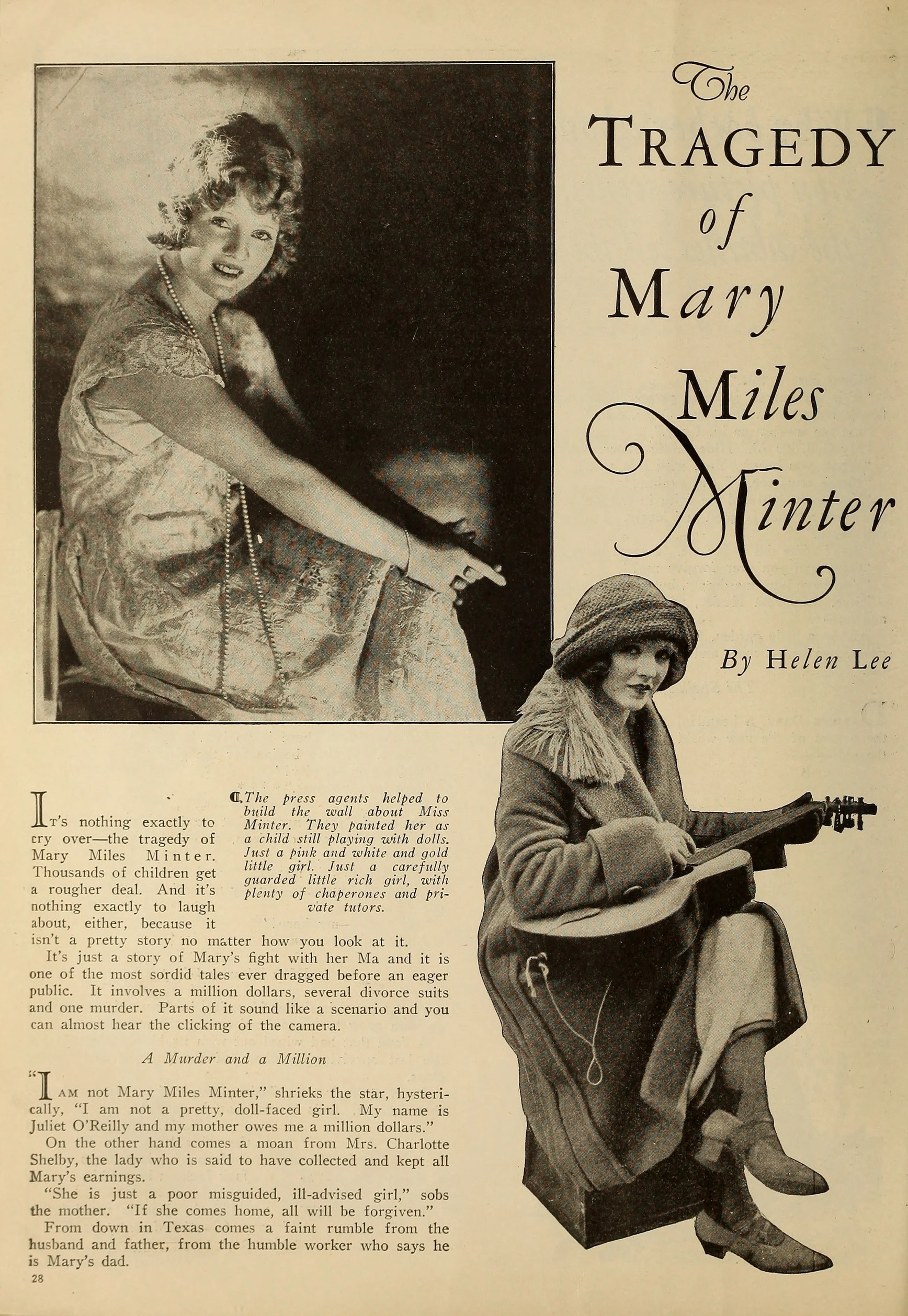
He loved fat puns about women like Mary Miles Minter (and, in the sequel, Elizabeth Taylor), and could be extremely racist about women like Lupe Velez. The latter is forever cursed by Hollywood Babylon. It seems to be from this book that the myth that she died by suicide with her head in the toilet either originated or was popularized. In this book, Anger claims that Velez’s dream of the picture-perfect death was spoiled because all the spicy Mexican food she had eaten before taking the sleeping pills made her vomit. Yikes.
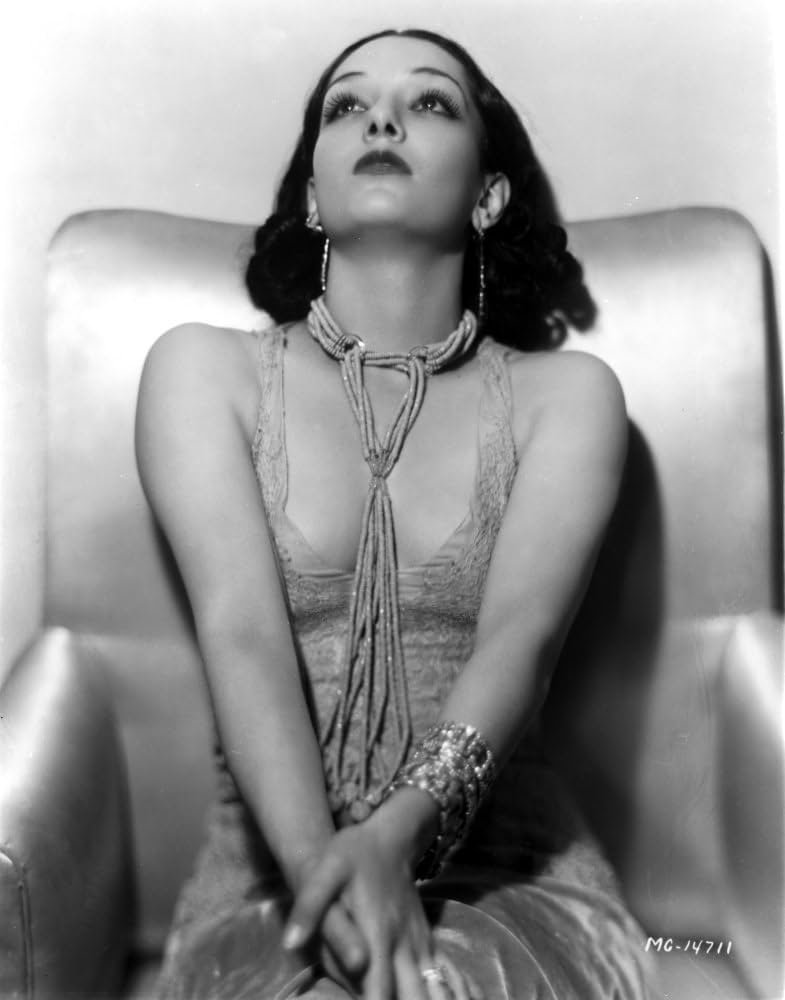
(Lupe Velez. Image via IMDb.)
Some of the sexism is just garden-variety cruelty about women ageing and not looking as they did in their peak of fame, like Judy Garland and Marion Davis. In the sequel, Liz Taylor is treated especially heinously, with the cover image being of Taylor at her largest, sitting in a car. I don’t think Anger has any grander agenda here than to take these women down a peg or two. It’s all part of the book’s ethos, that Hollywood is built on lies and deviance, and what better evidence of that than a woman “lying” about her own beauty? Not much has changed in that regard if tabloids and social media are anything to go by.
He was, at least, critical of the McCarthy anti-community witch hunts that tore apart Hollywood, but the book cannot help but read as startlingly conservative. You’d think a gay avant-garde filmmaker who knew Satanists and bikers wouldn’t be so pearl-clutching, but he clearly knew what sold. My edition, first published in 1975, was updated to include other shocking stories from the tail-end of the ‘60s, such as the Manson family murders and the death of Louis Stone, an actor who reportedly died after suffering a heart attack while trying to chase away some unruly kids from his garden. These stories were all included as further examples of the industry’s moral degradation. It’s so tragic but make sure you look at it for as long as possible.
Hollywood Babylon does get some things right, less in the details and more in the spirit of the thing. It is true that the early days of the film world were viewed as an unbridled space of money, power, and lawlessness. The explosion in popularity and clout that Hollywood underwent in such a short amount of time is easy to downplay, but in its beginnings, it was kind of miraculous. It went from a novelty to a national pastime at record speed, and that terrified a lot of people, from women’s groups to well-organized Catholics to politicians. Pre-Great Depression, the boom of cash and opulence was hypnotic to watch unfold. Imagine what it must have been like to see a moving picture for the first time, and to see an unknown face become an object of absolute obsession. The first actors weren’t even credited by their names, partly to control their pay and work conditions, but audiences needed to know them, and so the stars were born.
(Source.)
All of this fervour made those early scandals seem both juicier and more close to home for the masses. We’re all wearily familiar nowadays with being fans of someone and then seeing them be revealed as an abuser or creep. Imagine dealing with that for the very first time en masse. Anger does savvily capture the sense of when the bubble bursts and how much that sucks. He’s maybe enjoying it a little too much to fully understand the dynamics at play, or to offer much in the way of empathy, but it is true to the tone of classic gossip reporting (and modern, really – I’m convinced Perez Hilton owns a copy of this book.) If celebrity gossip is about the performance of scandal, then Anger is doing some top-class work.
A lot of the most enduring Hollywood myths have stuck around not because they’re true but because there’s a sliver of believability to it. Conspiracies operate by the same, for lack of a better term, logic. When you view the entertainment industry as a liberal cesspool of endless filth and deviance, it’s easy to jump to the illogical conclusion that QAnon is real. With Hollywood Babylon, we know how the studio system sought to protect its stars and helped to conceal some very serious indiscretions, including pregnancies and affairs. It’s not hard to, say, look at Loretta Young covering up an entire pregnancy and then adopting her own kid, then think that maybe someone did help to cover up Valentino’s kinks.
Plus, when enough time passes, it’s easier to divorce the salacious story from the humanity within. Most people nowadays probably have no idea who Lupe Velez is. I didn’t know, but the first thing I ever heard about her was the toilet suicide story perpetrated by Anger (via an episode of Frasier, in my case.) The Richard Gere gerbil story still carries surprising weight in online circles (see my post on that weird whisper war here.) I think a lot about how the well-funded smear campaigns of the past decade against women like Amber Heard and Megan thee Stallion, and how, despite it all, the easily provable lies will be the lore of a new generation.
Kenneth Anger died in 2023 at the age of 96. Post-Hollywood Babylon, he kept making short films. He famously collaborated with Bobby Beausoleil before he was jailed for life for murder after getting involved with the Manson family. His work is frequently cited as an inspiration for the development of music videos, thanks to his blending of visuals and modern song. In his latter years, he largely became a grandfather of underground cinema and the lore he crafted both on and off-screen. He claimed to have abandoned writing a third edition of Hollywood Babylon because he was too scared of Scientology suing him. Even occultists were afraid of Xenu, apparently.
Despite it all, I do recommend reading Hollywood Babylon if you’re a gossip nerd, if only to understand how myths are made and to hone one’s bullsh*t radar more effectively. The DNA of Anger’s work is all over modern celebrity coverage, which has gotten more humane and academic on one side but also swung harder into heady conservative fearmongering on the other end. Check out how many other newsletters on Substack are basically Hollywood Babylon but somehow even more charmless.
But the best companion to the book is Karina Longworth’s season-long dissection of it on her podcast, You Must Remember This. In her detailed fact-check, she goes to town, taking on some of the more insidious claims Anger made and manages to bring to light more complicated and interesting truths. But, as always, the legend prevails for a reason.
Speaking of books: I’m setting up a Bookshop page for the Gossip Reading Club, where you can check out some of my most recommended books relating to our work on this newsletter. I’m still trying to get things going, but check it out and let me know what you think.