Oscar Seasoning: The Bananas One-Woman Campaign of Sally Kirkland
RIP to a proper awards season legend.
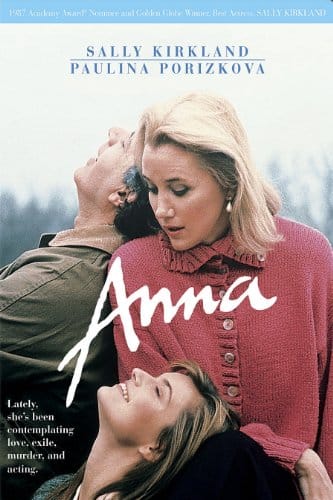
This week, the news broke of the death of Sally Kirkland at the age of 84. She had entered hospice care amid her struggle with dementia, and a GoFundMe page had been set up to help with ballooning costs. For many, Kirkland was not a household name, but for Oscar nerds like myself, she was kind of an icon. Amid a sea of subtle backstabbing and well-funded schmoozing, Sally Kirkland was the one-woman FYC campaigner who elbowed her way to a Best Actress nomination when nobody thought such a thing would be possible. When you think of glorious Oscar thirst at its most brazen and proud, it’s Kirkland whose face (and amazing bouffant of blonde hair) comes to mind.
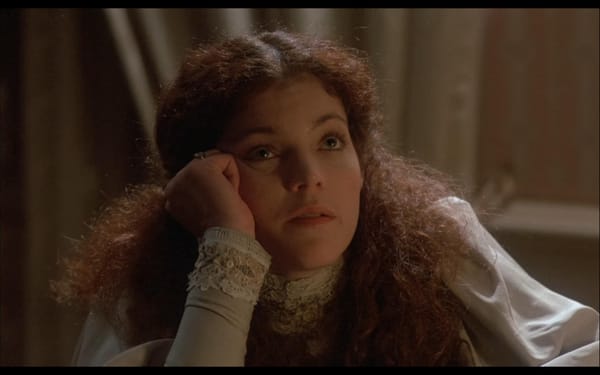
In the ‘80s, Kirkland was a bit-part actor who you may have spotted in minor roles in the likes of Love Letters and Private Benjamin. She was the epitome of a jobbing actor, one with a filmography full of one-off TV roles in shows such as Charlie’s Angels, Kojack, and Hawaii Five-O. It was a semi-stable living and certainly a contrast from her time as a member of Andy Warhol’s Factory. By 1987, she was 46 years old and hadn’t had her breakout. It seemed like she never would, and Hollywood was not a place for actresses over 40. So, when she landed the meatiest role of her career, she knew she couldn’t waste it.
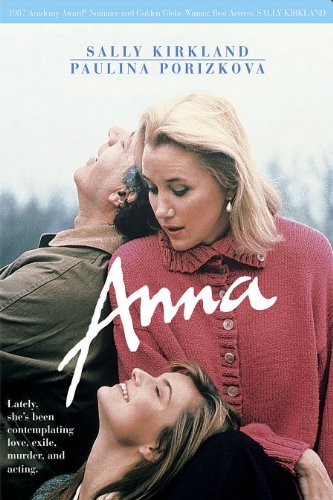
(Image via IMDb.)
Anna was directed and co-written by the Polish filmmaker Yurek Bogayevicz in his directorial debut (the legendary Agnieszka Holland also had a screenwriting credit.) It was a low-budget dramedy about the eponymous Anna, an actress who was forced out of her native Czechoslovakia and becomes a mentor to a younger star, played by the model Paulina Porizkova. Some critics were effusive in their praise of the movie, and particularly Kirkland’s go-big-or-go-home performance as the fiery Anna. But it made no money at the box office and was distributed by Vestron, a company that had no interest in giving it a big Oscar campaign (in 1987, they were mostly concerned with their biggest hit ever, Dirty Dancing.)
Sally decided to do it all herself. If her own studio or distributor couldn’t or wouldn’t campaign for an Oscar nomination, she’d call in every favour she’d accrued over two decades in the business and make it happen herself. First, she wrote letters to everyone she knew who was an Academy member, although rumours persist that she actually wrote to every single member, which would have been labourious. Sally didn’t have a lot of money to work with, but what she did have was a strong circle of friends. She was a Warhol girl, as we mentioned, but she also knew Joan Rivers, who loved to schmooze and put Sally on her TV Show, and two-time Oscar winner Shelley Winters, who was a good friend and professional mentor. Shelley talked adoringly of Sally in interviews and hosted screenings of Anna for Academy voters. If the Oscars are a big popularity contest, then having an iconic character actress like Winters in your corner doesn’t hurt.
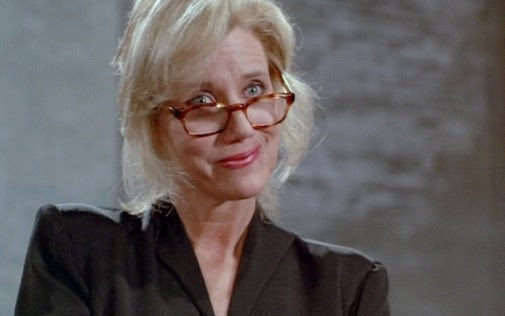
Kirkland went to every party or event she was invited to. This is par for the course now for any wannabe nominee, but think about it from Sally’s perspective. This was a season where her competition included genuine megastars like Meryl and Cher, and she needed to make herself as visible as possible to voters. She also hired her own publicists for the season and they ensured a good amount of press coverage and FYC ads. It’s not unlike what Melissa Leo would do a couple of decades later for her The Fighter campaign. She wasn’t an ingenue so much as a hidden gem who, to quote the Los Angeles Times, was “one of those performers whose talent has been an open secret to her fellow actors but something of a mystery to the general public. There should be no confusion about her identity after this blazing comet of a performance.”
One of the biggest supporters in Kirkland’s corner was Dale Olson, a legendary writer and publicist who helped to shape a number of Oscar-winning campaigns. He was also an absolute icon who represented the likes of Rock Hudson and Gene Kelly, and is often cited as being the first openly gay man to appear on American TV. Olson threw legendary parties and whipped up a barnstorming one for Sally. He made 50 copies of the film and handed them out at a party at his home. Guests included Elliott Gould and Robert De Niro, as well as a few entertainment journalists with wide reach in the business. Olson even cooked the dinner himself, a chicken cordon bleu that was reportedly excellent. The campaign was notable enough to get coverage on Entertainment Tonight.
Olson told Kirkland to aim for an LA Film Critics Association award as it would be a solid in with Academy recognition. She ended up winning in a draw with Holly Hunter, who was the breakout new star of the season with Broadcast News. He also screened Anna for the Hollywood Foreign Press Association, and Kirkland ended up winning the Golden Globe. Come Academy Award nomination morning and Kirkland was a Best Actress nominee.
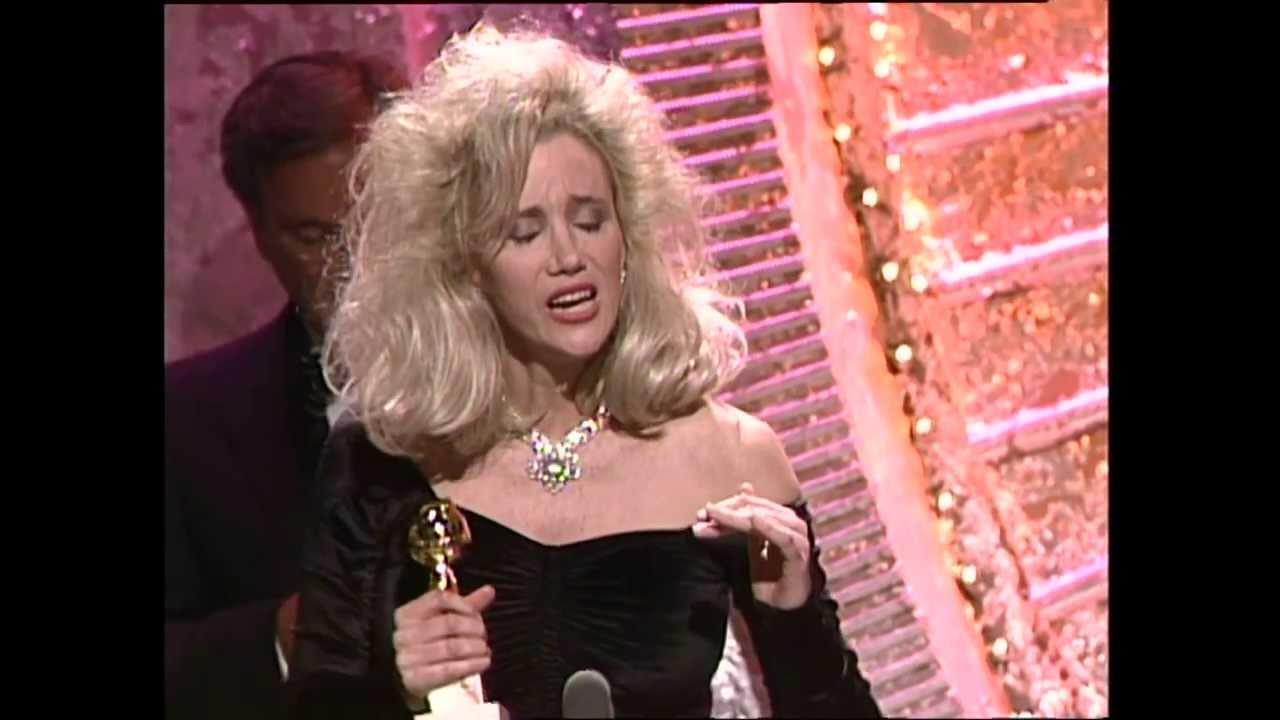
(Image via YouTube.)
Her fellow nominees were Meryl Streep for Ironweed, Holly Hunter for Broadcast News, Glenn Close for Fatal Attraction, and Cher for Moonstruck. Ironweed isn’t great but it had Meryl and Jack Nicholson and both were at the peak of their “we’ll get nominated for sneezing” eras. Hunter, as we mentioned, was the bright young thing of the moment. She’d gotten the role in Broadcast News only two days before filming began after Debra Winger dropped out. Glenn Close was the star of one of the year’s most talked-about films and her work in Fatal Attraction would become iconic, but it was a controversial movie and the sort of genre that voters frequently reject.
And then there’s Cher, the legendary diva who went from singer and variety show star to serious actress. She was derided for daring to make the jump from feathers and Sonny Bono duets to working with Mike Nichols and Robert Altman. But performance after performance proved her doubters wrong. She wasn’t nominated for Mask, which many interpreted as an active snub on the Academy’s part. She famously told reporters, “I’ll be back” after that. The next year, she was. Moonstruck is a blast and Cher is effervescent in it. This is one of the great rom-coms, and it’s Cher who makes it work with a classic movie-star performance. You can see why even hardcore sceptics were won over by her work, so of course she won.
(Image via YouTube.)
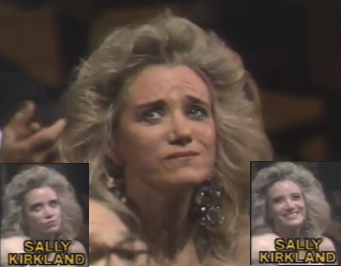
Sally wasn’t bitter. She often described that evening of the ceremony as being her Cinderella moment. Her awkwardness is evident in the Best Actress segment where she still seems stunned to be among the top five. She didn’t win but she got a lot of goodwill from her campaign. Sally told the Huffington Post that Gena Rowlands said, “I voted for you, Sally, but I have to confess something, I never saw the film, but I wanted you to win so much because of that campaign.” It was a victory for the little film, the indies that seemingly didn’t stand a chance in an increasingly commodified season. But it is also worth noting that the big winner that night was The Last Emperor, which is the anti-Anna in that regard.
If you’re like me, then you knew Sally Kirkland as a mascot of sorts on awards prognosticator communities and forums where open thirst and shameless campaigning is part of the fun. I’ve been browsing the various iterations of AwardsWorthy for about two decades now (yikes), and Kirkland’s thirst was often invoked when an actor of any given year was getting a tad too eager. Some looked at it derisively, but others enjoyed it. They liked that Sally made it happen for herself despite the odds. Why should a campaign suffer just because it doesn’t have, say, Netflix’s bottomless pockets behind it?
Obviously, awards season campaigning at its most ruthless also evokes bad memories of the likes of Harvey Weinstein, who used dirty tactics and wielded his kingmaking abilities against the women who tried to speak out against him. There’s a reason that Oscar campaigns post-#MeToo calmed down significantly. But the spunk of a one-person grassroots effort remains. Andrea Riseborough was dinged for her To Leslie campaign, but it worked and highlighted how effectively it can be done with good connections and the right degree of shamelessness. See also Melissa Leo, whose Consider photoshoot is gloriously tacky but the right spirit for the season. Frankly, I think we need more Sally Kirklands in any given season. It’s always more fun when there’s a brazen passion behind the push than some beleaguered A-Lister going through the motions.
After Anna, Kirkland worked consistently, leading up to her death, but she never really got another role as meaty as the one that landed her that nomination. You may have seen her in Bruce Almighty, JFK, or Roseanne. She did a lot of TV work, but also just never stopped hustling. I’ve been getting publicist emails for years about something called Sallywood, wherein she plays a version of herself. She was still a regular at any event that would have her. I like that she never stopped fighting for another Anna moment. Isn’t that what it’s all supposed to be about?