Oscar Seasoning: Halle Berry Made Hollywood History… Then Hollywood Ignored It
One Black woman has won Best Actress. 24 years later, not much has changed.
This year’s Best Actress race was a stacked one. The five nominees could easily be swapped out for another set of candidates without complaint. Right now, the race seems to be between Jessie Buckley and Rose Byrne, with the Hamnet star in front with major predecessor wins, but Byrne is favoured more by critics. It’s also, alas, another all-white line-up. Chase Infiniti, the breakout star of One Battle After Another, didn’t make the cut even as the movie cemented its status as the Best Picture frontrunner. Even by the mega-white standards of the Academy, the Best Actress category is shockingly un-diverse. Only two women of colour have won this award in the past century: Michelle Yeoh and Halle Berry.
In 2002, Halle Berry won the Best Actress Oscar for Monster’s Ball, a drama about a prison guard who falls in love with the widow of a man he helped to execute. She made history by becoming the first Black woman to win the award, and only the seventh to receive the nomination. Berry herself, and many others, believed that this punch through the glass ceiling would open the floodgates for women of colour to get their dues in Hollywood. But the entertainment industry almost immediately closed the doors behind Berry.
(Image via YouTube.)
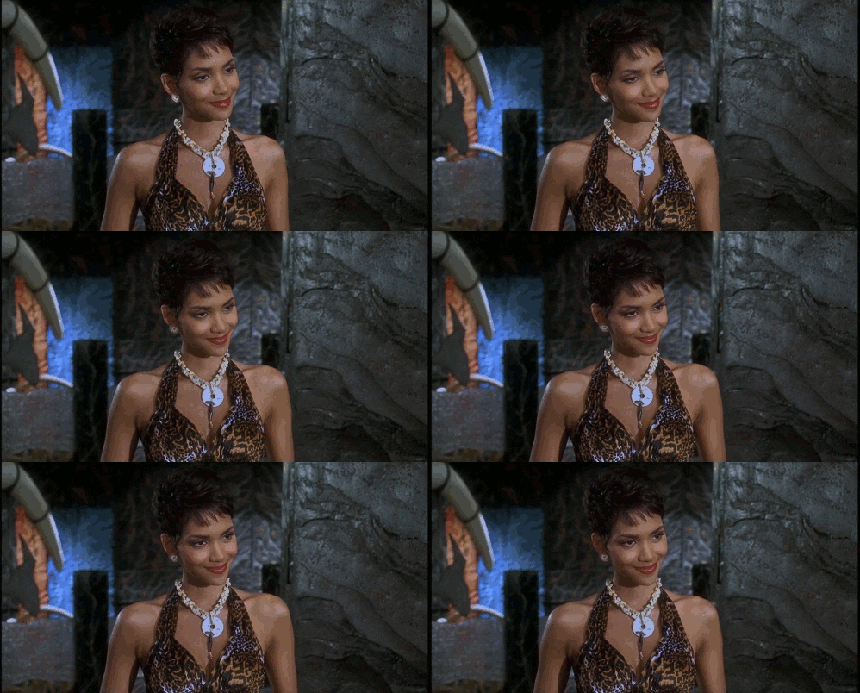
Maria Halle Berry was born in Ohio and got her start as a beauty queen, becoming the first African-American to represent the United States at the Miss World beauty pageant. She moved to New York to establish herself as an actress. In 1990, landed her first role in Spike Lee’s Jungle Fever as a drug addict, and she committed hard to the part. Berry visited crack dens to see the ravages of addiction first-hand, which her co-stars thought was going too far. She also didn’t shower or brush her hair and teeth for a fortnight for her scenes, a process she says she’d never do nowadays. But it put her on the map, and she started working steadily in films like Boomerang, Losing Isaiah, and Bulworth. The Flintstones proved to be a major film for Berry because it was the first role she landed that was initially written for a white woman.
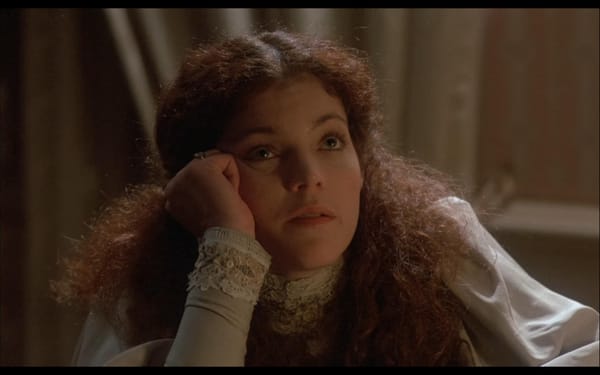
In 1999, she played Dorothy Dandridge, the first Black woman to be nominated for the Best Actress Oscar, in the TV movie Introducing Dorothy Dandridge, for which she won an Emmy. She also landed the role of Storm in the big-budget live-action take on X-Men, although noted accused sex criminal Bryan Singer clearly didn’t give a sh*t about the character and consistently sidelined one of comic book history’s greatest heroines because he sucks. At the dawn of a new millennium, Berry was doing well, even if the roles weren’t consistent. She was prized for her beauty but often reduced to sex symbol parts, where her body was seen as the hook. She famously did a topless scene for the cyber-thriller Swordfish, something she’d refused to do for most of her career, and the press went wild speculating that she received a $150k per-breast bonus for doing so.
(Image via IMDb.)
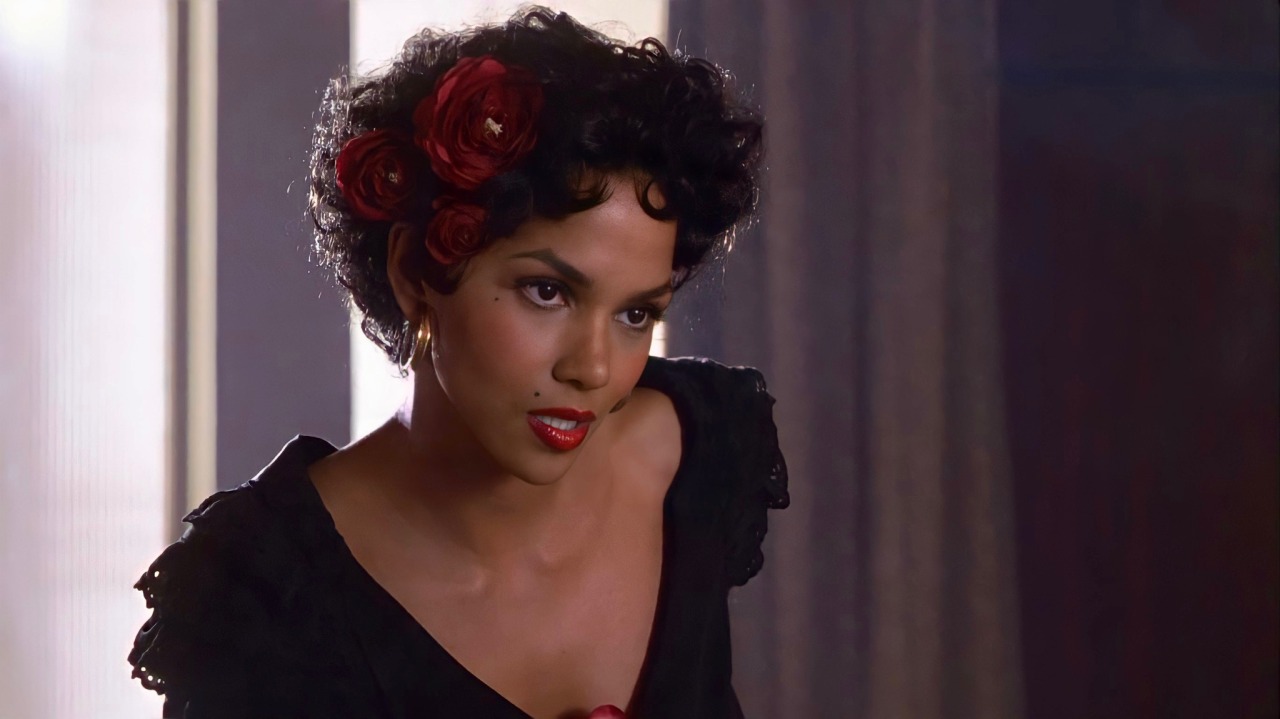
Monster’s Ball was a chance for Berry to really show what she was capable of, but it wasn’t a film or role without controversy. It was a film about a racist white guy who falls for a Black woman whose husband he helped to execute. Many saw the role of Leticia as a blend of gendered and racial stereotypes about Black women, their sexuality, and the narrative cliché of them existing to make white men’s lives easier. Eugene Boggs of The Los Angeles Times wrote, “Simply and bluntly, the film is a Ku Klux Klan fantasy: A poor white racist gets to “legally lynch” a black man (conveniently depicted as a triple murderer who proclaims himself a “bad man”), then takes the dead man’s dream woman, at her invitation (no rape necessary), and, finally, gets her acquiescence if not outright approval of his killing of her black man.”
Angela Bassett, who had been Oscar-nominated for playing Tina Turner in What’s Love Got To Do With It, had turned down the lead role, telling Newsweek that she found the role to be “such a stereotype about black women and sexuality” (but she wasn’t cruel towards Berry or her performance, it should be noted.) And even critics who didn’t like Monster’s Ball were pro-Halle. She worked for SAG scale to help keep the budget low and was committed to getting the project made. It paid off with the best reviews of her career, and the Oscar buzz followed almost immediately.
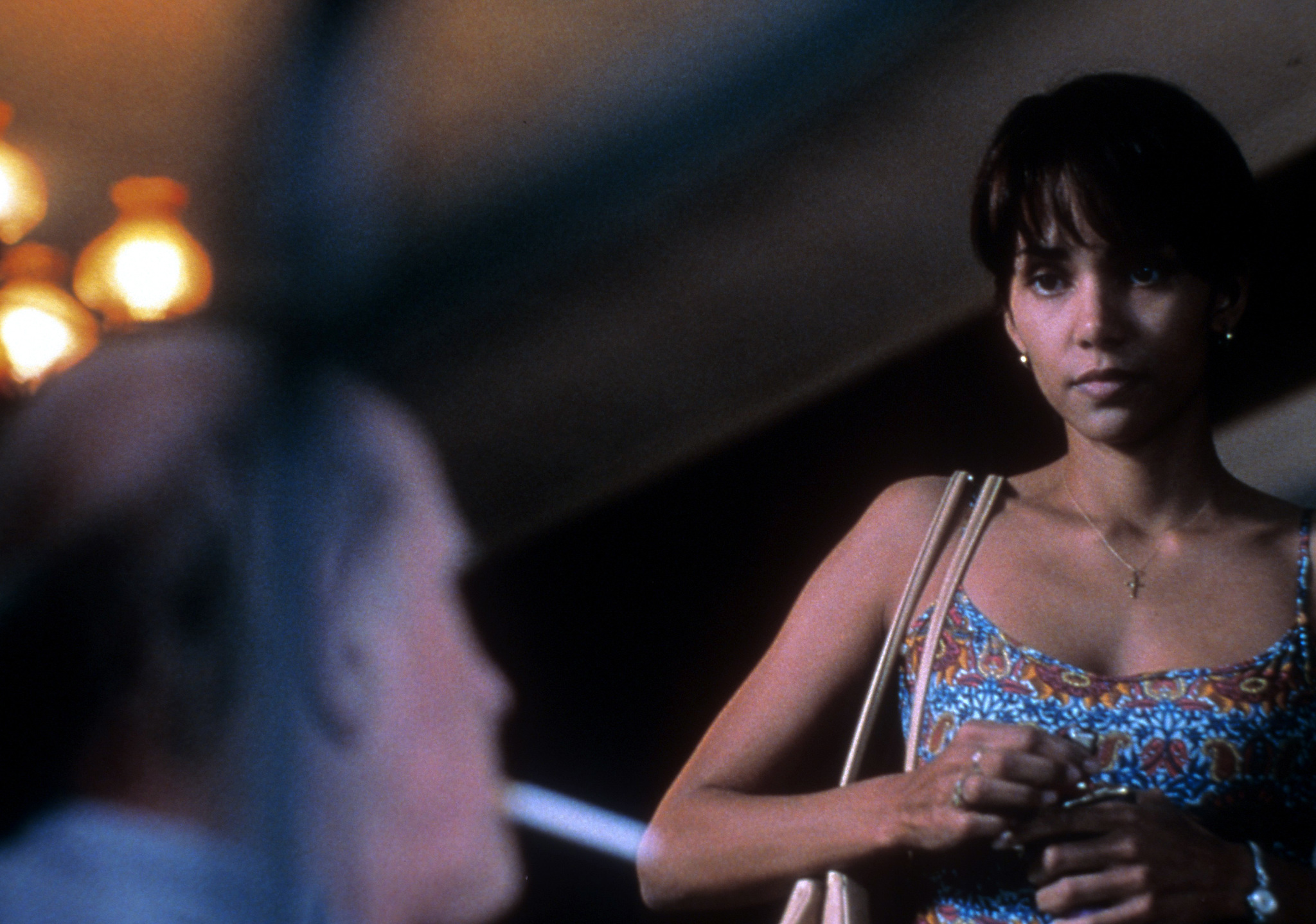
(Image via IMDb.)
The 74th Academy Awards were an interesting one. It was the first ceremony after September 11, and security was high around the Kodak Theatre. There had been talk of cancelling the event, but the Academy argued that doing so would send the message that the terrorists had won. Woody Allen, who famously never attends the Oscars even when he wins, appeared to lead a tribute to New York City, with Nora Ephron directing a short film on the subject. It was the first year with a Best Animated Feature award, which went to Shrek.
The winners of the night were a, well, mixed bag. Ron Howard beat Robert Altman (!) and David f*cking Lynch to win Best Director for A Beautiful Mind, a truly terrible movie that stands tall as one of the worst Best Picture wins of all time. Jim Broadbent won Best Supporting Actor for Iris, but we all pretend it was for Moulin Rouge! Denzel Washington won Best Actor for Training Day, which is a great performance, but even at the time, people wondered if it was the Academy atoning for him not winning for Malcolm X. At least Sean Penn didn’t win for I Am Sam. No, seriously, he got nominated for that. Yiiiiiiikes.
Berry’s fellow nominees were: Judi Dench for Iris, where she played the author Iris Murdoch in her later years as she succumbed to Alzheimer’s; Sissy Spacek in In the Bedroom, Todd Field’s family drama which was Miramax’s big player of the night; Nicole Kidman for Moulin Rouge!, her first-ever Best Actress nomination; and Renée Zellweger for Bridget Jones’s Diary, the classic rom-com and a rare comedic performance receiving a Best Actress nod. Honestly, it’s a solid line-up. They’d all make decent winners. But it was Halle’s to lose. She walked the red carpet in an era-defining Elie Saab number that screamed, “this is my moment.”
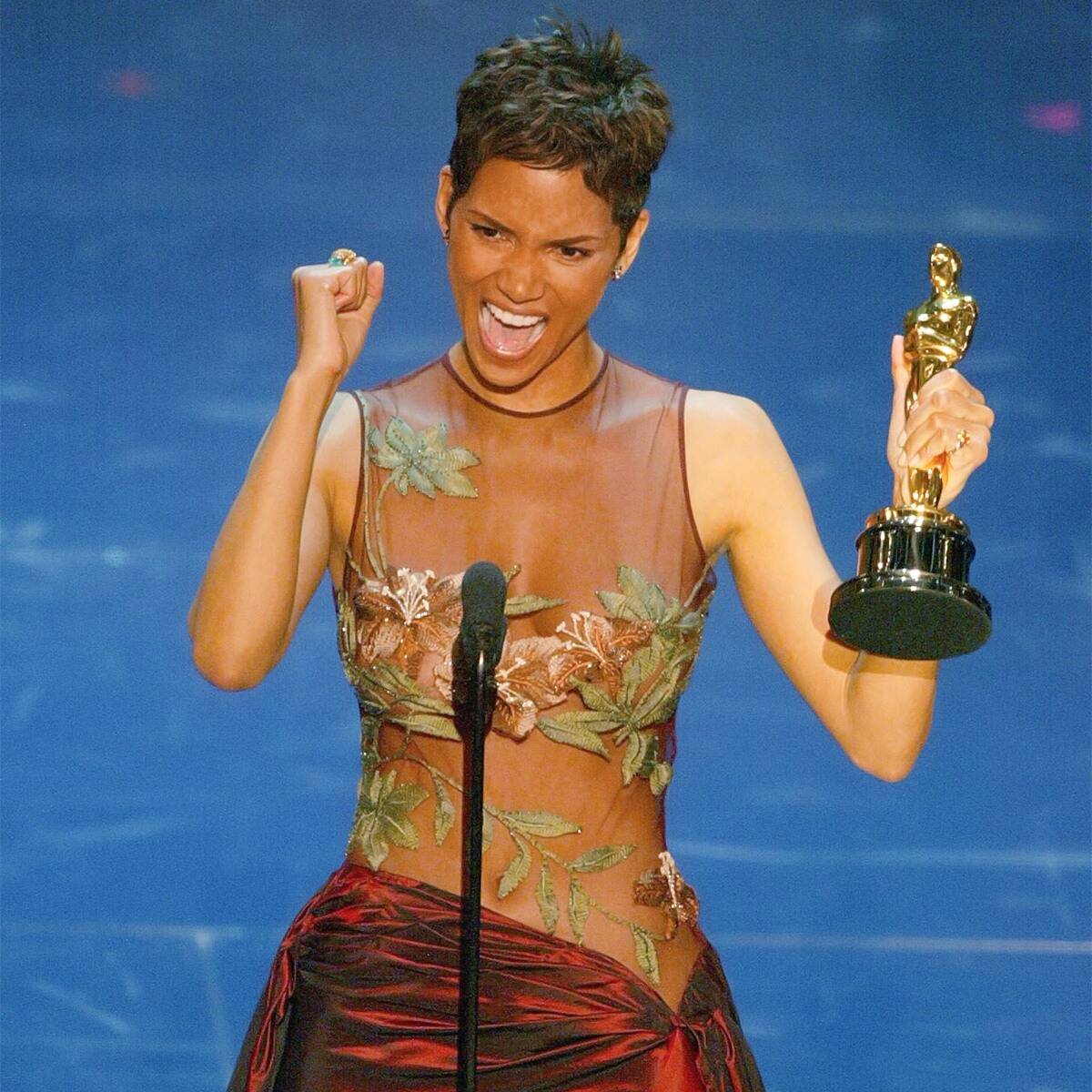
(Seriously, one of the best Oscar dresses ever.)
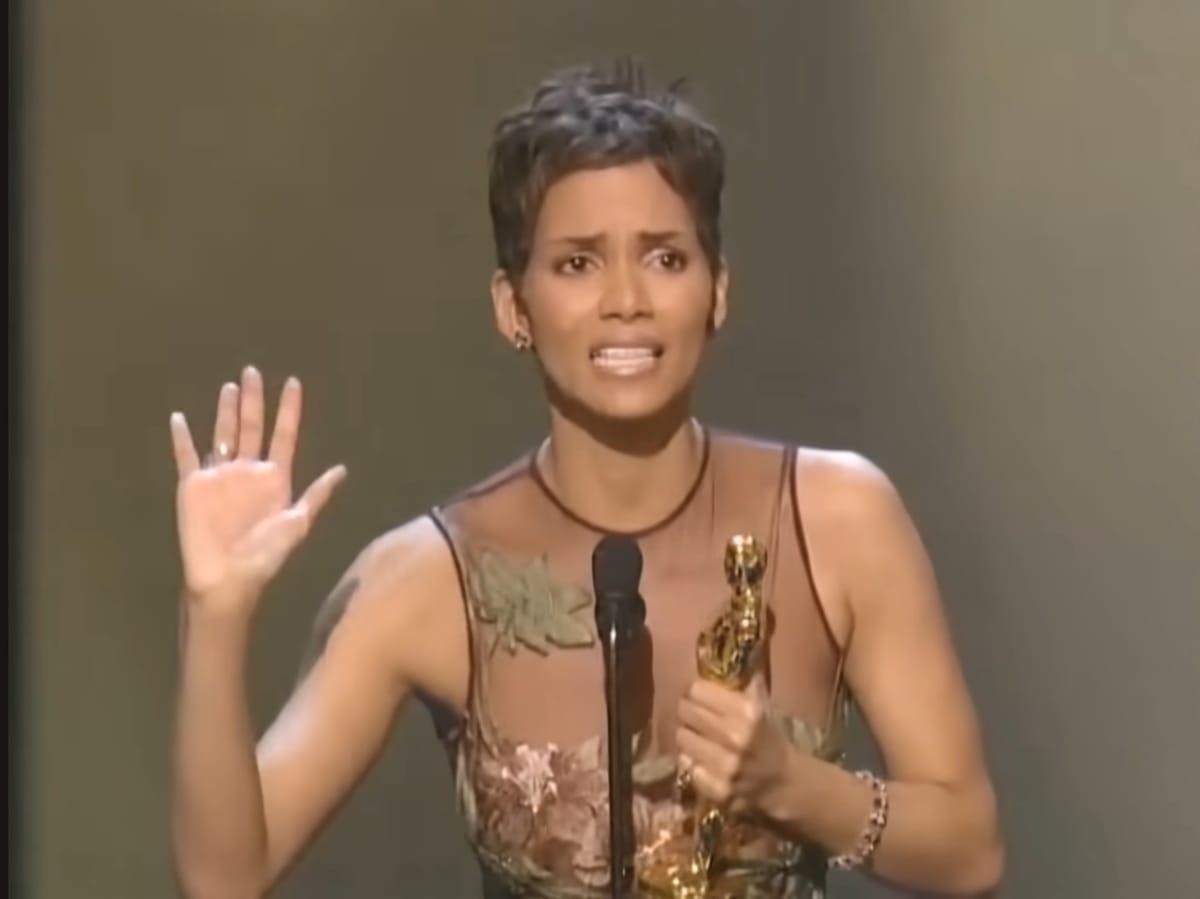
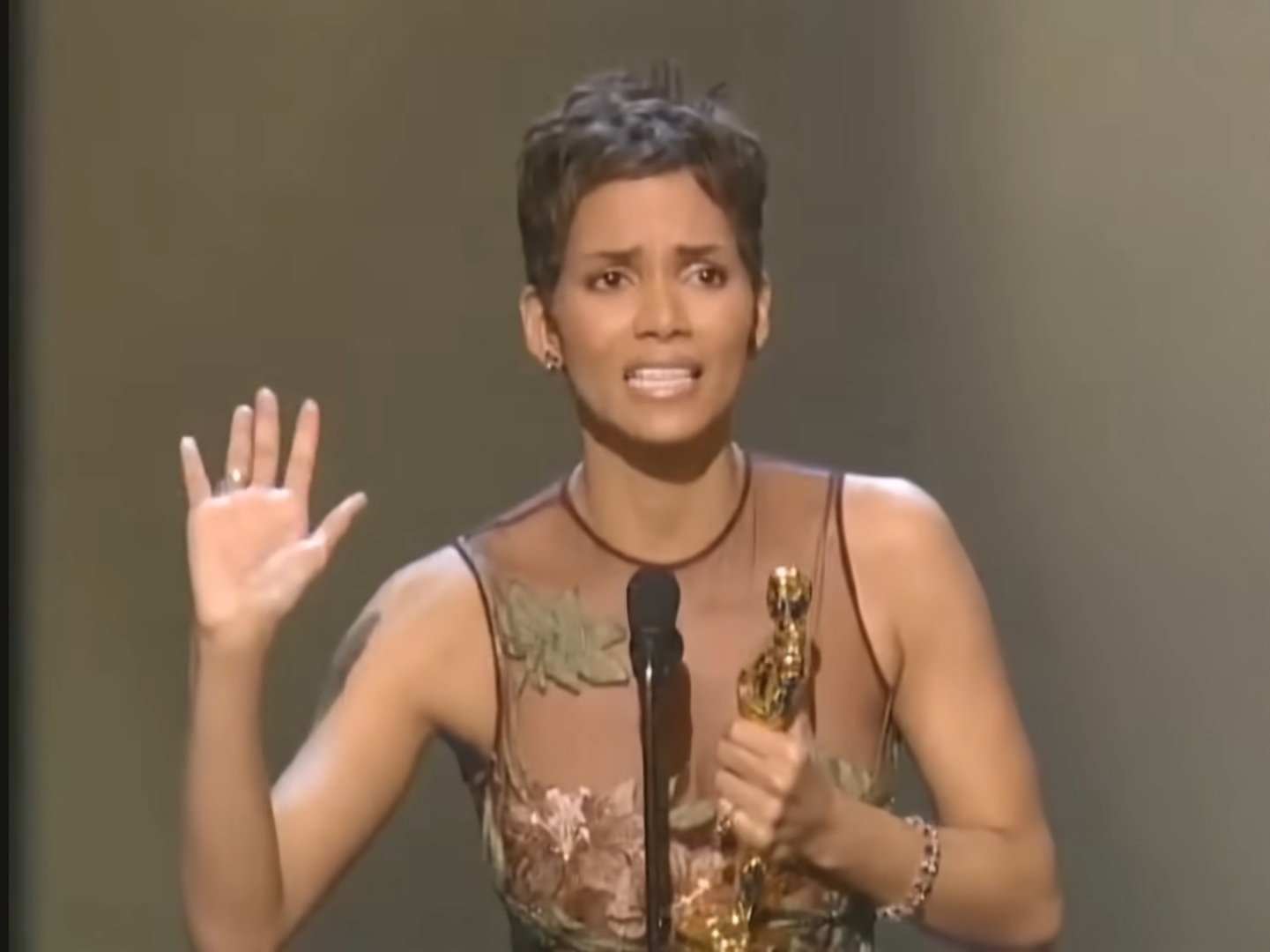
It was an evening of Black excellence in many ways. Whoopi was an excellent host, Denzel won, the honorary award went to Sidney Poitier, and then Halle won. She was overwhelmed by the announcement and dedicated her win to “Dorothy Dandridge, Lena Horne, Diahann Carroll […] for the women that stand beside me, Jada Pinkett, Angela Bassett, Vivica Fox. And it’s for every nameless, faceless woman of colour that now has a chance because this door tonight has been opened.” In terms of iconic Oscar speeches, it’s really up there with the best of them.
Looking at reports of that night’s Oscars, you get the sense that a lot of white journalists and industry experts didn’t see Berry’s win as that big a deal. They didn’t seem aware of, willingly or otherwise, the historic nature of the moment. Many people just mocked Berry for being so emotional. It’s not that write-ups ignored how big the night was for Black talent, but they didn’t seem cognisant of how this moment could and should become something bigger. Maybe it was the post-9/11 of it all, or a genuinely awful film winning Best Picture. Or it was just racism. Probably that.
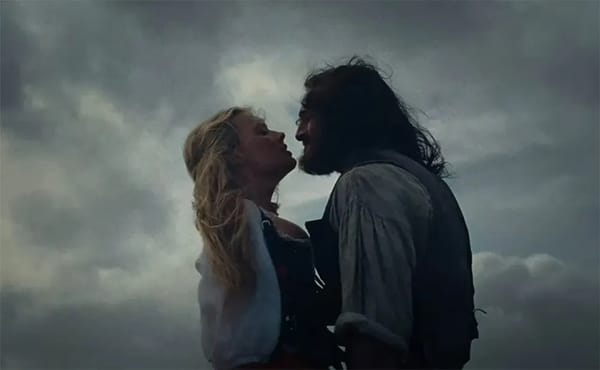
Right after winning her Oscar, Berry’s next role was as a Bond girl in Die Another Day. There was talk of giving her character a spin-off movie, which fell apart after the Bond franchise went on ice before the Craig reboot. She played Storm again and got a leading role in horror movie Gothika. Then there was Catwoman. Bless. It’s truly a terrible movie. Berry was screwed over with that one. Imagine her playing the actual Selina Kyle and not this, well, whatever that movie was. At least she was game enough to accept her Razzie in person, but it also signalled how Berry was not getting the post-win boost that was typical of Oscar winners.
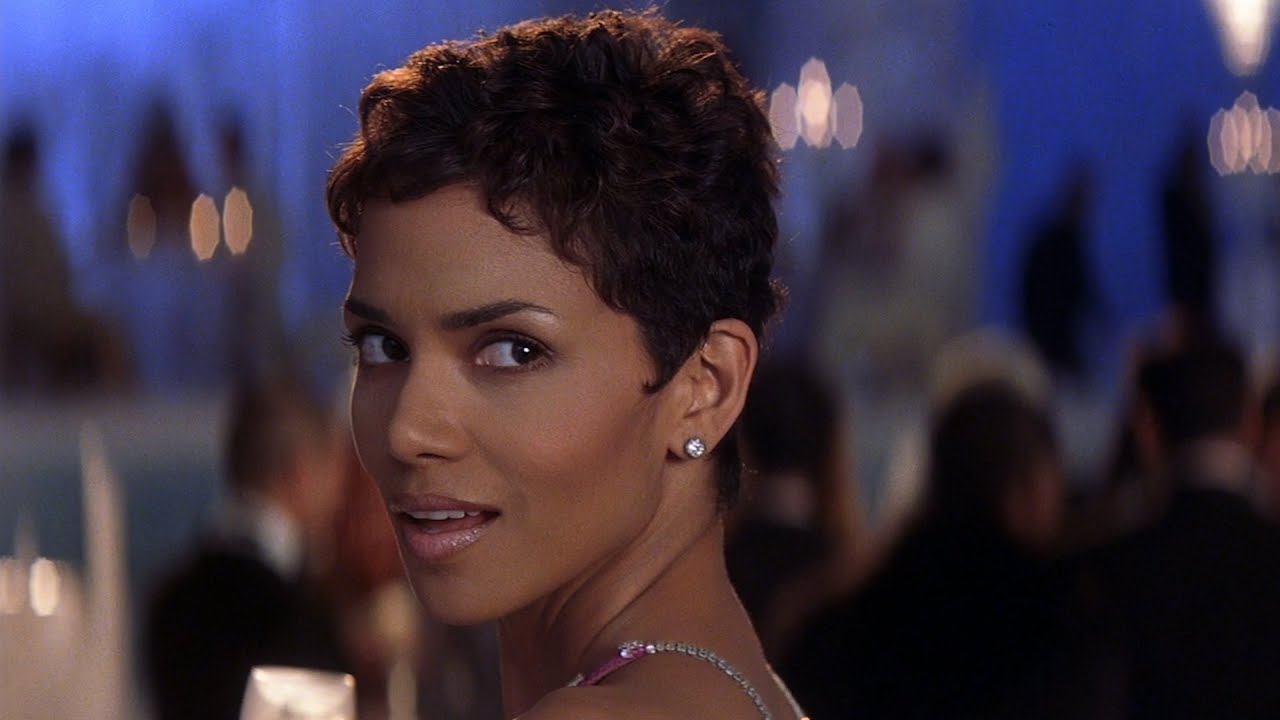
(Image via IMDb.)
While promoting her latest movie, Crime 101, Berry spoke to The Cut about how that Oscar win “didn’t necessarily change the course of my career.” She had hoped “there was going to be a script truck showing up outside my front door”, but the industry still saw Black actresses as niche. “While I was wildly proud of it, I was still black that next morning. Directors were still saying, ‘If we put a black woman in this role, what does this mean for the whole story? Do I have to cast a black man? Then it’s a black movie. Black movies don’t sell overseas.’”
She wasn’t alone in saying this. Lupita Nyong’o, who won Best Supporting Actress for 12 Years a Slave, told CNN last year that most of the roles she was offered were variations on slave roles. Look at the history of women of colour winning or being nominated for Oscars, and see how often their careers either stagnate or evolve far more slowly than their white counterparts. Diahann Carroll didn’t get another movie role after her Oscar-nominated turn in 1974’s Claudine until 1982. Rita Moreno won an Oscar for West Side Story and was candid at the time about how the roles she was offered didn’t improve in the slightest. Angela Bassett says she didn’t receive any offers of work for a year and a half after she played Tina.
Thanks for reading Gossip Reading Club! This post is public so feel free to share it.
Every time a film or TV show comes along with a diverse cast or concept that does well with audiences, we have to see the same cycle of think-pieces over what it means for the industry. It never seems to break through the trite and ageing status quo that inclusivity sells, and the viewership for it has only grown. It doesn’t help that such instances are always met with the tedious cycle of “anti-woke” fake culture war nonsense, a barrage of grievance politics pushed by racists who don’t care about art beyond its ability to cement their narrow worldviews. The issue is that executives, looking for an excuse to avoid change, place too much weight on these braying but ultimately minority voices. They pretend that men won’t watch films about women, that white people will never relate to people of colour, and that no straight person would care about a queer romance. Every example to the contrary is seen as the exception and not the rule.
In 2026, we saw two Black women nominated for Best Supporting Actress, and none in Best Actress. To this day, only 16 nominees out of hundreds were for Black women. Men fare a little better, but not by much. A Black filmmaker has never won Best Director, and a Black woman has never even been nominated. The incremental progress Hollywood makes in terms of inclusivity is always conditional, and it’s quickly dismissed the moment it’s politically feasible to do so.
Halle Berry really stands tall as one of many examples of how racism prizes abject stupidity and nonsensical decision-making over common sense. Are you telling me a Storm movie with Berry wouldn’t have been a huge hit? Or that a Catwoman movie made by someone who didn’t think women were icky and shallow couldn’t have been a game changer for superhero movies? John Wick 3 proved that she’s an impeccable action star, and her own directorial debut, Bruised, showed she’s got great potential behind the camera. Every move Berry’s made to cement her status as a consistent and hard-working presence in Hollywood has been in spite of the industry. Such is the case for too many women of colour in entertainment.