Issue 35: The Rise of Meryl Streep
The "greatest actress of all time" was heralded as such from the early years of her career, and Time was there to make the declaration.
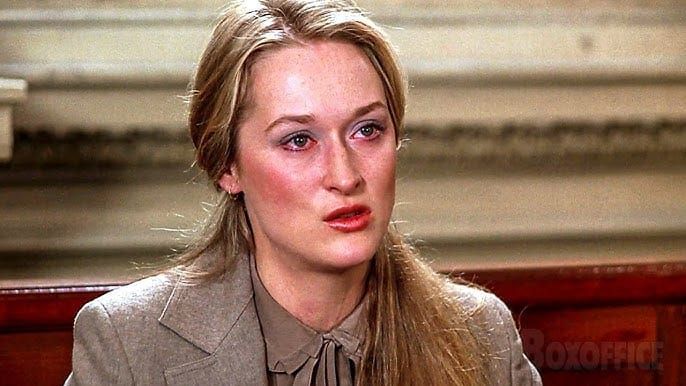
It wasn’t a massive surprise that The Devil Wears Prada 2 ended up making big money at the box office. Legacy sequels with big millennial appeal and a female audience in mind are oft-underestimated but everyone knew this was a hit in waiting. The first film, an uncommon instance of an adaptation being better than its source material, is one of the 2000s’ comedy classics, endlessly quotable and all too familiar in its depiction of a nightmarish but oddly appealing workplace situation. And holding it all together was Meryl Streep, the “greatest actress of her generation” who suddenly, in middle age, became an icon. As I wrote for Pajiba, this was when Meryl became MERYL, and it gave her career a massive boost with critics and audiences alike.
The name Meryl Streep is synonymous with excellence and has been for decades, and that’s been taken for granted. Dennis Lim once said that "Streep – in her own iconic, institutional way – is, yes, underrated." One of the things The Devil Wears Prada was a jolt to her image that reminded people of just how good she could be, after a few years of being seen as, if not a has-been then at least with her best years behind her.
Time. "What Makes Meryl Magic." September 7, 1981. John Skow.
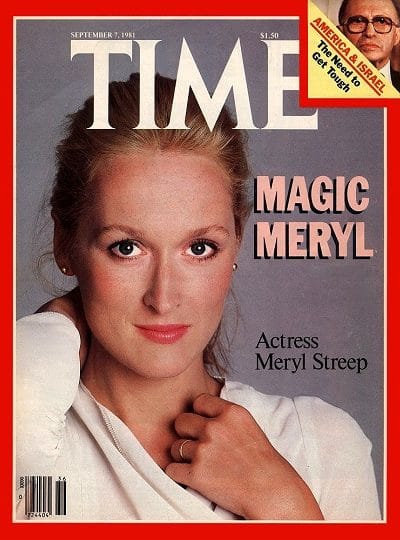
By 1981, Mary Louise Streep was already an Oscar winner. She'd taken home the Best Supporting Actress trophy for her work in Kramer vs. Kramer, stealing the show from Dustin Hoffman with an empathetic portrayal of a woman who leaves her family and then fights to reclaim custody of her son. This Time profile sees her on the set of The French Lieutenant's Woman, Karol Reisz's adaptation of the postmodernist novel that many saw as unadaptable. The lead role in this reimagining would require an actress who could play two very different parts: the shamed woman who falls for a gentleman palaeontologist in Victorian-era England, and the American actress playing her in a current-day movie while having an affair with her co-star.
"An actress who can manage this adequately is a remarkable technician. One who can do it well is a rarity of the sort who comes along once or twice in a decade," the piece declares. And who can do it? Meryl, of course. Reisz said he never even considered another actress, which is a strong statement to make given that Streep had only made five movies at that time. Granted, she had an Oscar, another nomination, and had worked with the likes of Jane Fonda, Robert De Niro, and Woody Allen. Before that, she had earned rapturous reviews for her work on stage, landing a Tony nomination and doing a legendary Much Ado About Nothing with Raul Julia for Shakespeare in the Park. It hadn't taken her long to make a big impression. "What is remarkable about Meryl Streep's brief film career [...] is that she has brought this same feeling of inevitability even to relatively minor parts."
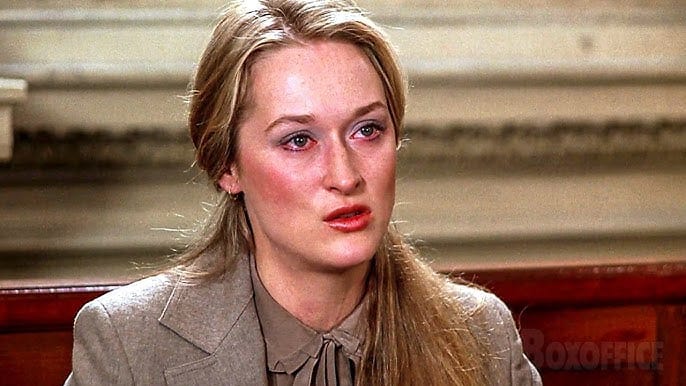
That had led to an immense amount of hype by the time the ‘80s rolled on. ""For a while there it was either me or the Ayatullah on the covers of national magazines," she says with no pleasure. "It was excessive hype."" And this piece doesn't exactly tone down that rhetoric. It's practically giddy in describing her how "she manages to make her face an astonishingly clear reflection of her character's complexities [...] There is no doubt that in an instant this woman could take flight toward any state of emotion or mind."
But it's also reflective of how critics talked about her. She was heralded almost from the beginning for her incredible range. In the course of five years on stage, she'd done Shakespeare, Chekhov, Tennessee Williams, and a Kurt Weill musical. On TV, she was in a miniseries about the Holocaust and a drama about ice hockey. Even her scant filmography covered an immense spectrum of roles: the terrified wife dealing with her husband's trauma in The Deer Hunter; the icy lesbian ex-wife in Manhattan; the ambitious lawyer who engages in an extramarital affair in The Seduction of Joe Tynan. It’s not that audiences were unused to seeing an actress of impeccable skill, but Hollywood is limiting when it comes to women, and the post-studio era of New Hollywood wasn’t always brilliant when it came to female roles. These were movies made by young, bratty men in baseball caps who often struggled to move past the hot girlfriend or bored spouse tropes. Even a lot of incredible actresses from this era were underestimated by the press or viewed as sex symbols first, like Jessica Lange (or were lightning rods for political controversy, like Jane Fonda, who won two Oscars in the ‘70s.)
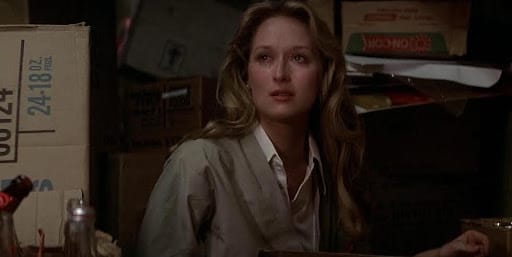
Streep is undeniably gorgeous – want to talk about her having the best hair in the business?! – but a lot of this early coverage focused on her not being a traditional beauty. It seems bizarre to treat Streep as though she wasn’t traditionally pretty, and yet even she herself talked about feeling out of place among her peers. When asked by Time about her "unusual looks", which they do posit as a compliment, she says, "Watching the film, I couldn't help wishing that I was more beautiful." She also shares the now-infamous story of meeting legendary nightmare producer Dino De Laurentiiis at an audition and hearing him and his son talk in Italian about how she was “not beautiful.” They didn’t know that Streep had studied Italian at Vassar and could understand their conversation.
The Time article positions this detail as one of the rare moments of friction in Streep’s meteoric rise. She was raised by a loving and supportive family who paid for her voice lessons. She was a good student, popular with classmates and got our of her self-described ugly duckling phase pretty quickly. It seems that every teacher she encountered understood her talent to be beyond prodigious. Certainly, it was evident enough for Yale to offer her a three-year scholarship to their drama school, where she played between 12 and 15 roles a year. Frankly, if Meryl appeared on the scene now, she’d be the subject of a hell of a lot of discourse about privilege.
But if that were to happen, it would probably be eased by Streep’s clarity and down-to-earth approach to discussing her life and craft. She hates the competitive aspect of the job, comparing the “this performance is better than that one” mentality to the plague of sports media. The infighting over roles and prestige exhausts her. She’s humble without being needlessly self-deprecating, which is harder to do than it looks. There’s a real “get on with it” quality to Streep here, one that remains in interviews to this day, the proof of a woman who puts the work first and thinks self-pitying is too showy. The death of her partner, the legendary actor John Cazale, is discussed. As she tended to him while he suffered from the agony of bone cancer at the age of 42, she had to leave the country to film a miniseries in Europe. Her co-star praised her "tremendous professional devotion." One wouldn’t have blamed her had she decided to abandon those responsibilities to deal with her grief, but the Streep portrayed her seems uninterested in putting herself before anything else. The piece finds her in a better place, married to Don Gummer and the mother of a son (they’ve since split and she is maybe dating Martin Short.)
Reading these details, I wondered a lot about how a male actor would be framed if he was in a similar position. I’m not sure much would have changed, which is fascinating. Can’t you see these points – the legendary talent, the talk of their looks, the celebration of their commitment even in the face of tragedy – being written about, say, Gene Hackman or Dustin Hoffman? The Time article doesn’t deny Streep’s femininity or explicitly talk about her as an exception to her gender. It doesn’t treat her as being “not like other girls.”
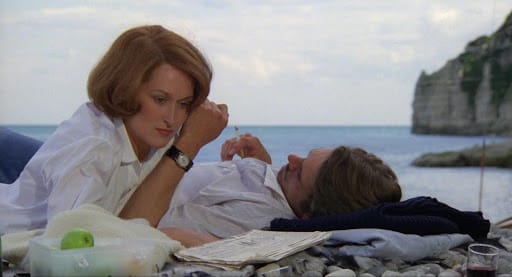
That feels like a miracle given the time. Hell, it’d feel like a miracle now. So, I think this really drives home how exceptional Streep was seen as by the industry and public. They were so taken by her unique range and power as a performer that they stopped being sexist for a bit. Even when they describe her as "a liberal who is outraged by the Reaganauts in Washington, and a feminist who supports the ERA and who gets angry at the way films exploit women in sex scenes," they don't include some snide quip about it.
And what was next for Streep? A little film called Sophie’s Choice. She was so determined to get the part that would land her that second Oscar that she obtained a pirated copy of the script and practically begged director Alan J. Pakula for the chance to audition. She even urged her pal, Kevin Kline, to put himself forward for a supporting role. To prepare, Streep said she was studying Polish five days a week for three months. "I haven't picked her apart yet. First I'll learn Polish. Then I'll forget me. Then I'll get to her. That's my plan of action."
The piece ends with a friend and collaborator of Streep declaring, "I'm convinced we haven't yet begun to see the richness of her talent. In films—which always do the obvious—we've only seen about ten percent of her." And he was right. The 1980s alone would bring her Silkwood, Out of Africa, Plenty, Heartburn, Evil Angels, and Ironweed. Six Oscar nominations and one win in ten years.
Frankly, we could be here for weeks dissecting her career beat by beat: her leap into comedies like She-Devil and Postcards From the Edge; the failed Oscar bait years of The House of the Spirits and Dancing at Lughnasa; being Bart Simpson's girlfriend and Bill Dauterive's aunt on TV; Angels in America! I feel like we will return to Meryl in the future, if only to see how the conversation evolves in those fun and weird ways. Up next, she's in Greta Gerwig's Narnia movies, reportedly voicing Aslan, and she's still knocking them out in Only Murders in the Building. The joy of performance is that, even with her incredible range of roles, there are many elements left undiscovered for her to delve into. Imagine Meryl working with a Lynne Ramsay or doing an Ari Aster horror. Streep herself has said she’d love to work with Scorsese, and really, isn’t it odd that she hasn’t already?
There’s only one Meryl, and her skills helped her to avoid being typecast or dismissed even as she got older and had a few box office flops to contend with. I can’t help but wonder who could inherit her crown, or if we even have a system in place that would allow for new generations of Meryls to rise to the forefront. There should be more than one. I’m sure Streep would have liked more GOAT contemporaries during her rise. It’s not meant to be a sport, as she said. But she's still winning it.
Thanks for reading. Now that the Gossip Reading Club is on Ghost, free of the stranglehold of Substack, I’m hoping to keep things moving forward and to continue growing our readership. The big downside about jumping ship is that it’s far easier to expand your subscriber base on a platform with a built-in social network than it is to go solo. So, I would greatly appreciate it if you could share around the newsletter far and wide. Transferring everything over to Ghost, unfortunately, lost me a ton of subscribers, and I’m still working to dig myself out of that hole.
If you’d like to make a one-off donation to support my work, you can check out my Ko-Fi page.