Issue 34: Nicki Minaj Walks Out
The Queen of Rap called out the New York Times' bad questioning. It's a far cry from the MAGA Nicki of today.
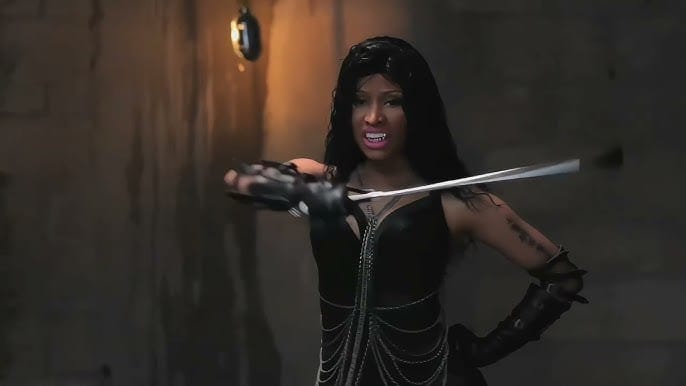
When Nicki Minaj walked onto the stage of Talking Points USA alongside Erika Kirk, it wasn’t surprising. The rapper had not been quiet in her downward spiral into cruelty and conspiracy or her increasing allegiance to the hard right. Spewing inanities about gender and how you can’t say anything these days (yawn) to an easily entertained crowd of bigoted losers was an embarrassing but predictable turn. Most recently, Minaj has been cozying up to Donald Trump, calling herself his biggest fan, and spewing homophobic insults at Don Lemon on social media. It’s an indignant fall from grace from one of the most influential figures in rap, and someone who, only a decade ago, was an undisputed megastar.
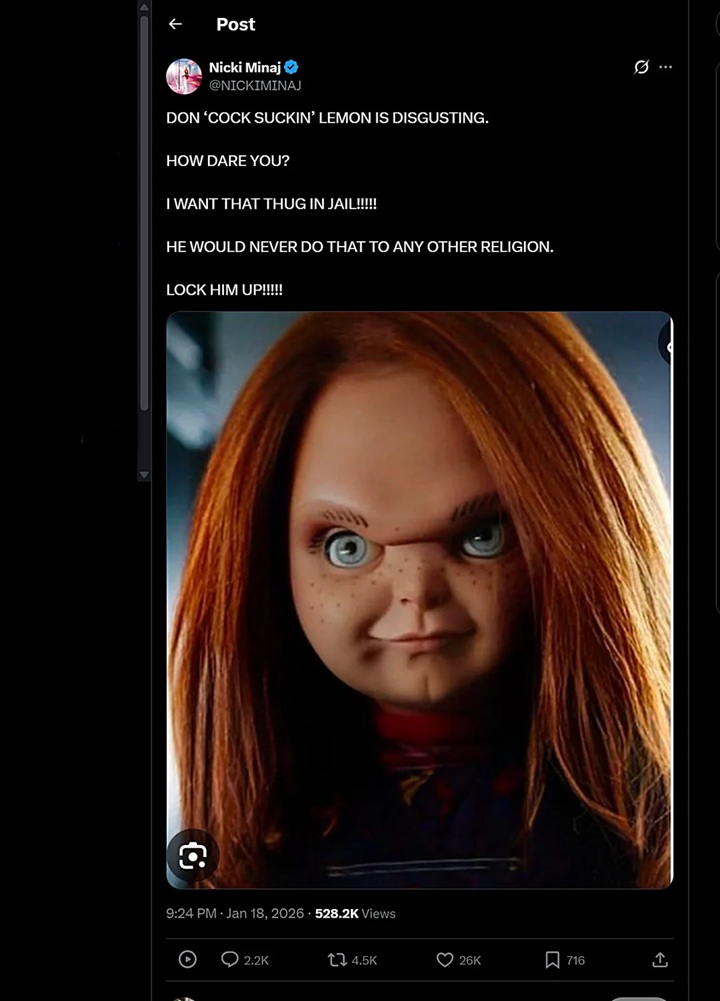
(Note to Nicki: Chucky’s a queer ally icon with a non-binary kid. You don’t get to claim him.)
Now that it’s possible to call out Minaj without pushback (and the notoriously nasty Barbz seem to have been forced to eat humble pie, if only for a moment), it’s open season on sh*t-talking this loser. I support it. One person who recently spoke out was Erik Madigan Heck, the photographer who shot Minaj for The New York Times in 2015. Heck talked about how unprofessional and late Minaj was, and how the entire affair was a “sh*t show.”
But his comments on Instagram are also self-aggrandizing and reek of the “well, I never liked them anyway” smarm that tons of people love to do once a celebrity has a downfall. “At the time I also remember thinking, why is Nicki Minaj worthy of being a NYT Magazine cover subject?” he asked. Dude, I know this woman is objectively terrible and I’m sorry you had a bad experience with her -- a common occurrence from what I’ve heard among the entertainment world -- but this is also dumb. Why was she getting a New York Times profile? Because she was one of the most famous people in the world in 2015. She was a record-breaking musician who helped to shatter rap’s glass ceiling. You can’t deny that.
But that profile? Well, it’s infamous for its own reasons. It sparked a firestorm of discourse, dividing people between Team Nicki and Team NYT. Over a decade later, how does the piece read? And how do we contend with Minaj’s image and the ways it was often poorly treated when we know what she would become?
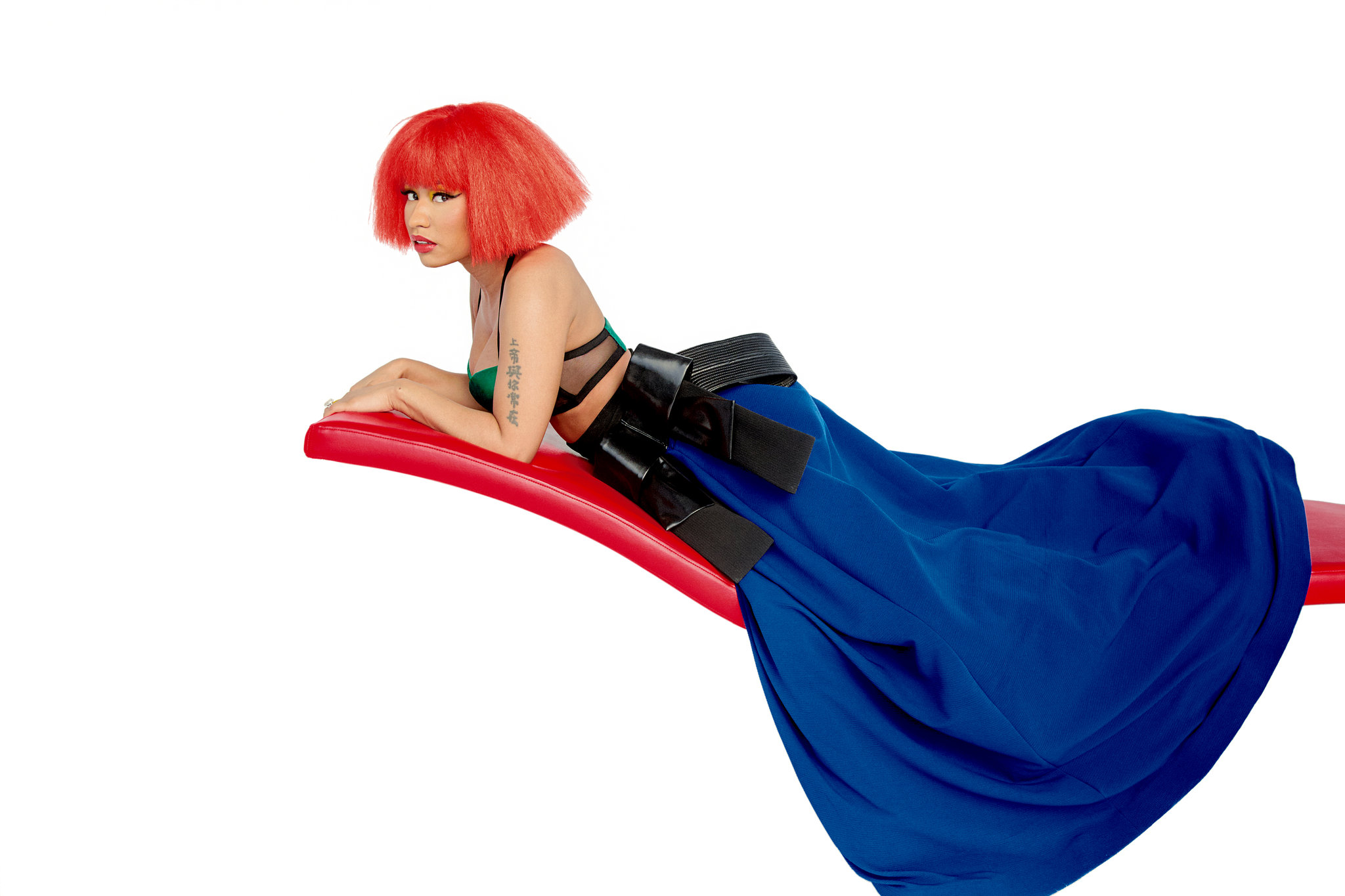
The New York Times Magazine. “The Passion of Nicki Minaj.” October 7, 2015. Vanessa Grigoriadis.
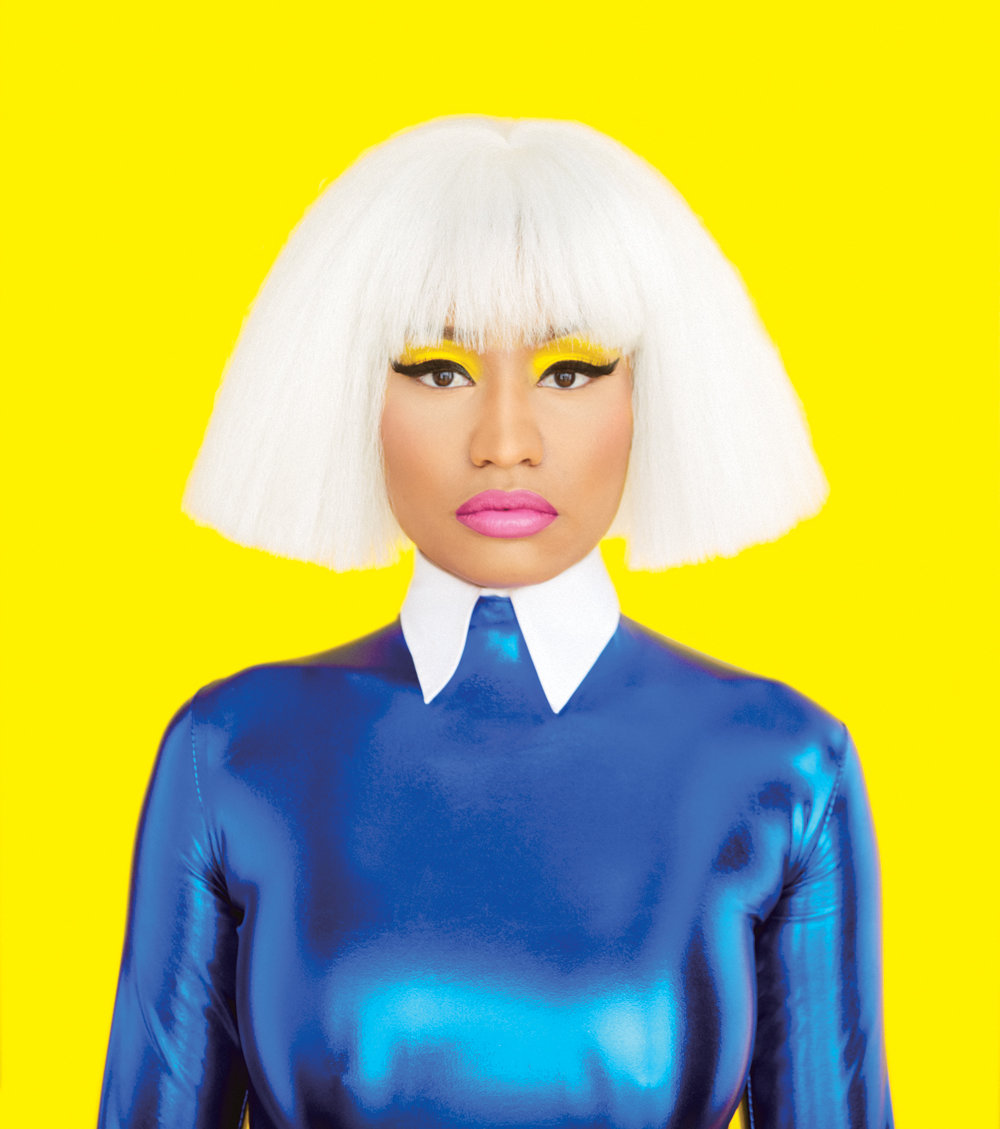
(Image via the New York Times.)
It’s 2015. Barack Obama is still in office, but the beginnings of the MAGA movement are taking root. Britain re-elected David Cameron’s Tory government in a landslide. Star Wars: The Force Awakens was released in cinemas and earned $2 billion. Beck won Album of the Year at the Grammys. Nicki Minaj will end the year with five singles on the Billboard Year-End Hot 100 chart. That year, she’d go on her world tour to promote her 2014 album The Pinkprint, which would go two-times platinum and land her a Grammy nomination for Best Rap Album (she lost to Kendrick Lamar for To Pimp a Butterfly.) Make no mistake: it was a good time to be Nicki.
The New York Times profile opens with a statement that remains true to this day: “Pop music is dominated almost exclusively by the female star.” Nicki stood tall alongside Beyoncé, Katy Perry, Rihanna, Lady Gaga, and Taylor Swift. But as well as being pop, she was rap. At the time, rap was topping the charts. Taylor, Selena, and Ariana had rappers on their singles to push up sales. A Nicki feature was gold: “Bang Bang”, with Ariana and Jessie J, was one of the year’s biggest hits. Not that she always needed a pop diva to bolster her own numbers. 2014 gave the world “Anaconda.”
As Vanessa Grigoriadis, the profile writer and long-time pop culture journalist, notes, these pop stars were “engaging in a frantic, complex game — crossing over many genres to keep up with the current caldron of hip-hop, electronic music and R&B; signing sponsorship deals to make up for the lack of album sales; performing live everywhere from sheikhs’ parties to worldwide arenas — these women are the pop business now, and they’re not feeling particularly shy about telling us that.” For Grigoriadis, and for the era of pop culture where we said “girlboss” with no irony, Minaj was a leading force. She was a woman in a man’s field, a proud combination of high drag, unhinged ferocity, and no-holds-barred candour. It wasn’t just that she was a successful woman in rap: it’s that she did it with hyper-feminine brazenness and a willingness to name names. And it was fun.
(Was it all downhill after the “Monster” verse? Answers on a postcard. Image via YouTube.)
It was funny when she said, “Miley, what’s good” at the MTV VMAs after Cyrus made some dog-whistle statements about Minaj’s “anger” over being snubbed for her “Anaconda” video. But it was also something we felt came from a very raw place. As Miley entered her “I’m so naughty” era, she mostly relied on appropriation of Black womanhood and lots of twerking to show how adult and sexy she was. When asked about it, Nicki’s response is smart and fair:
‘‘The fact that you feel upset about me speaking on something that affects black women makes me feel like you have some big balls. You’re in videos with black men, and you’re bringing out black women on your stages, but you don’t want to know how black women feel about something that’s so important? Come on, you can’t want the good without the bad. If you want to enjoy our culture and our lifestyle, bond with us, dance with us, have fun with us, twerk with us, rap with us, then you should also want to know what affects us, what is bothering us, what we feel is unfair to us. You shouldn’t not want to know that.’’
This is a weird profile, and not just in hindsight. Grigoriadis seems fascinated by Minaj’s status as a “boss bitch”, which “seems like a contradiction, or redundant” to her. She’s certainly intrigued by her business savvy, and how she can leap around genres and how she became “the first woman to rise to the very top of the rap game not only as a star but also as a business entity.” She speaks of how “female empowerment is a trend” in the era’s music, especially with the use of the word “bitch” (nothing new, as Queen Latifah can attest to, but it was a big thing in 2015.)
It all made Minaj popular with multiple demographics: ten-year-olds, Black women, queer people, rap devotees, pop chart followers, and some feminists. Remember the “Is Anaconda feminist” discourse? The perennial battle of “is it empowering to sexualise yourself?” was a foundation of Minaj-world. Treva B. Lindsey, an assistant professor of women’s, gender and sexuality studies at the Ohio State University, is quoted as saying, ‘‘Do we even know what an autonomous female looks like in pop culture? What does control even mean in such a corporatized mass-media space?’’
One gets the feeling reading this piece that perhaps Grigoriadis would have preferred to write a piece on Minaj’s impact without the interview aspect. That may also be because Minaj doesn’t say much here. Nicki doesn’t want to answer many questions and tells Grigoriadis repeatedly when she thinks a question is “dumb.” Really, Nicki doesn’t say all that much throughout. You can tell when a subject is hesitant to talk or outright refuses to because the writer has to do some serious padding to make up for it (see the Vanity Fair cover story on Kate McKinnon, where she said six things, then the journalist went a bit mad trying to compensate for it. I wrote about it!)
Thanks for reading Gossip Reading Club! This post is public so feel free to share it.
“This was not the game Minaj was here to play — interviews in the social-media era are about being adored, not interrogated.” That’s certainly true, and it’s only become more so as publications undergo intense cuts and celebs turn more towards online media for the promo circuit. Granted, I don’t think Minaj would ever have gone deep on some of the topics Grigoriadis is interested in, like the rap beef between Drake and her then-boyfriend Meek Mill, which she asks several questions about.
It’s this subject that caused Minaj to walk away from the interview. Asked Grigoriadis, “Is there a part of you that thrives on drama, or is it no, just pain and unpleasantness—’’ And Minaj got out of her chair. “That’s disrespectful,” she replied. “What do the four men you just named have to do with me thriving off drama? Why would you even say that?”
Grigoriadis admits that she instantly regretted asking it, more for her phrasing than the substance of her query. “In pop-culture idiom, ‘drama’ is the province of Real Housewives with nothing better to do than stick their noses where they don’t belong. I was more interested in a different kind of drama — the kind worthy of an HBO series, in which your labelmate is releasing endless dis tracks against your boyfriend and your mentor is suing your label president for a king’s ransom. But the phrase I used was offensive, and even as I tried to apologize, I only made matters worse.”
(Image via New York Times.)
As Minaj exits the interview, she calls out Grigoriadis for what she saw as another example of women blaming other women for the messes of men:
“To put down a woman for something that men do, as if they’re children and I’m responsible, has nothing to do with you asking stupid questions, because you know that’s not just a stupid question. That’s a premeditated thing you just did.’’ She called me ‘‘rude’’ and ‘‘a troublemaker,’’ said ‘‘Do not speak to me like I’m stupid or beneath you in any way’’ and, at last, declared, ‘‘I don’t care to speak to you anymore.’’
As Grigoriadis leaves the Trump Hotel where the interview took place (of course it did), she reflects on the incident and how Minaj “was right to call me out.”
“She had the mike and used it to her advantage, hitting the notes that we want stars like her to address right now, particularly those of misogyny and standing up for yourself, even if it involves standing up for yourself against another woman. I didn’t know how much of it Minaj really felt, and how much it was a convenient way of maintaining control. I only knew that, in that moment, she was a boss bitch.”
Responses to the profile were largely pro-Nicki. The dynamics were clearly off: the white journalist for the prestigious publication asking a Black woman if she was fuelled by drama and implicitly blaming her for the stupidity of men. It wasn’t even about her beefs with other celebrities, but someone else’s fight, so it felt like a grab for an easy headline.
Sesali B. wrote for Feministing, “This interview honestly made my blood boil because it reflected the micro (and macro) aggressions that Black women often experience from white people. They come in the form of innocently worded but accusatory questions from colleagues, passive-aggressive “suggestions” from superiors, VMA snubs, sly comments from interviewers, and shade from affluent folks who want to know all the details of our culture and but trivialize our existence.”
Spencer Kornhaber of The Atlantic explained, “Grigoriadis wonders if she loves drama, they’re making category errors, assuming that Minaj seeks to operate by the rules of pop stardom.” These were the common refrains in Nicki defences after the interview, and they were fair: the microaggressions were evident and misunderstanding the kind of star Minaj was made Grigoriadis’s attempts at analysis fall flat.
Reading this all now feels weighed down by the tedium of foresight. We know how it ends and it’s not good: Minaj’s constant defences of sex criminals; her endless beefs; her attacks on fellow women in rap; the ridiculous Megan thee Stallion diss track; the swollen testicles COVID vaccine tweet; and her holding hands with Trump. It makes it easy to pretend that Nicki was never right about anything, but it also makes us prone to pointing out all her errors and pretending they were a sign of something bigger.
There’s a moment in the NYT piece that quotes Minaj during an MTV documentary where she explained that she walks out of photo shoots when there’s ‘‘a $50 clothes budget and some sliced pickles.’’ To demand respect, you have to reject disrespect. There’s truth to that, but it’s also true that we have well over a decade of stories of Minaj being a jerk to work with. We’re talking about chronic lateness, disrespect to staff and crew, and generally poor treatment of anyone she deems beneath her. I wonder how Grigoriadis and her team were treated during that interview, which doesn’t excuse her dunderheaded questioning but does seem like something of an explanation for her asking about a seeming penchant for causing drama.
Interestingly, Grigoriadis had talked about wanting to interview Minaj in 2014. She told The Gentlewoman: “She is a great untold story that personally I wanted to do about a year ago when she wasn’t hot, before she went from zero to 100. But I think that, sadly, it’s unnecessary for her to do an intimate, revealing portrait now. And anyway, she’s in the urban and the rap game, and it’s all about monetization. And her attitude may be, I’m going to monetise this fucking story – I’m not going to give it away.” I mean, she wasn’t wrong, but I also don’t think Minaj would have been up for anything truly revealing or intimate before 2014 either. That year, she gave a meh interview to GQ that’s only notable in that she fell asleep multiple times during the process.
It’d be too easy to pretend that Minaj was always a Trumpite in waiting or that she never had any positive attributes. You do not get as famous as she did without talent, hustle, and genuine appeal to a mass audience, and she was extremely savvy at this point in her career. She used to stand up for her fans, whether it was shouting out her queer supporters or encouraging her young female ones to stay in school. When she beefed, it seemed like she was doing it for reasons bigger than herself.
But it didn’t last, and her struggle to stay on her perch as the competition increased seemed to fuel her worst instincts. She couldn’t handle Cardi B’s rise. Megan thee Stallion was once a friend but became an easy enemy once Megan stopped being subservient. Her fans became more vicious, which she encouraged. She abandoned her devoted queer fanbase in favour of MAGA ideology. Nicki stopped being fun and was just mean. Moreover, she’d long stopped being an outsider to the industry and was a thoroughly establishment figure, yet she continued to act as though the world was against her.
In his essay on Minaj, writer and self-described “Barb in recovery” wrote:
“Few artists have so publicly struggled with their gift like Nicki Minaj. A decent chunk of her body of work amounts to an attempt on her part to provide evidence of its vast scope. She’s obsessed with stats, numbers, awards. “We made the biggest impact, check the spreadsheet,” she urges us in “Barbie Tingz,” marking the rare appearance of a spreadsheet in a rap song (itself a lead single that she released, then scrapped, then relegated to a Target bonus track)7. That album, Queen, is Nicki at her smallest and most paranoid. At its core, it’s a response to the rise of Cardi B, the first insurgent to be considered a legitimate threat. Feeling threatened undid Nicki. Like Trump, she prefers asymmetrical warfare.”
This is something I thought about a lot while reading the NYT profile. The grievance politics of Minaj have long been evident, but when her targets made sense, they could be compartmentalised. Here is a woman who scraped her way to the top against the odds, but no amount of wins has made her satisfied. Those who do not kiss the ring are her enemies. Once upon a time, she had a point. She had people rooting for her. But she became so obsessed with dominance that she dropped her communities at the drop of a hat.
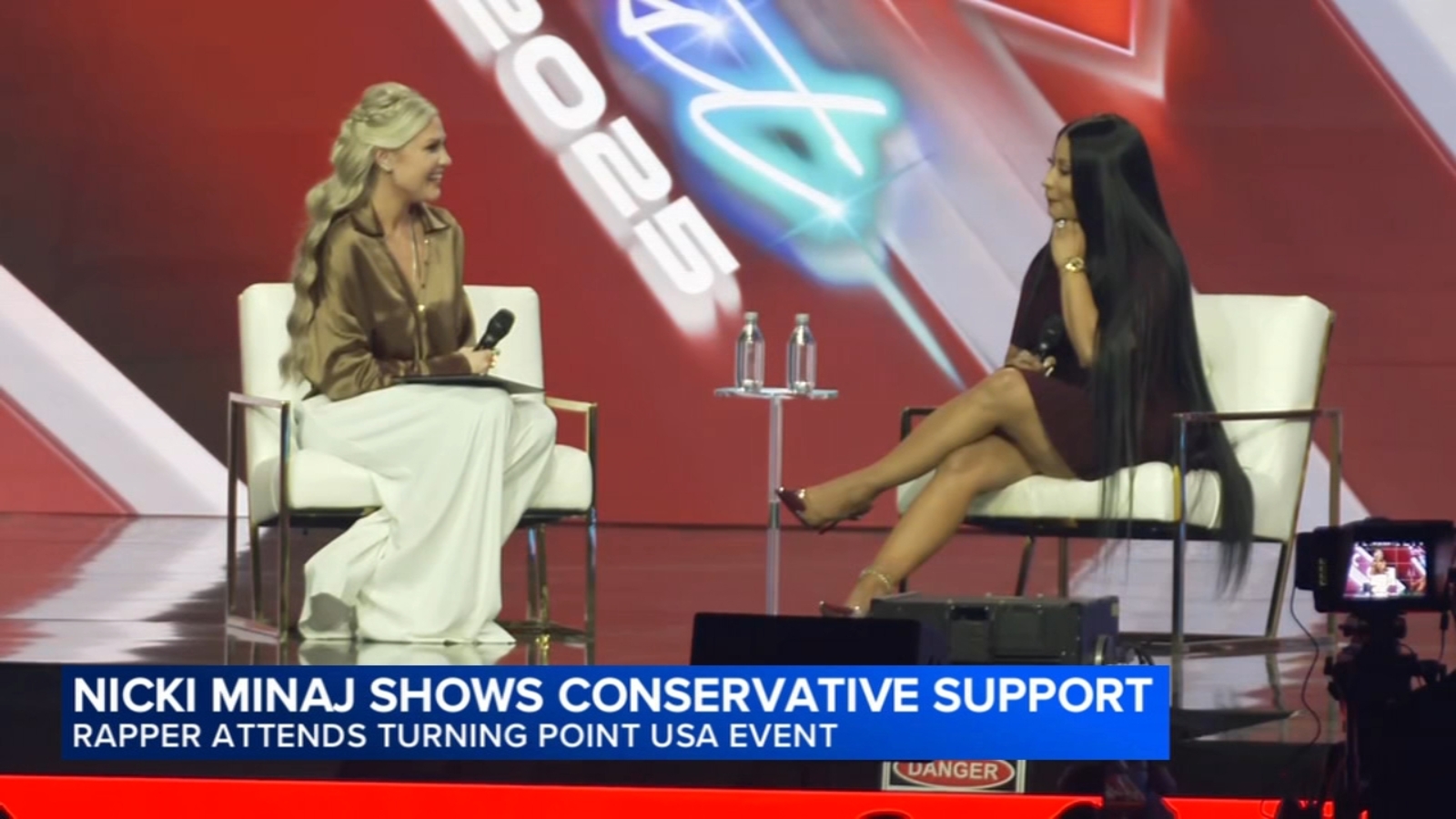
(To quote DanOlson: “Cringe. There’s no other word for it. This makes me cringe. It’s embarrassing.” Image via YouTube.)
Like Nicki, MAGA is obsessed with winning, so of course she found new allies in that cesspool. To once again quote Brammer, “vacuous, blustering, obsessed with dominance [...] If “Monster” was the triumph of the raw gift, her MAGA turn is the triumph of Nicki the Person, Nicki the Husk, Nicki the Mouthpiece, Nicki the Petty Reactionary; easily wounded, easily impressed, seeking only praise and admiration.”
I know a lot of people, including some in-denial Barbz, think Minaj is only cozying up to fascism to get pardons for her sex criminal husband and brother (which he can’t do anyway because that’s not how those state charges work), but that’s no excuse. I think Nicki just wants to do what she’s always done: pretend the whole world is against her, and now she’s embraced an ideology that encourages that. She has made her choice, and it’s off the backs of the people who once adored her. To quote Bob the Drag Queen, “Nicki Minaj did not lose relevance; she rejected evolution.”
Thanks for reading. You can find my work scattered across the internet. My main stomping ground is Pajiba, but you can also find me on Inverse, Crooked Marquee, TheWrap, Paste, and The AV Club, to name some recent places kind enough to not ignore my pitches!
Awards season is underway, so if you’d like lots of chat related to that, sign up for regular Oscar Seasoning pieces. Recently, we delved into the Safdie brothers drama, the big snubs of 2025, One Battle After Another’s supporting actor race, and the rise of Amy Madigan. If you’re into true crime, check out my pieces on the Jenny Jones Show murder, the death of Peg Entwistle, and how Rebecca Schaeffer’s murder led to a change in Hollywood’s stalking laws. For some deep dives into classic gossip, check out my piece on Oprah’s wagon of fat, the Avril Lavigne replacement conspiracy theory, and Sarah Ferguson’s toe-sucking scandal.