Issue 32: We Were All Complicit In The Downfall of Britney
As she experienced the most public breakdown in modern celebrity history, Rolling Stone tried to make sense of the chaos.
Content note: This piece discusses topics of mental health, addiction, and suicidal ideation. Approach with caution.
On the 1st of February, 2008, Britney Spears was placed under a conservatorship. For 13 years, her father, Jamie Spears, and attorney, Andrew M. Wallet, had total control over her personal, professional, and financial affairs. This decision would eventually prove controversial and lead to a public and press pushback that culminated in the #FreeBritney movement. But in 2008, the idea of placing an adult woman and multi-millionaire under the contested control of her father and a team of lawyers was seen as acceptable.
Indeed, it was encouraged. It was preferrable to yet another breakdown from a celebrity who had suffered one of the most notorious and indignant falls from grace in the history of modern entertainment. For the better part of three years, Spears had been put through the wringer, becoming a subject of mockery as she struggled with postpartum issues, a crappy husband, and paparazzi stalkers. She dealt with legal problems, was derided for a bad TV performance, and called a bad mother. When she shaved her head as the cameras rolled, the world just kept watching and gloating.
We’ve tried to atone for our sins as a society following Spears’ release from her conservatorship, but the chances are we’ll never truly confront the cancer of that moment and what it still represents. When I tackled the first big Rolling Stone cover story featuring Britney (and her Teletubby), I was confronted by the reality of how it seemed like Spears was set up to fail from the first days of her stardom. She was forced to navigate an impossible path of come-hither teen sexuality and pious virginity, to be a spokesperson for a generation of teen girls as well as their commodified aspirational fantasy and an acceptable vessel for the leering of adult men. When she fell off that narrow tightrope, the world was not kind. Neither were even the most “sympathetic” profiles of her struggles. Enter, once again, Rolling Stone.
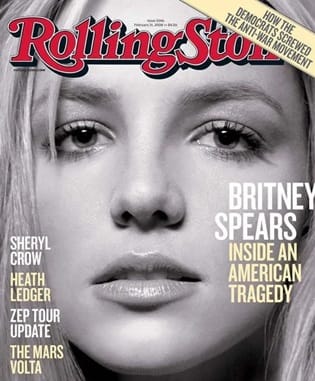
Rolling Stone. “The Tragedy of Britney Spears.” February 21, 2008. Vanessa Grigoriadis.
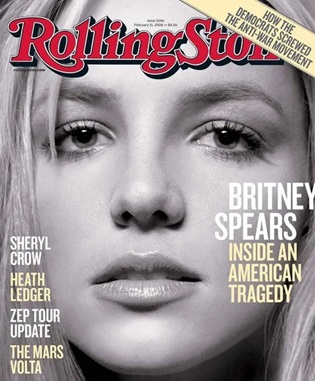
The piece introduces us to Spears as she goes shopping in a Betsey Johnson boutique in the West Topanga mall. As she tries to get her credit card payment through, a crowd gathers outside the window to take photos on their phones. The card won’t go through. Britney lets out a “wail [...] guttural, vile, the kind of base animalistic shriek only heard at a family member’s deathbed.” As she breaks down in public, swearing at the staff and being trailed by her paparazzo boyfriend Adnan Ghalib, two of the teenage girls watching it all unfold “run after Britney to get a video to put up on YouTube.” She calls a fan who asks for a photo in this moment a “bitch.”
This is the tragedy of Britney Spears in 2007: the former perennially peppy pop queen has become uncouth, mean, and trashy. It is, as Vanessa Grigoriadis says, “the most public downfall of any star in history.” This is the ultimate cautionary tale of fame, so we’re told: “loving it, hating it and never quite being able to stop it from destroying you.” This is a line offered sympathetically by Grigoriadis, but so much of the piece is written with the giddy cruelty that plagued Spears during this time. Grigoriadis, a long-time writer and profiler, describes Spears thusly:
“She is not a good girl. She is not America’s sweetheart. She is an inbred swamp thing who chain-smokes, doesn’t do her nails, tells reporters to ‘eat it, snort it, lick it, fuck it’ and screams at people who want pictures for their little sisters. She is not someone who can live by the most basic social rules [...] She’s the perfect celebrity for America in decline: Like President Bush, she just doesn’t give a fuck, but at least we won’t have to clean up after her mess for the rest of our lives.”
This reads as excessively mean, right? Describing anyone as a “thing” is an act of abject dehumanization. But to then position this nastiness as some sort of political parallel is bananas. Maybe it’s the hindsight that comes with living in 2025 speaking here, but describing George W. Bush’s presidency as one of a man who didn’t care feels quaint. I also wouldn’t say that Spears’ issue was not caring. Mental illness and public bullying is tough to shrug off with a “fuck off.”

Spears wasn’t the only celebrity of this time whose work and actions were viewed as a symbol of a nation in a state of degradation. Her frequent nightclub buddies Paris Hilton and Lindsay Lohan were openly referred to as “whores” and accused of causing a dumbing down of girls and women (hello, Pink’s “Stupid Girls.”) MTV and VH1 reality TV shows were full of women throwing drinks in one another’s faces and fighting over the lousiest of vaguely famous men. I was a teenager during this era and I remember being barraged by body-shaming and misogyny from every corner. The sheer amount of magazine covers and articles I saw bemoaning how Britney had gotten “fat” was staggering. The glee over her changing body felt like a throwback to the 1980s, when Elizabeth Taylor dared to put on weight and was derided for no longer looking as she did at 18. People wanted to take these teen sweethearts down a peg or two.
Grigoriadis seems to view Britney’s change with a strange kind of cruel respect. She says Spears is not “book smart” but still “intelligent enough to understand what the world wanted of her: that she was created as a virgin to be deflowered before us, for our amusement and titillation. She is not ashamed of her new persona - she wants us to know what we did to her.” I’m not sure I agree with her assessment that Spears was a master manipulator of press attention, or that she was “enjoying the chaos she [was] creating.” I don’t think her shaving her head or sobbing in the streets was a sign of a woman wielding the puppet strings. Having her kids taken away was not fun.
Nor was that now-notorious MTV VMAs performance, where she was lambasted for looking unprofessional, both in her sloppy performance and in her seeming weight gain (again, she was still tiny.) It’s a performance that never should have been allowed to happen, and everyone failed her. Sarah Silverman made fun of her as a bad mother DURING that show! At the time, it seemed like she didn’t give a fuck. Now, it plays like a woman who needs help. Scratch that: it played at the time like a woman who needed help in her darkest hour, and nobody listened. I think of Amy Winehouse’s final live performances when she was so inebriated that she could barely stand, and she was still pushed onto the stage to be booed. It’s no wonder South Park depicted her as a sacrificial lamb.
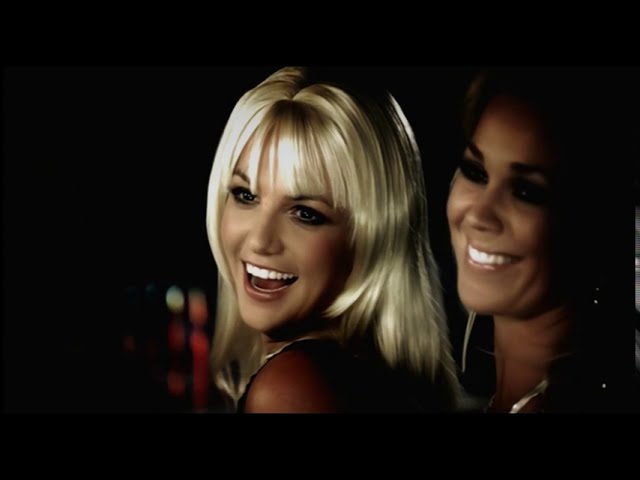
(Gimme More is still a banger. Image via YouTube.)
The paparazzi are, of course, a big feature in this piece. “Every day in L.A., at least a hundred paparazzi, reporters, and celebrity-magazine editors dash after her, this braless chick padding around town on hilariously mundane errands.” Watching footage of Spears being trailed by literally dozens of men with cameras had me on the verge of an anxiety attack. It’s a miracle she was able to even move through the streets with this smothering crowd braying for her attention.
The Britney Beat was a major part of the media ecosystem during this time, and not just in the gossip sector. The Associated Press announced in a leaked memo that “everything that happens to Britney is news” (and they even began writing her obituary.) I remember seeing Britney stories on every newspaper, magazine, TV show, and website during that time. None of it was positive or even remotely sympathetic, except for Craig Ferguson’s Late Late Show monologue. Why would they stop when there was so much money to be made? Bottom-feeder Harvey Levin of TMZ was proud of his ceaseless Britney coverage. One guy interviewed in this piece claims he planned to build an entire paparazzi empire around Britney stuff. Grigoriadis ends up riding around with an obvious loser who claims he can get her an exclusive interview with Spears for a cool $2 million (for himself, apparently, not her.)
Thanks for reading Gossip Reading Club! This post is public so feel free to share it.
In my last issue on a Rolling Stone profile of Britney, we looked at how the magazine positioned the Spears clan as a wholesome country family who only ever wanted to support their darling daughter in her hunger for fame. Here, there are more shades to that story. Jamie Spears is depicted as a “horrible addict” who was never home, and Lynne is the pushy stage mother living vicariously through her daughter. The family declared bankruptcy when Britney was a child, making her move into The Mickey Mouse Club a financial boon for their floundering fortunes. And as she became a teenager, her manager eagerly marketed her as “the teenage Lolita of middle-aged men’s dreams.”
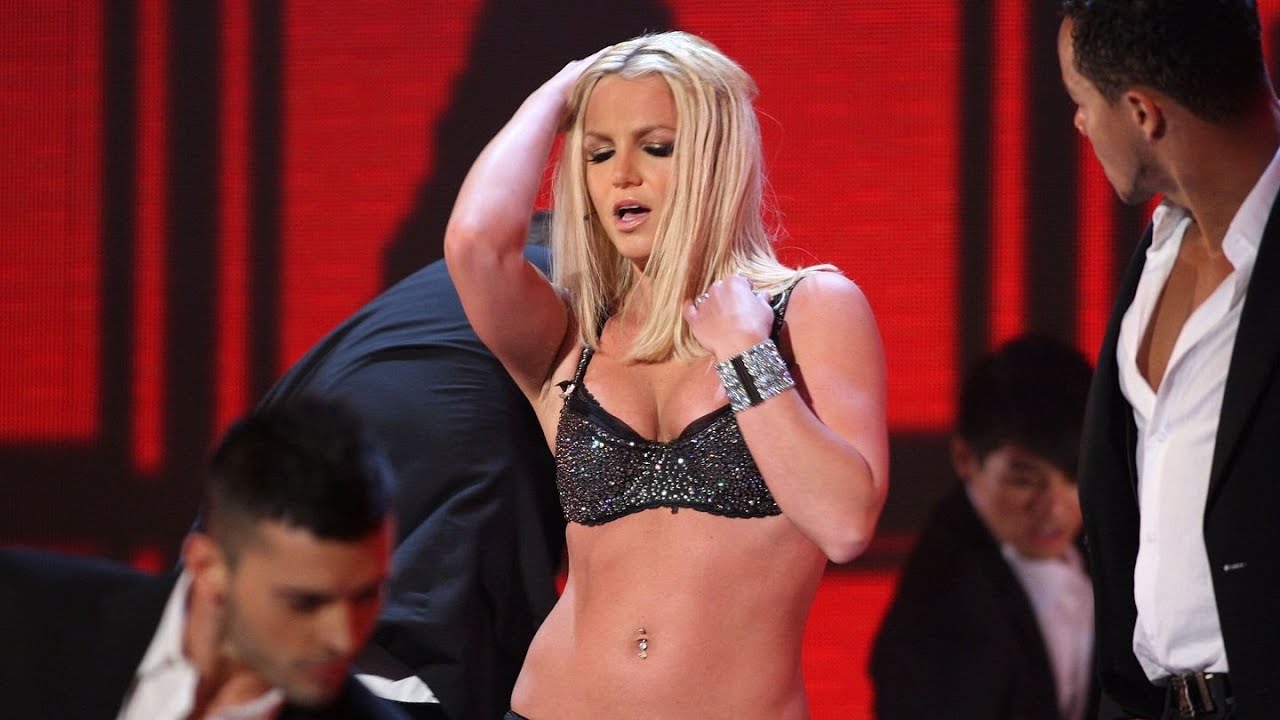
(A reminder, ONCE MORE, that Britney was derided as disgustingly unattractive and overweight in this performance. Image via YouTube.)
Grigoriadis is kinder to Spears in discussing her insecurities and the pressure to work overtime despite her young age, although the need to be an incisive journalistic examination leads to some moments of invasion of privacy. We’re told of the exact night when Britney allegedly slept with Justin Timberlake for the first time, despite her public promises that she was remaining a virgin until marriage. It is alleged that Lynne Spears encouraged Britney to get breast implants. All of the stuff with Kevin Federline is portrayed as a tragic mess, because it was. As I wrote for Pajiba a few weeks ago once KFed dropped his self-serving memoir, nobody ever liked this man. There was no point in the history of Britney’s life where anyone ever thought of him as a decent guy. Everyone clocked him as a gold-digging moocher from the millisecond he was introduced as her boyfriend. But it was also used as yet another excuse to rag on Britney: her taste in men sucks and it must be a reflection of her issues in some way.
After the VMAs performance, according to Grigoriadis, Britney became “a recluse, in a way”, forever trailed by her new boyfriend, former paparazzo and total jerk Sam Lutfi. Spears is described as paranoid, forever intoxicated, and only slipping further downward. When she does leave the house, it’s to make the paparazzi follow her for hours on end. Adnan Ghalib, a paparazzo with the world’s worst facial hair who briefly dated Britney during this time, is in a war of attrition against Lutfi. Both men claim to be fighting for Britney but it just seems to be yet another instance of men squabbling with one another for control over her life.
In the piece’s closing paragraphs, things only get worse. X17, a photo agency, puts out the alert that Spears may have attempted suicide.
“Seventy-five paps gather around the entrances of Britney’s gated community, stamping their feet in the chilly winter night, as a police helicopter circles overhead. ‘You don’t want an ambulance to roll out with a body bag and miss that,’ says a French photographer, checking his battery. These guys are jaded after all that’s happened. ‘Man, Britney can’t die, because then I won’t get my money!’ says a guy in a Famous Stars and Straps baseball hat.”
As we’re left with the image of Spears being taken to hospital, Grigoriadis tries to tie this whole thing up with a neat bow and thematic consistency.
“She’s the canary in the coal mine of our culture, the most vivid representation of the excess of the past decade. She didn’t think there was a tomorrow worth saving for, and neither did we. After blaming everyone else for her problems, Britney’s finally starting to realize the degree to which she’s messed up, but her sense of entitlement keeps her from admitting it to herself, or to anyone who is trying to help her. We want her to survive and thrive, to evolve into someone who can make us proud again. Or maybe, we just don’t want the show to end.”
Look, I get what she’s doing here. I imagine that being a second-hand witness to a vulnerable woman’s downfall was despicable to watch and she needed to find a way to make what many saw as selfish celebrity tittle-tattle have some deeper meaning. It wasn’t a shallow issue, of course. And it was a spectacle that revealed a lot about the era of paparazzi, misogyny, and state-wide body-shaming. But it also really feels like Grigoriadis was trying to hedge her bets, right? So, what’s why we get all this stuff about a potentially manic addict who may have experienced suicidal ideation being the one at fault because of “her sense of entitlement.” What, was it wrong for her to feel entitled to some privacy or autonomy? The media parallels between Spears and Amy Winehouse were always terrifying.
And in the midst of this, Spears’ fifth album Blackout was released. It’s still considered one of her best works (it’s definitely my favourite), and the one where she had the most creative control over each song. As a dance-pop album, it’s pretty unimpeachable, and it also has those songs like “Piece of Me” that felt like of-the-moment commentaries on what Spears was going through at the time. Given everything that was going on, it’s somewhat surprising that the album was dropped in the midst of this madness. Nowadays, the artist and their team would probably delay it, but Jive wanted to ride the wave of all this noise and felt the need to push it out early after it was leaked.

(A pop legend! Image via Wikipedia.)
Many reviews of Blackout felt more like commentary on her issues than the music itself. It was impossible to separate the work from the noise. Even the positive write-ups could disentangle their opinions on the work from the surrounding drama. The A.V. Club said the album “counts both as a significant event and as a disquieting aberration that couldn’t be more mysteriously manufactured or bizarrely ill-timed” in which “every song counts as markedly progressive and strange.” With the distance of time, Blackout feels like a big shift in the pop music of the era. A lot of it feels incredibly fresh even in 2025, and you can see its influence on artists like Slayyyter, Addison Rae, Tate McRae, and Kim Petras. Still, Britney herself hasn’t always been given the credit for that work. Usually, her producers are seen as the driving force behind the songs. Dazed heralded Blackout as “the result of a hazardous moment in pop culture history that saw a serendipitous and symbiotic relationship between an artist eroding her past and producers forging their future.”
Once the conservatorship was in place, Britney went back to work. She guest-starred in How I Met Your Mother in March of 2008. That June, she appeared in a pre-taped skit with Jonah Hill for the VMAs. Her sixth studio album, Circus, dropped in December 2008, two months after her conservatorship was extended indefinitely. Britney was back! Clearly, the conservatorship “worked.”
What remains fascinating about Spears’ life after her breakdown is how speedily she was able to return to some semblance of the status quo, at least publicly. She wasn’t made to do some apology tour or give a ton of interviews where she tearfully apologized to her fans for messing up. Obviously, she should never have had to do any of that, but we used to make women apologize for having their own photos leaked by hackers. In that context, the “peace” with which Britney could return to pop princess stardom is unique. But it also hid the seedy truth of her lack of autonomy over her life and career. During this time, she was heavily medicated against her will, forced to have an IUD despite her wishes to have more kids, and a lot of people made a lot of money off her workhorse schedule. In court documents, Spears revealed that she’d spent years trying to get out of her conservatorship and that she was tired and traumatized by “telling the whole world I’m OK and I’m happy” when it wasn’t the case. She was forced to be the pre-fall Britney over and over because nobody wanted to confront the truth or her pain.
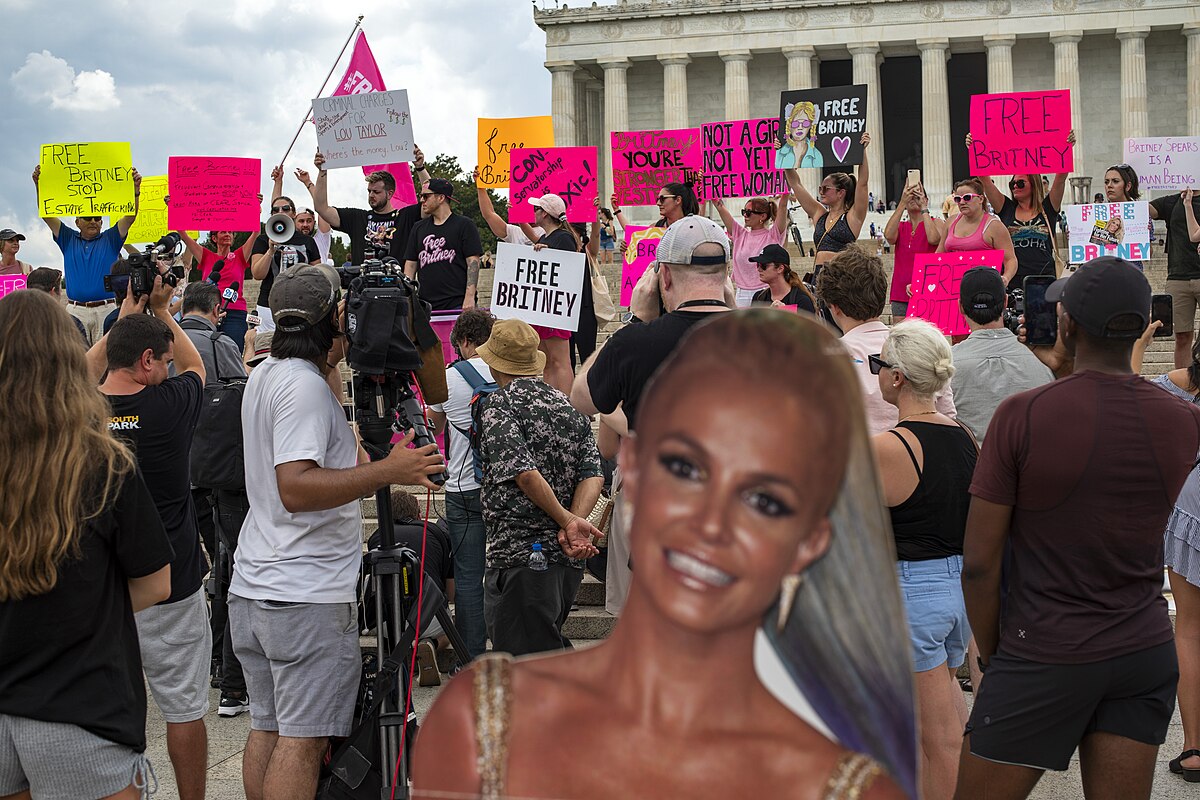
(Image via Wikimedia Commons - author, Mike Maguire.)
We’ve never stopped being obsessed with Spears. Despite her retirement from music, the press keep reporting on her otherwise quiet life, digging for dirt. Her infrequent social media posts still inspire fevered media coverage and conspiracy theories, including a series of welfare checks at her home made by fans. While I was researching this piece, a bunch of clickbait sites had articles on how she had acted “erratic” at a restaurant, which the venue’s owner quickly refuted. Here we have a mentally ill woman, undoubtedly left traumatized by her experiences, and we have no idea how to confront that.
There are still people in and out of her life eager to make a quick buck by exposing her lowest moments and dramatizing things that none of us should even know about. There are plans to adapt her best-selling memoir, The Woman in Me, into a feature film, which Spears at least seems to be involved with first-hand. I have feelings about this very difficult story being turned into glitzy awards bait. Making a truly honest Britney biopic would end up as psychologically taxing as a Michael Haneke or Catherine Breillat film, and there’s no way Jon M. Chu will do that. People fought for years to have Britney left alone, but they never will, let’s be honest. They’re still waiting for the tragedy they were not-so-secretly hoping for in 2007.
Thanks for reading.
If you would like to get a full paid subscription to the Gossip Reading Club but do not want Substack to get any of your money, DM me and I can set up everything manually! If you’d prefer to just make a tip (much appreciated!), I have a Ko-Fi page.