Hollywood & Crime: Whatever Happened to Olive Thomas?
A silent movie star, her partying husband, and the tragic accident that caused an industry-wide scandal.
There are some classic Hollywood scandals that have become entertainment lore because they seem to prove something about the industry that we all not-so-secretly believe: That being famous is terrible and nothing good comes of it. These stories become cautionary tales that serve to warn future generations of the perils of celebrity, and of a business that views its workers as disposable.
This argument makes sense in some cases more than others. The Fatty Arbuckle-Virginia Rappe case was quickly spun into proof of early Hollywood debauchery by religious groups because it seemed, from the outside, like the epitome of the new film world’s corrupting force. The Black Dahlia case faced similar framing, even though Elizabeth Short wasn’t involved with the industry, and her murder really had nothing to do with the reputation of the city in which it took place. It doesn’t take much for any crime to become the stuff of conspiracies that seek to cement a certain narrative, and Hollywood has always lent itself well to such scheming, long before QAnon was a thing. With our latest Hollywood & Crime story, a tragic accident instantly became the stuff of heated intrigue, largely because of press sensationalism and a hunger for it to mean more than it did.
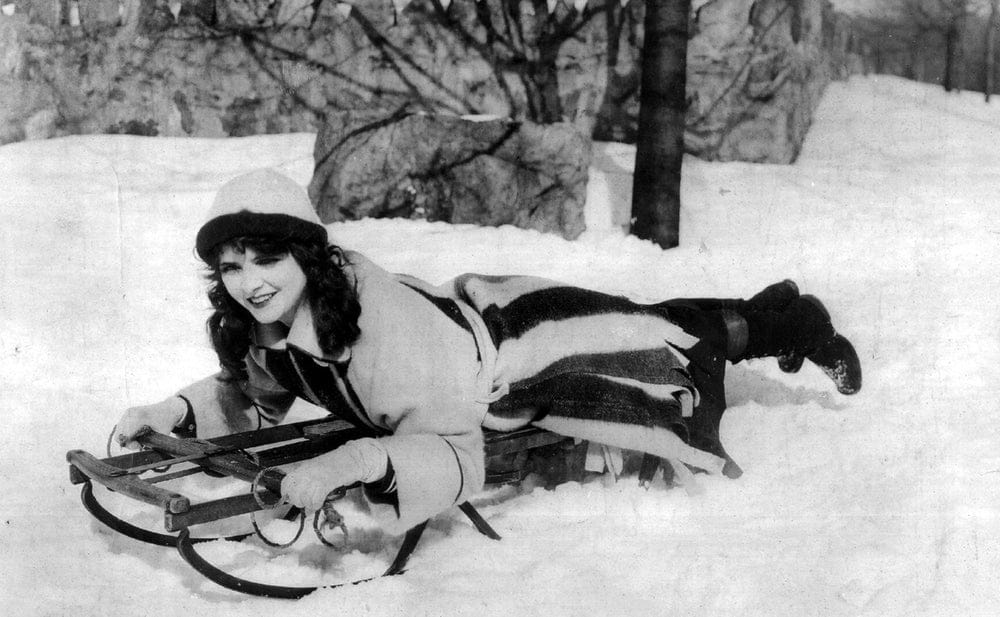
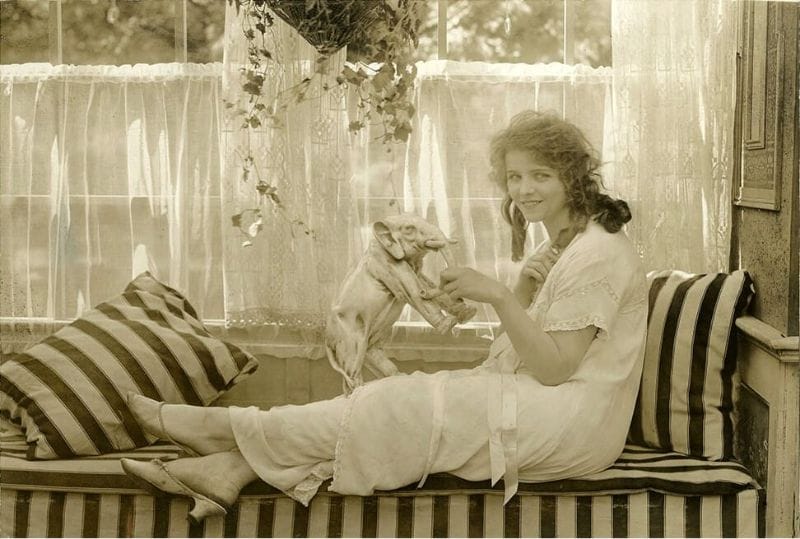
Olive R. Duffy was an Irish-American girl who left school at 15 to provide for her family. She got a job selling gingham at Joseph Horne's department store in Pittsburgh for $2.75 per week. There, she met and married her first husband, Bernard Thomas, but they split after only two years. She then moved to New York City, where she found work as an artist's model. She posed for the likes of Haskell Coffin and Penrhyn Stanlaws, a job that often involved posing nude. She eventually found her way to the Ziegfeld Follies, the legendary theatrical revue known for its lavish costumes and gorgeous performers. Florenz Ziegfeld, Jr., the man behind the follies, seems to have been quite taken with her, and it didn't take long for the pair to begin an affair (he was married to Billie Burke at the time, who would go on to become best known as Glinda in The Wizard of Oz.)
As Olive became more beloved by audiences, she started accruing expensive gifts from her many admirers. She had hoped that Ziegfeld would divorce his wife and marry her, but he was a playboy who slept with many of his employees and refused to settle for just one girl, so Thomas ended the affair. Still, she kept working on the follies until she could break into something bigger.
By the mid-1910s, the movie world was growing into an entertainment juggernaut. Audiences were flocking to the cinema and they were finding their favourites on screen. The first-ever leading performers weren't credited by their names, but as fans grew to demand it, they were soon credited and became stars. One of the first Hollywood stars was Mary Pickford, a former child star of the stage who became the first-ever Hollywood millionaire. She was the first America's sweetheart, famous for playing ingénues and childlike idols who audiences quickly became obsessed with. You could easily make the case that she was the most famous person alive during the 1910s and '20s. She brought her family along for the ride, including her brother John, better known as Jack.
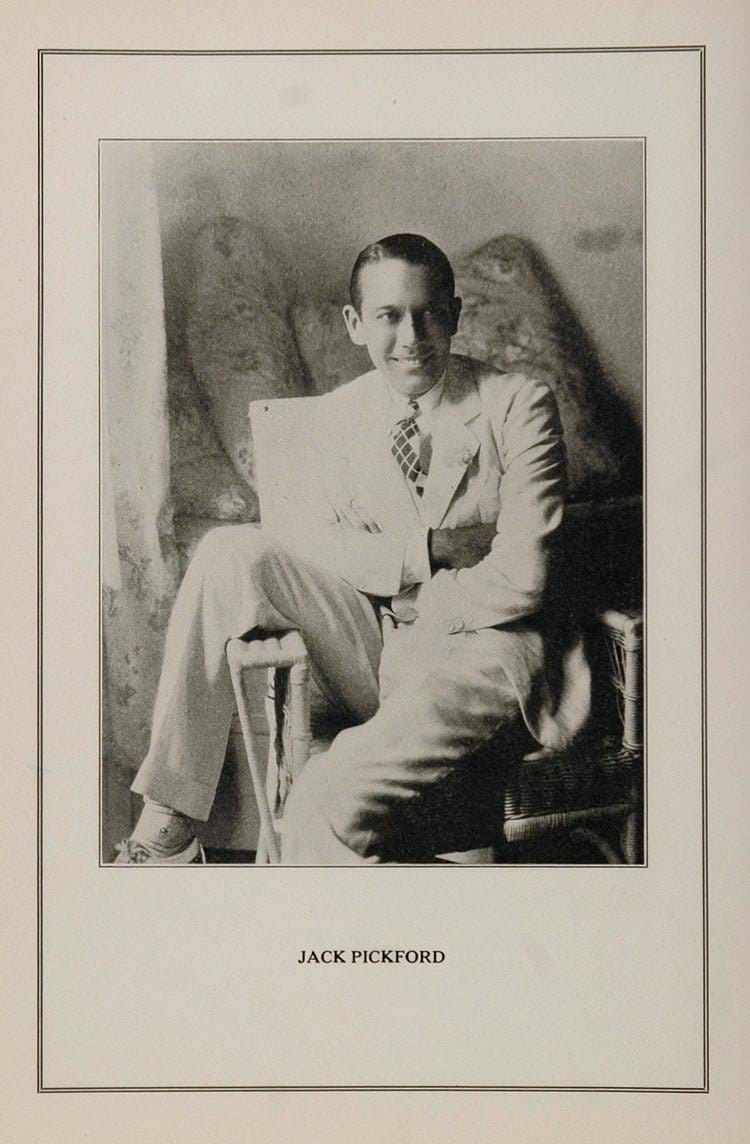
In 1916, Olive began making movies. In 1917, she made her full-length feature debut in A Girl Like That for Paramount Pictures. She appeared in six films that year, and audiences liked her. She started earning big paydays and spent it accordingly. In 1916, she met Jack Pickford, and the pair instantly hit it off. They were both young, gorgeous, and loved to party. Screenwriter Frances Marion called them "the gayest, wildest brats who ever stirred the stardust on Broadway." After a brief courtship, the pair eloped.