Hollywood & Crime: The Mysterious Death of Bob Crane
The star of Hogan's Heroes is the subject of one of the oddest unsolved crimes in entertainment history.
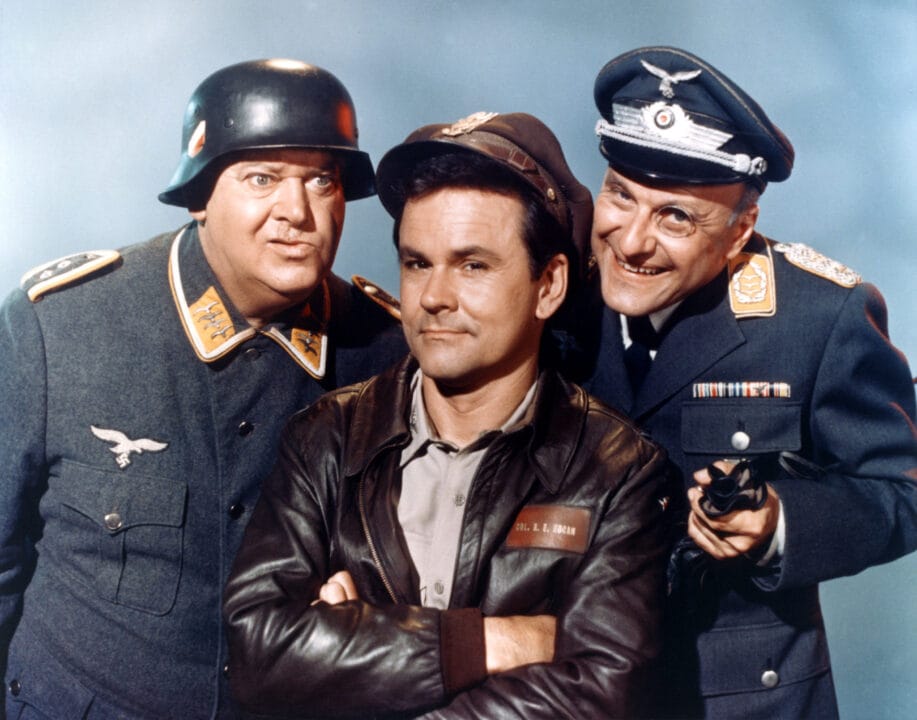
I have never seen a single episode of Hogan’s Heroes. When I first heard about the show through cultural osmosis (read: a joke on The Simpsons), I was kind of stunned that it even existed. A wacky sitcom set in a German POW camp? Are you sure this thing really ran for six years on network TV? I largely knew about Bob Crane not from this show but the many true crime specials I’d seen that detailed his mysterious and still-unsolved murder. In the history of shocking Hollywood crimes (hello, E! specials and whoever uploaded them to YouTube), this was a curious one. That it remains unsolved and continues to attract theories, speculation, and sleaze is unsurprising.
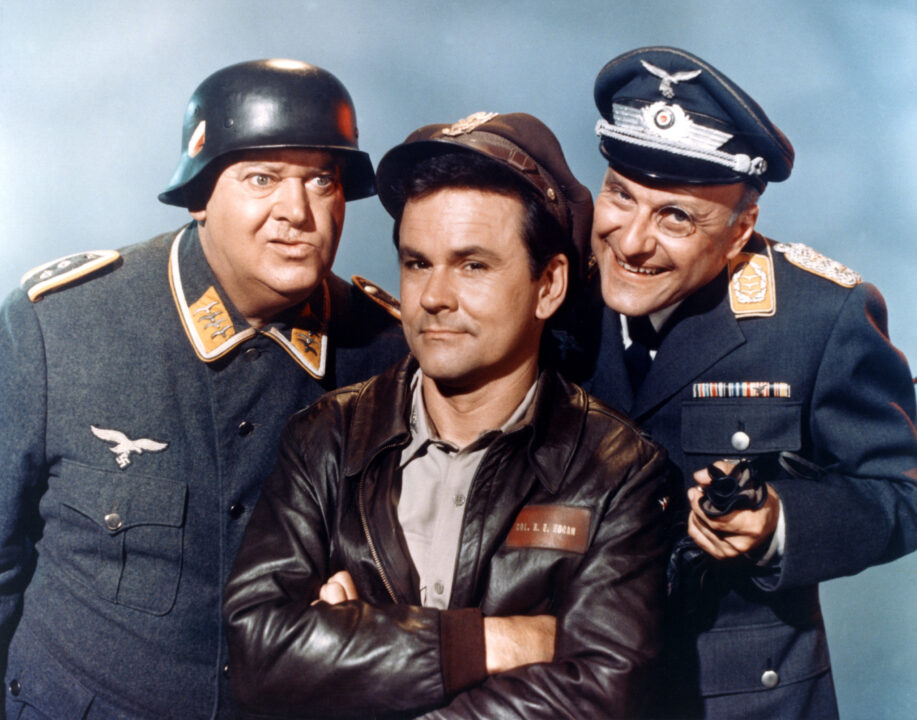
(Shout out to everyone else who only knows this show because of that episode of The Simpsons were Homer is haunted by the ghost of Colonel Klink! Image via IMDb.)
In the early 1960s, Bob Crane was a radio star whose biggest TV role was as a supporting player on The Donna Reed Show. His fame grew exponentially when he was cast in Hogan’s Heroes as the eponymous Colonel Robert Hogan, an allied prisoner of war who caused all manner of wacky shenanigans for the oblivious Germans guarding him in the camp. The show was an immediate ratings hit, finishing in the top ten in its first year and earning Crane an Emmy nomination. It’s a weird show, but I imagine it felt like catharsis to a generation of people who fought in the Second World War and were still grappling with the consequences of that. It took a while for American pop culture to really confront WW2, but the ‘60s saw a shift thanks to dramas like The Pawnbroker and Judgment at Nuremberg, and comedies like The Producers. You needed to laugh at these monsters as well as dissect the trauma they induced.
Crane lapped up his fame, eventually leaving his wife for his co-star Sigrid Valdis. After Hogan’s Heroes came to an end, Crane had trouble finding work. He appeared in a couple of terrible Disney movies and mostly relied on guest appearances on sitcoms and dinner theatre. At some point during the run of Hogan’s Heroes, he met John Henry Carpenter, a regional sales manager for Sony Electronics who often helped famous clients with their video equipment. The new technology allowed anyone to record whatever they wanted from the comfort of their own homes. Bob Crane used it to record his sexual encounters.
He and Carpenter often worked together in their kinks, picking up women and taping their nights. Many women claimed that they had no idea they were being filmed during these meetings. Carpenter even rearranged his work travel plans to follow Crane around the country for his dinner theatre performances, just so they could keep up their rigorous schedule of secret camera sex shows.
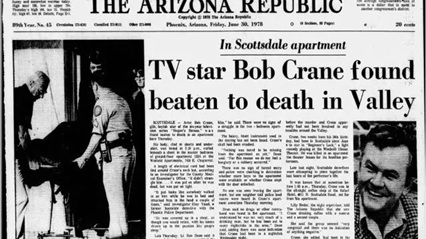
In June 1978, Crane was living in the Winfield Place Apartments in Scottsdale during a run of Beginner’s Luck, the play he performed most frequently during dinner theatre gigs. The night before his death, he was seen at a restaurant with Carpenter, where their interactions had been described as “tense” by a waitress. On the afternoon of June 29, his co-star Victoria Ann Berry entered his apartment after he failed to show up for a planned lunch meeting. She discovered his body, at first thinking it was just another woman Crane had brought home for sex. He had been bludgeoned to death. An electrical cord was tied around his neck. Crane was 49 years old.
The Crane case was mishandled from the beginning. Scottsdale’s police department didn’t have a homicide division at the time, so they had no idea how to deal with a case like this, let alone one so high-profile. From the outside, it seemed very random: there was no sign of forced entry, and nothing valuable was stolen. The camera equipment, which would have sold for a hefty penny, was still there. So were Crane’s videotapes. DNA testing wasn’t available, so blood testing could only reveal what blood type was spilled on the floors.
Blood was found in a rental car used by Carpenter. The samples taken matched Crane’s blood type. But it wasn’t enough for the district attorneys to file charges, so Carpenter went free. In 1990, Scottsdale police investigators decided to reopen the case. DNA testing was now used on the car blood samples, but it proved inconclusive. A photograph of the car’s interior revealed a speck that many thought was brain tissue, but actual tissue samples from the scene had been lost. Still, it was enough for a judge to decide that, yes, Carpenter could be charged and put on trial for the murder of Bob Crane.
In 1994, Carpenter appeared in court. The defence argued that there wasn’t a case, that all the evidence was circumstantial at best. The prosecution didn’t even have a murder weapon. What they put forward as a probable tool was the camera tripod found in Crane’s room, but that was flimsy. Carpenter argued that he lacked a motive. While Crane’s son Scotty claimed that his father had decided to drop Carpenter from his life for being a hanger-on, Carpenter denied that. Eventually, he was acquitted.
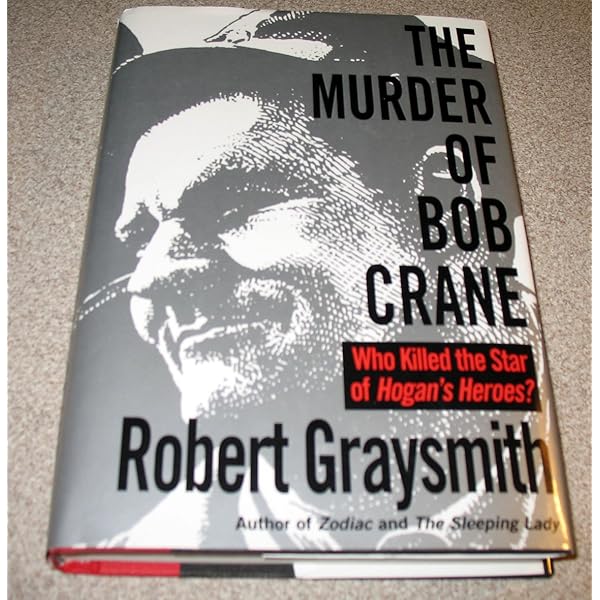
(Image via eBay.)
The Bob Crane murder remains unsolved, even after advanced DNA testing took place in 2016. It’s not hard to see what draws gossip hounds and true crime nerds to this case. Celebrity murders are seldom left unsolved, and this is one mired in sleaze with a heavy dose of mystery overhead. Was Crane murdered by a spurned lover? Was he caught up in the kink underworld? Did Carpenter snap, despite his denials?
One of my favourite biopics (a genre I’m largely sceptical of) is Auto Focus, directed by Paul Schrader and written by Michael Gerbosi, based on a book by Robert Graysmith, a.k.a. the guy that Zodiac was made about. What I find so fascinating about this film is how it has zero interest in delving deeper into the psyche of Crane. As far as Auto Focus is concerned, Crane was not a deep thinking man or one with a layered psychological profile. He was a guy who liked being famous and liked filming himself having sex, and that was it. That’s not to say that this is a shallow movie. It’s actually an incisive portrait of a dumb man and the nightmares of male sexual pathology. If you were rich, famous, and weird, wouldn’t you milk it for all it’s worth too?
Auto Focus portrays Crane (a never-better Greg Kinnear) as a nice dude who eagerly slides down the rabbit hole of filth once he’s able to do so, and Carpenter (Willem Dafoe) is his proud stooge who is sort of a bad influence but is mostly just along for the ride, camera in hand. It also doesn’t point the finger at Carpenter for the murder, leaving the ending as ambiguous as the real case. One thing it does add, however, is a dose of one-sided homoeroticism between the men that may have been an instigating factor in their strange dynamic.
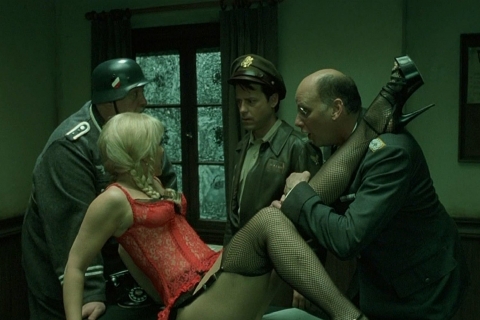
(Image via IMDb.)
That movie was not without controversy. One of Bob Crane’s sons, Scotty, derided it as inaccurate in various ways. Scotty Crane is an odd one. In 2001, he launched a website where you could pay to access photos of his father’s sex films and autopsy report. He seemed especially eager to refute Auto Focus‘s claim that dad had a penile implant. For what it’s worth, neither Schrader nor Gerbosi ever called the film definitive, and Graysmith’s book was heavily criticized upon publication. As with most biopics, Auto Focus is best viewed as an interpretation of Hollywood in flux. And it’s still way less invasive than setting up a website so strangers can give you money to look at your dad’s genitals. It’s also worth noting that he tried to shill his own script about his dad’s life that never got off the ground once Auto Focus was greenlit.
Carpenter has remained the lone suspect of Crane theorists, mostly because of the lack of options and because of stuff like Graysmith’s book and Auto Focus. It’s a theory largely formed through a shoddy police investigation, press speculation, and some casual homophobia. The method of Crane’s death has become impossible to separate from his proclivities. Historically, there is not a great precedence for legal or criminal investigations into cases involving kink, consensual or otherwise.
The most intriguing theory I’ve heard about his murder came in the comments section of FindADeath.com (yeah, I know.) A very detailed commenter offered their not-unconvincing ideas for the murderer, or at least one of the accomplices, being Victoria Berry, his co-star. She had a key to his room. Her details of the scene were inconsistent with the layout. She had been involved with Crane on a couple of occasions. At the time, Berry was dating Alan Wells, a former bit-part actor and business manager she would later marry. Carpenter’s defence team saw Wells as a potential culprit in the murder. According to the Phoenix New Times, Wells had been driving a white Caddy with California plates in 1978, a car spotted at the scene. He also had motive, given that Crane had slept with his girlfriend while they were together. Wells and Berry were never charged and the case has all but frittered away to pure internet whispers. Cold cases like this tend to stay cold for a reason.
Crane’s body was exhumed and moved to Westwood Memorial Park. There was a battle for postmortem ownership of his legacy from wives one and two, as well as his kids. Images of his dead body are easy to find online without paying Scotty Crane. I remember seeing flashes of them during one of those E! true crime countdown specials. Ick. Bob Crane’s story is one that will forever be defined by sleaze, whether or not that was accurate to his lived experience. Was he a sex addict in the throes of hardcore kink who wanted out and was murdered for his troubles? Or was he just a horndog who got unlucky? Whatever the case, it’s a story that has continued to fascinate people because of its perceived seediness. Such is Hollywood and crime, right?
Thanks for reading. I was going to include this as a Do You Remember entry, but it happened before I was born so, no, I didn’t remember it. Still, I know a lot about weird celebrity crimes and felt there was something to write about, so if you’d like more of this sort of thing, let me know!