Do You Remember: When Elvis Met Nixon
When the King of Rock and Roll turns up at the White House asking for a meeting with the President, you say yes!
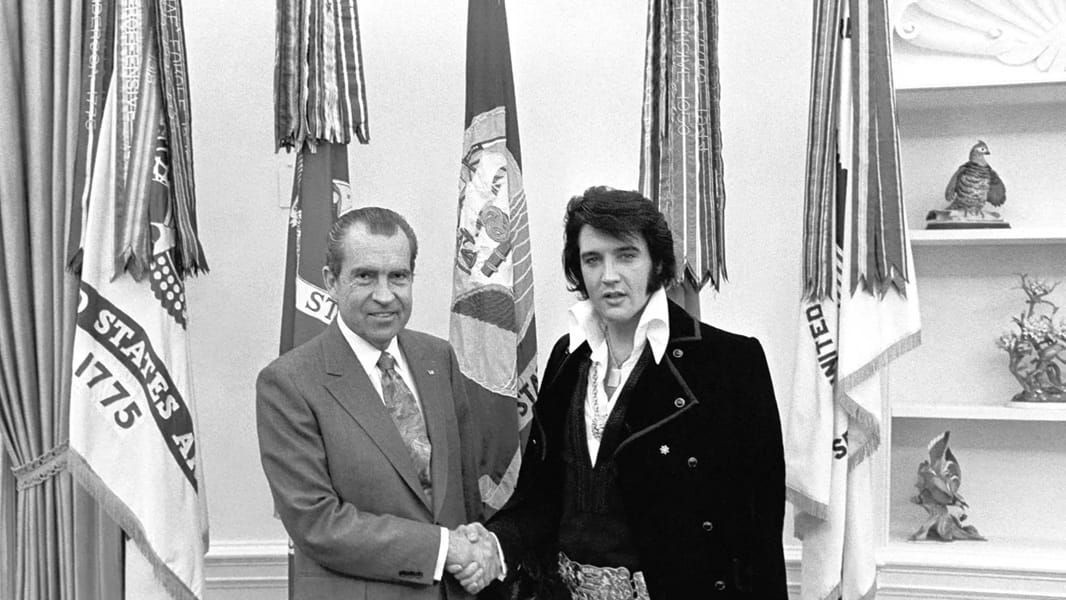
It might be the most American photograph ever taken. President Richard Milhous Nixon, the 37th President of the United States, shaking hands with Elvis Presley, in a caped jumpsuit and wearing sunglasses indoors, in the Oval Office of the White House. It encapsulates that great nation better than decades of literature, cinema, and weird AI-generated art of Trump Jesus. Two movies have been made about this one incident (one co-written by Cary Elwes?!) The Simpsons mocked it. For some, it represents a nadir in the life of the King of Rock and Roll. For others, it’s a symbol of his unimpeachable power, a contrast to the other sweaty dude in the picture. To me, this story is one of the most fascinating and outright barmy testaments to fame I’ve ever encountered. It’s also just hilarious, so we have to talk about it.
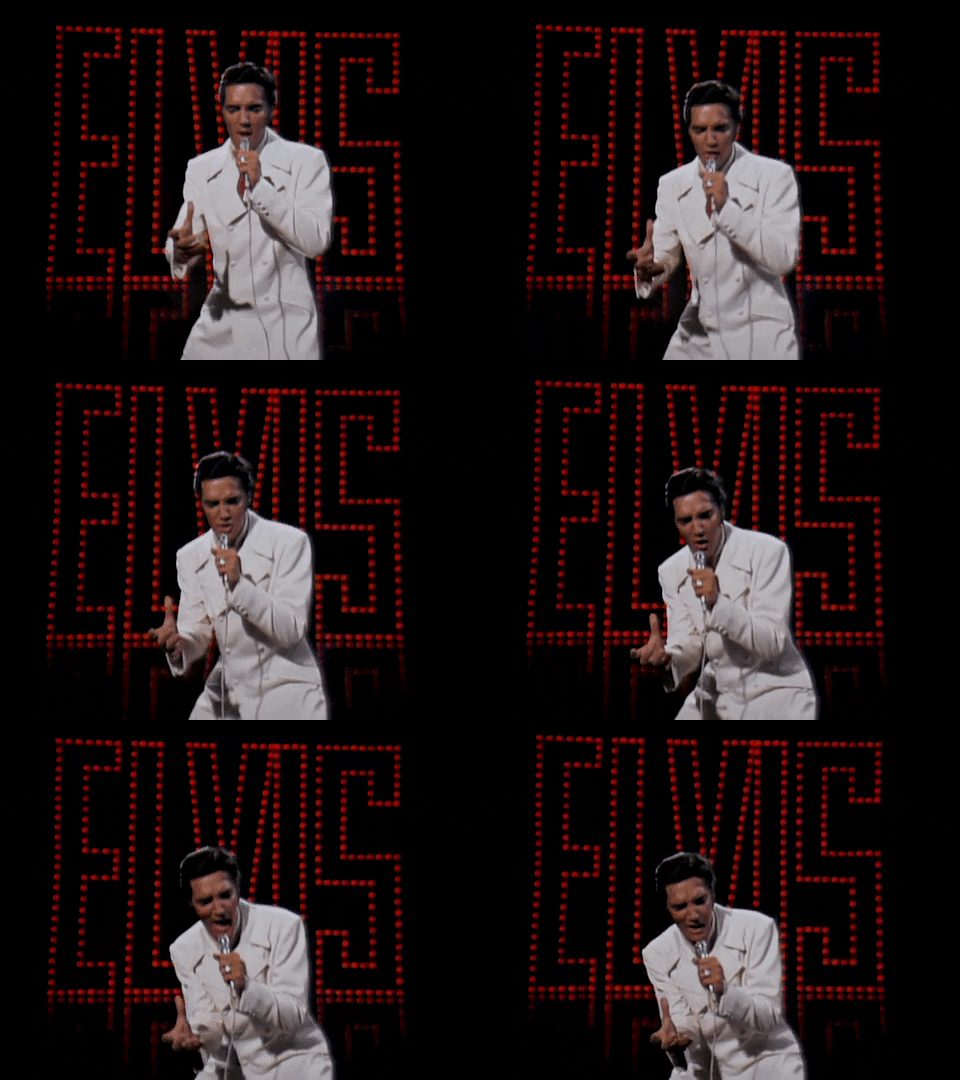
In 1970, Elvis was in a period of professional flux. He'd experienced perhaps the greatest musical comeback in history with his 1968 TV special, which led to a prolific series of recording sessions and a ton of big-money offers for tours and residencies. He ended up signing a four-week special at the International Hotel in Las Vegas, which led to a near-permanent residency in the city under the control of Colonel Tom Parker that saw him morph into a sad parody of himself. But he wasn't there yet. He was still Elvis f*cking Presley, and he could do essentially whatever he wanted. And what he wanted was to meet the President.
On a flight to Washington D.C., Elvis asked for some paper from a stewardess. On an American Airlines-branded notepad, he wrote to President Nixon. "I am Elvis Presley and admire you and have great respect for your office," he wrote, with very wobbly handwriting. He mentioned that he had talked to Vice President Spiro Agnew in Palm Springs and that they'd discussed "the drug culture, the hippie movements […] the Black Panthers” and other countercultural groups that concerned him. He wanted, he told Nixon, to offer "any service I can to help the country out" and he requested that he be made "a federal agent at large."