Do You Remember: JT LeRoy, the Literary Scam That Tricked Hollywood
The coolest author of the late '90s and early 2000s was also the weirdest hoax of its time.
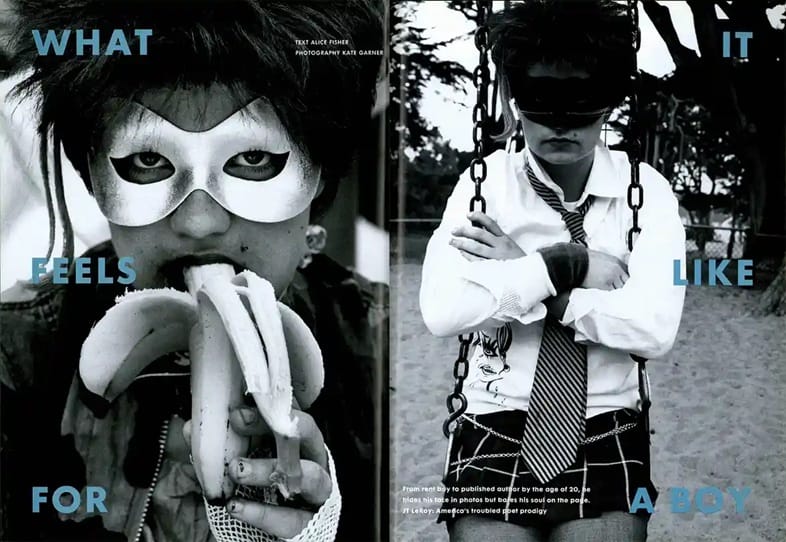
If you were a cool kid in the early 2000s, then the chances were you'd read the work of Jeremiah Terminator LeRoy. He was the literary wunderkind of Gen X, an anti-establishment voice whose raw, semi-autobiographical portrayals of abuse, sex work, and trauma were a slap in the face to the status quo. He hung out with all the coolest people, like Courtney Love and Winona Ryder, and posed for fashion editorials. The underground and mainstream alike were enthralled by his realness, and the mystery surrounding his identity only made him more fascinating. For a long time, LeRoy never made public appearances. Rumours swirled that LeRoy was actually a pseudonym for a major writer or celebrity. Some thought he was author Dennis Cooper, or maybe even Billy Corgan of Smashing Pumpkins fame. Actually, he was two people, and the truth had been hiding in plain sight.
In the world of literary scams and hoaxes – A Million Little Pieces, The Salt Path, any number of memoirs – there is something particularly curious about the JT LeRoy case. It was a layered myth of exploitation, gender, identity, and authenticity that exposed a generation’s simultaneous hunger for realness and leering voyeurism. It was the trauma plot turned into Gen X farce, a drama populated with bad wigs, even worse accents, and raccoon penis bones. In hindsight, it was all clearly ridiculous. At the time, it felt like life or death.
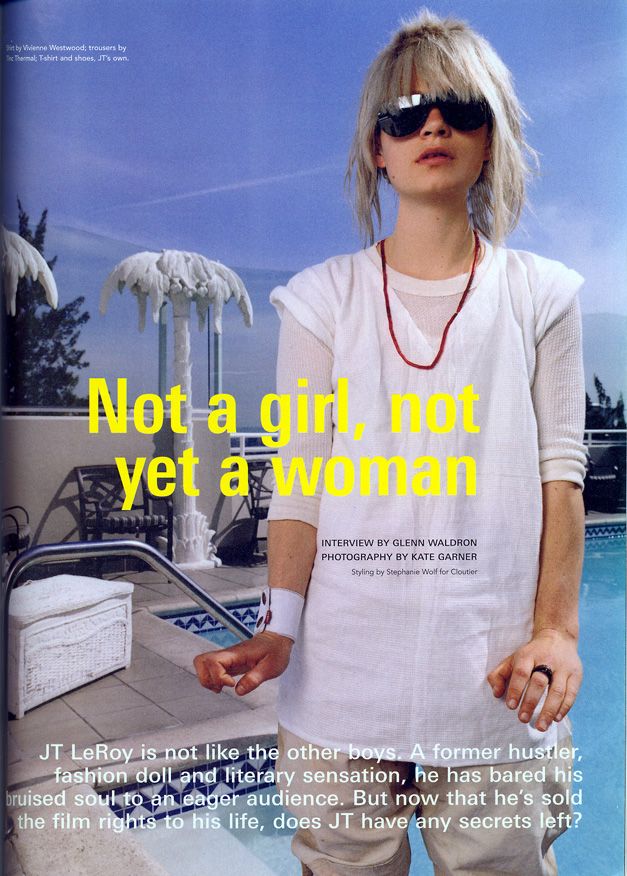
JT LeRoy is actually Laura Albert, a woman from Brooklyn who was residing in San Francisco with her boyfriend, Geoffrey Knoop. Under her own name, she wrote sex advice online, worked as a phone sex operator, and performed in a band with Knoop. Albert had a troubled childhood, spending time in a group home and struggling with her mental health. She turned to suicide hotlines for help during her adolescence. Because of her past experiences with sexual abuse, Albert said that she felt more comfortable talking to these strangers in the persona of a boy. She also claimed that people found her more sympathetic as a man.